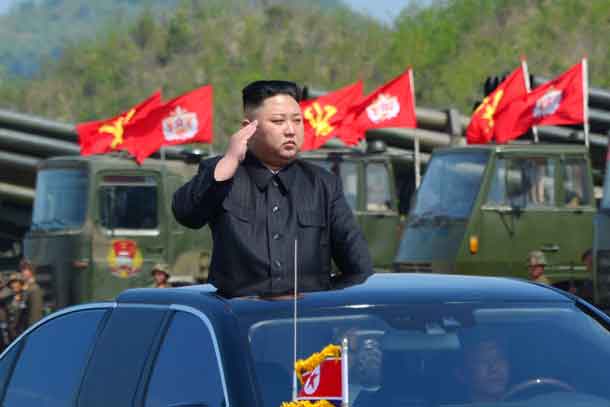
For decades, American policymakers have hoped that diplomacy, economic incentives, and international pressure would persuade North Korea to abandon its nuclear ambitions. Yet Pyongyang has repeatedly exploited diplomatic openings while expanding its weapons programs and maintaining an authoritarian system built on repression.
Jay Lefkowitz challenged this approach long before the North Korean nuclear threat reached its current scale. As President George W. Bush’s special envoy for human rights in North Korea, he argued that Washington needed a more comprehensive strategy combining military deterrence, diplomatic leverage, and a sustained commitment to human rights.
His arguments in The Washington Post and Commentary highlighted why American policy could not rely on negotiations alone. Readers can learn more about Jay Lefkowitz’s career and work by checking out his official website.
Why America’s Approach to North Korea Was Failing
In April 2013, Lefkowitz and Christian Whiton published an opinion piece in The Washington Post titled “U.S. Response to North Korea’s Rhetoric Is Dangerously Naive.” They warned that Washington risked encouraging further North Korean aggression if its responses to provocations failed to impose meaningful costs.
The concern was grounded in experience. In 2010, the sinking of the South Korean warship Cheonan and North Korea’s shelling of Yeonpyeong Island demonstrated Pyongyang’s willingness to use military force without initiating a full-scale war.
North Korea could pursue limited attacks, test its adversaries’ resolve, and exploit their reluctance to escalate.
Lefkowitz’s argument was not that every provocation demanded an immediate military response. Rather, he emphasized that deterrence depended on convincing North Korean leaders that aggression would carry consequences that outweighed any potential benefits.
This approach required a clear understanding of the regime’s incentives rather than an assumption that diplomatic engagement would eventually moderate its behavior.
The China Problem: Washington Couldn’t Outsource Its Strategy
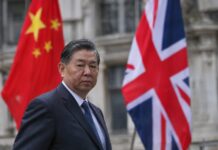
American policymakers frequently looked to China to pressure North Korea into abandoning its nuclear ambitions. Beijing possessed considerable economic influence over Pyongyang, making Chinese cooperation an important element of international efforts to contain the threat.
However, China’s priorities did not necessarily align with Washington’s.
North Korea served as a strategic buffer between China and South Korea, which hosts American military forces. Beijing also had strong reasons to fear the consequences of North Korean state collapse, including refugee flows, instability along its border, and the possibility of a unified Korea aligned with the United States.
This created a fundamental obstacle: China could oppose North Korean provocations while remaining unwilling to take measures that threatened the regime’s survival.
The lesson was that American strategy needed to account for competing national interests rather than assume that Beijing would solve the problem.
A realistic approach would recognize that:
- China could be an important partner without being a reliable instrument of American policy.
- Beijing’s fear of instability could limit its willingness to impose severe pressure on Pyongyang.
- Washington needed to maintain its own diplomatic, economic, and military options.
- Coordination with South Korea and Japan remained essential to a credible regional strategy.
Cooperation with China mattered, but it could not replace an independent American policy.
Why Human Rights Belonged at the Center of the Debate
In his 2012 Commentary essay, “Escaping from the North Korean Stalemate,” Lefkowitz made the case for integrating human rights into a broader strategy toward North Korea.
The regime’s political prison camps, restrictions on movement, suppression of dissent, and control over information were not merely humanitarian concerns. They were integral to the system through which the government maintained power.
Lefkowitz challenged the assumption that raising human rights issues would necessarily undermine nuclear negotiations. He argued that treating human rights as a secondary concern risked allowing the regime to receive diplomatic and economic benefits without addressing its domestic repression.
His approach suggested that international engagement could be linked to tangible progress on both security and human rights.
Key elements of this strategy included:
- International pressure: Maintain attention on political repression rather than allowing the issue to disappear during diplomatic negotiations.
- Access to information: Support efforts to expose North Koreans to information from outside the country, challenging the government’s information monopoly.
- Conditional engagement: Consider economic assistance and international cooperation in the context of meaningful, verifiable commitments.
- Long-term change: Recognize that weakening authoritarian control and encouraging reform may require sustained efforts rather than a single diplomatic breakthrough.
Lefkowitz also drew lessons from the Helsinki Final Act of 1975, which incorporated human rights commitments into a broader framework for international cooperation during the Cold War. Although North Korea’s circumstances were different, the example illustrated how international agreements could create opportunities to challenge authoritarian systems over time.
The Diplomatic Record Reinforced His Warning
Events following Lefkowitz’s arguments demonstrated the difficulty of achieving lasting progress through diplomacy.
North Korea continued conducting nuclear tests and developing increasingly sophisticated missile capabilities. The 2018 Singapore summit between President Donald Trump and Kim Jong Un raised hopes for a breakthrough, but the 2019 Hanoi summit ended without an agreement.
These developments do not prove that diplomacy is ineffective. Negotiations can reduce tensions, establish communication, and secure limited concessions. However, they illustrate the difference between diplomatic engagement and a durable resolution of the underlying security problem.
A summit does not guarantee denuclearization. A political declaration does not ensure implementation. And an improvement in diplomatic relations does not necessarily indicate that a government has abandoned its strategic objectives.
Lefkowitz’s emphasis on verification and leverage remains relevant because any agreement must be assessed by what it actually delivers.
Four Lessons for American Policymakers
Lefkowitz’s analysis offers several principles that remain important when evaluating North Korea policy.
- Make deterrence credible. The United States and its allies must communicate that military aggression will carry serious costs.
- Understand competing interests. China can contribute to diplomatic efforts, but American policymakers must recognize the limits imposed by Beijing’s own strategic priorities.
- Keep human rights on the agenda. The welfare of North Korea’s population should not be abandoned whenever nuclear negotiations become politically convenient.
- Measure diplomacy by results. Agreements require clear obligations, meaningful verification, and mechanisms for addressing noncompliance.
These principles do not eliminate the need for negotiations or guarantee a successful outcome. They provide a framework for avoiding the assumption that diplomatic engagement, by itself, will change the behavior of an entrenched authoritarian regime.
Conclusion: A Clear-Eyed Strategy for North Korea
Jay Lefkowitz’s central insight was that North Korea could not be understood simply as a diplomatic problem awaiting the right negotiating formula.
Its nuclear ambitions, strategic relationship with China, and domestic system of repression were interconnected challenges. A policy that addressed one while neglecting the others risked producing temporary progress without a lasting solution.
His approach called for credible deterrence, realistic diplomacy, and a sustained commitment to human rights. It recognized that negotiations remain necessary but are most effective when supported by leverage, verification, and a clear understanding of the adversary’s incentives.
The subsequent history of North Korea’s nuclear program has reinforced the importance of distinguishing diplomatic activity from strategic success. Lefkowitz’s argument remains a useful reminder that effective foreign policy requires more than optimistic assumptions: it requires a coherent strategy grounded in the realities of power.