Carney Is Rebalancing Canada’s U.S. Relationship — but Geography Still Sets the Limits
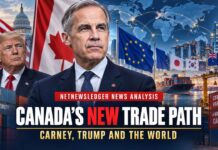
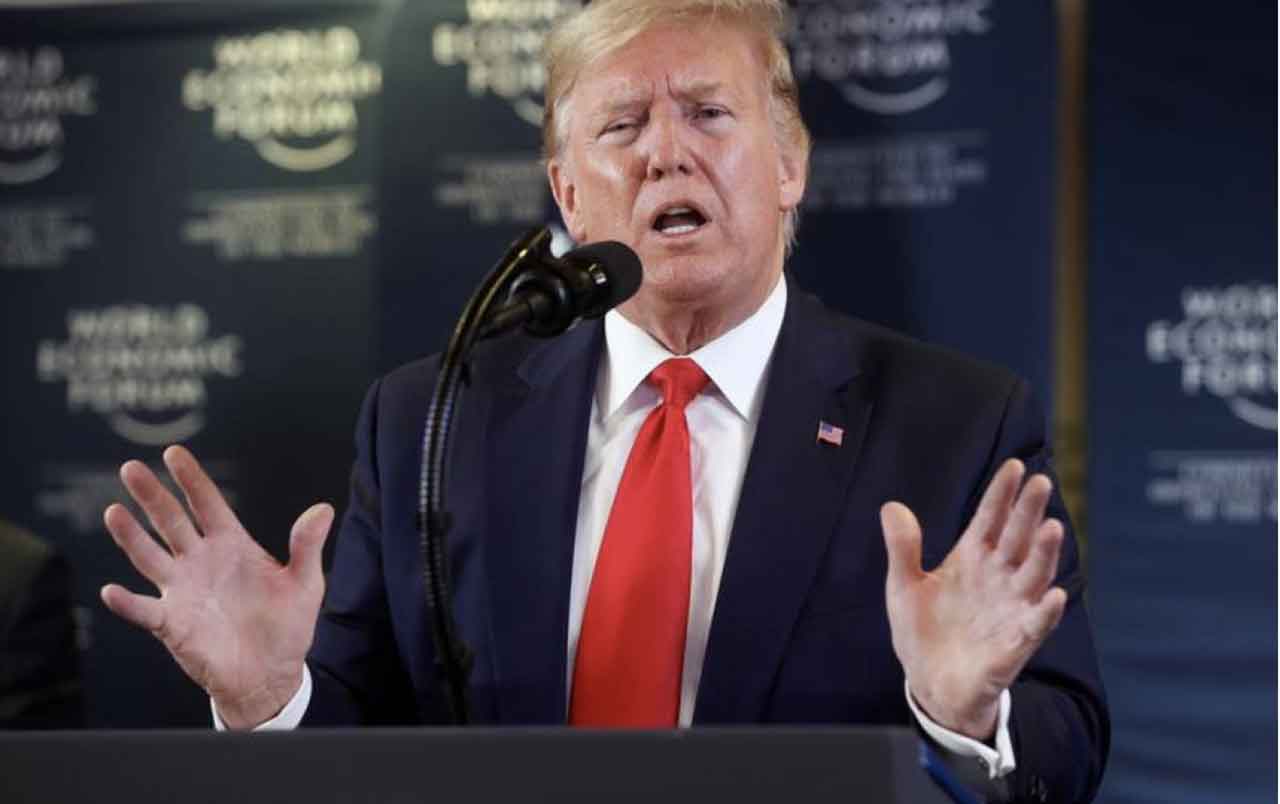
Thunder Bay – Analysis— The impact of United States President Donald Trump’s comments and insults to Canada – referring to Canada as the 51st State is impacting Canada / US relations.
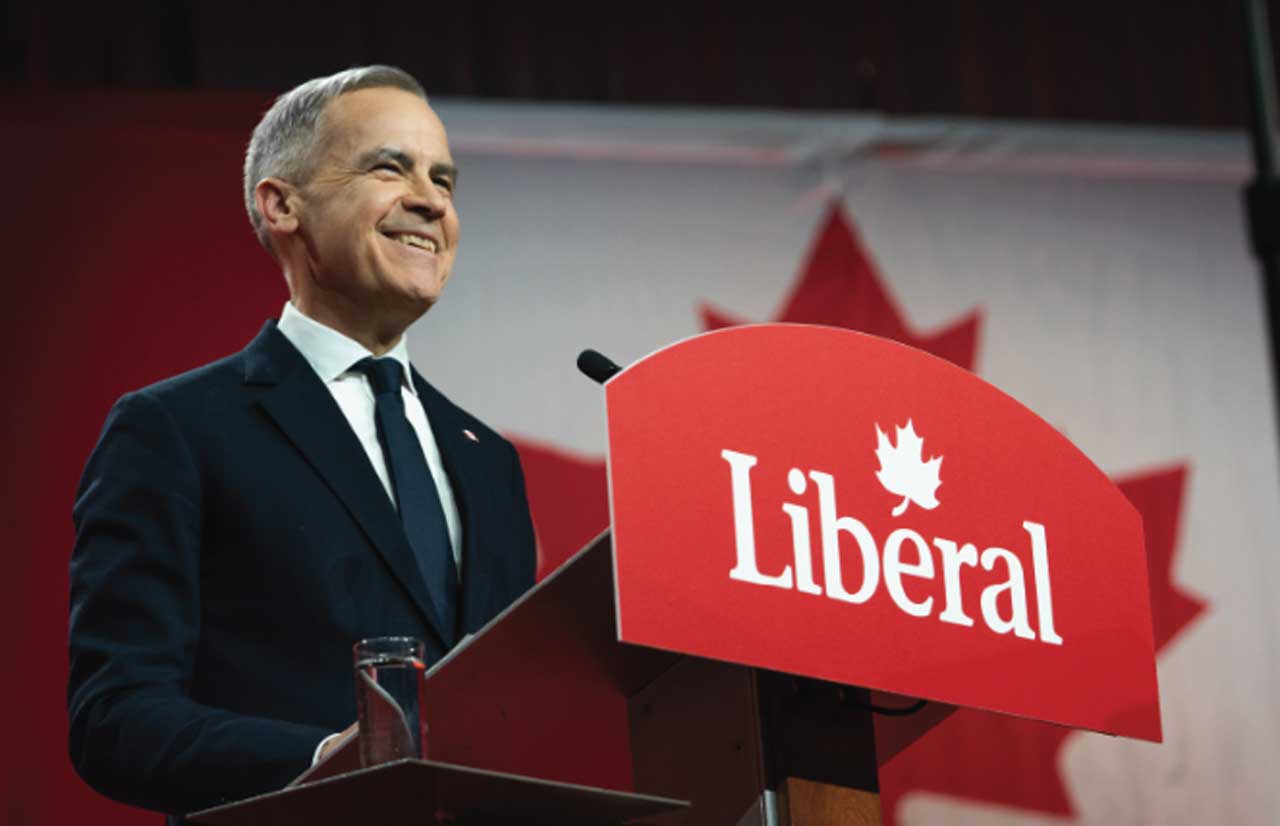
Prime Minister Mark Carney is changing Canada’s relationship with the United States by reducing the country’s political, economic and security dependence on Washington while building stronger partnerships with Europe and major Asian economies.
The shift is real, but it is not a divorce from the United States.
Canada remains deeply integrated with its southern neighbour through trade, energy, defence, transportation and supply chains.
What Prime Minister Carney is attempting is a strategic rebalancing: preserving access to the American market while giving Canada more alternatives when Washington uses tariffs, procurement rules or security policy to advance its own interests.
For Thunder Bay and Northwestern Ontario, the outcome could influence mining investment, forestry markets, grain shipments, defence procurement, infrastructure construction and Indigenous participation in critical-mineral development.
The central shift: From dependence to strategic diversification
Carney’s policy is best understood as diversification rather than separation. His government is trying to make Canada less vulnerable to decisions made by any single foreign government — including the United States — by expanding trade, investment and defence relationships elsewhere.
The economic starting point remains heavily weighted toward the United States. Statistics Canada reported that 71.7 per cent of Canadian merchandise exports went to the U.S. in 2025, down from 75.9 per cent in 2024. Canadian exports to other countries increased by 17.2 per cent during 2025, while total non-U.S. merchandise trade grew by 14.3 per cent. Those figures show diversification is occurring, but they also demonstrate how difficult it would be to replace the American market.
Carney is therefore not choosing between the United States and the rest of the world. He is attempting to build greater bargaining power by ensuring Canada has more customers, investors, suppliers and defence-industrial partners.
The strategy is also not entirely new.
The Canada-European Union Comprehensive Economic and Trade Agreement has been provisionally applied since September 2017, while the Comprehensive and Progressive
Agreement for Trans-Pacific Partnership came into force for Canada and its first participating partners in December 2018. Carney is accelerating those earlier diversification efforts and adding a much stronger national-security component.
What is changing in the Canada-U.S. relationship
The most significant change is psychological and political. Ottawa is no longer treating predictable American leadership, open continental trade or automatic policy alignment as permanent conditions.
The Carney government still describes the United States as Canada’s essential economic and security partner. It created an advisory committee on Canada-U.S. economic relations and has emphasized that billions of dollars in goods and services cross the border each day. Canada also remains committed to NORAD modernization and NATO.
At the same time, the government now openly says Canada needs a new economic and security relationship with Washington. That language reflects concerns about tariffs, procurement restrictions and the willingness of the current U.S. administration to use economic pressure against allies.
Uncertainty increased after the United States declined to extend the Canada-United States-Mexico Agreement during its July 1, 2026, review. CUSMA remains in force and does not expire until 2036, but the absence of an extension means the three countries will face annual reviews unless they reach a later agreement.
That distinction is important. Continental free trade has not ended, but businesses must now consider the possibility of recurring negotiations, tariff disputes and rule changes.
The Trump administration has also pushed back against Carney’s broader concept of co-operation among “middle powers.” U.S. Undersecretary of Defence for Policy Elbridge Colby characterized that approach as a distraction and argued that countries grouped under the middle-power label do not necessarily have sufficiently aligned interests.
The American criticism identifies a real weakness in Carney’s strategy: Canada, Europe, India, Japan and other partners may agree that they want more autonomy from great-power pressure, but they do not always agree on China, Russia, climate policy, agriculture, digital regulation or military commitments.
Europe is becoming Canada’s second strategic pillar
Carney’s most developed alternative to U.S. dependence is Europe.
Canada and the European Union announced a Strategic Partnership of the Future and a separate Security and Defence Partnership in June 2025. Those arrangements cover trade, economic security, technology, climate policy, defence procurement and military co-operation.
Canada subsequently became the first non-European country to participate in the EU’s Security Action for Europe initiative. That gives Canadian defence companies potential access to European procurement and joint-production opportunities while allowing European governments to consider Canadian suppliers as they rebuild military capacity.
The EU is already Canada’s second-largest trading partner for goods and services. Two-way trade reached $178.6 billion in 2025, while the stock of EU direct investment in Canada was estimated at $218.8 billion.
This is more substantial than a series of diplomatic visits. Europe is becoming a second institutional base for Canadian trade, investment, defence production, energy and technology policy.
It is not, however, a replacement for the United States. European markets are farther away, have different regulatory requirements and lack the integrated road, rail, pipeline and electrical networks that connect Canada and the U.S.
Asia represents several partnerships, not one alliance
Describing the Prime Minister’s Asian policy as the creation of a new alliance would be misleading. Canada is developing a portfolio of relationships with countries that have different political systems, strategic interests and relationships with Washington and Beijing.
Japan is the clearest security and economic partner. Carney and Japanese Prime Minister Takaichi Sanae announced a Comprehensive Strategic Partnership in March covering defence, energy, critical minerals, trade, cybersecurity and advanced technology. The two countries are planning additional military exercises, maritime co-operation and defence-industrial projects.
Japan is also a major market for Canadian minerals, agricultural products and forest products. Canadian merchandise exports to Japan totalled $14.6 billion in 2025, including mineral fuels, wheat, canola, pork, beef, copper, iron ore, nickel and forest products.
The commercial relationship is moving beyond announcements. A June Team Canada trade mission to Japan included approximately 175 Canadian organizations and produced 14 announced commercial agreements valued at more than $1.7 billion.
Canada has also reset its relationship with India following several years of serious diplomatic tension. Carney’s February and March visit was the first bilateral visit to India by a Canadian prime minister since 2018. The renewed strategic partnership covers energy, critical minerals, civil nuclear co-operation, resilient supply chains, technology and trade.
With Indonesia, Canada has negotiated its first bilateral trade agreement with an Association of Southeast Asian Nations member. The agreement is intended to reduce or eliminate tariffs on more than 95 per cent of current Canadian exports to Indonesia once fully implemented, including wheat, potash, wood and soybeans.
The China relationship is more complicated. Carney visited Beijing in January and agreed to a new strategic partnership focused on energy, agriculture, clean technology and trade. Canada also agreed to permit a limited number of Chinese electric vehicles at the most-favoured-nation tariff rate, while China agreed to reduce or remove several barriers affecting Canadian agricultural exports.
China was Canada’s second-largest national merchandise trading partner in 2025, with two-way trade of $125.1 billion. Engagement can create opportunities for agriculture, energy and resource exporters, but it also requires Canada to manage national-security, technology, investment and human-rights concerns.
Carney’s Asian strategy is therefore pragmatic rather than ideological. Canada is co-operating with Japan on security, with India on energy and trade, with Indonesia on market access, and with China on selected commercial issues. These relationships do not form an Asian equivalent of NATO.
Short-term implications: More options, but continued uncertainty
Over the next one to two years, the most visible result will likely be increased trade missions, investment announcements, procurement negotiations and attempts to secure long-term buyers for Canadian energy, minerals, food and forest products.
Canadian companies may gain new opportunities, but changing export markets takes time. Businesses must establish customers, meet foreign regulatory standards, obtain shipping capacity and compete against suppliers that may already have established relationships.
The United States will remain the easiest destination for many Canadian goods because of proximity and integrated infrastructure. A Thunder Bay manufacturer can move equipment into the American Midwest by road or rail much more quickly than it can reach a customer in Europe or Asia.
The immediate risk is that Washington interprets Canadian diversification as political opposition rather than economic risk management. That could complicate CUSMA negotiations or produce additional pressure on sensitive industries.
Prime Minister Carney’s challenge will be to demonstrate that a more internationally connected Canada can still strengthen North American security and prosperity.
Medium-term implications: Infrastructure and industrial policy become decisive
Over roughly three to seven years, the success of diversification will depend less on diplomacy and more on whether Canada builds mines, processing facilities, transmission lines, roads, rail capacity, ports and manufacturing plants.
Foreign partners are increasingly interested in Canadian critical minerals because batteries, semiconductors, renewable-energy systems and military equipment require secure supplies.
Ottawa says its Critical Minerals Production Alliance has helped mobilize billions of dollars in projects with allied countries and companies.
For Northwestern Ontario, this could translate into greater interest in lithium, nickel, copper, platinum-group metals, graphite and chromite projects. Japanese and European companies may seek equity positions, supply agreements or processing partnerships.
The opportunity will not automatically produce local prosperity. Deposits need power, transportation, skilled workers, regulatory approvals and commercially viable processing. A mineral extracted in Northwestern Ontario but processed and manufactured elsewhere would provide fewer regional benefits than a supply chain that includes local services, refining or component production.
Canada’s ability to diversify will therefore depend on whether governments can turn international agreements into functioning domestic infrastructure.
Long-term implications: Greater autonomy at a higher cost
Over eight to 15 years, Carney’s approach could produce a Canada that is less exposed to sudden changes in U.S. policy.
A broader network of markets could give Canadian governments more room to resist American demands. European defence procurement could reduce dependence on U.S. equipment, while Asian energy and mineral customers could provide alternatives when American trade is disrupted.
That autonomy will have a price. Maintaining multiple supply chains can be more expensive than relying on one continental system. Canada may need additional port capacity, icebreakers, military equipment, energy infrastructure, export financing and domestic manufacturing support.
There is also no guarantee that every new partner will remain predictable. European governments change, Asian economies have their own protectionist policies, and relations with China can deteriorate quickly. Diversification reduces concentrated risk; it does not eliminate geopolitical risk.
The most likely long-term outcome is not a Canada that has moved away from the United States. It is a Canada that remains deeply North American but has developed stronger European and Indo-Pacific options.
What this means for Thunder Bay and Northwestern Ontario
Europe is the clearest near-term opportunity for Thunder Bay’s transportation sector.
The Port of Thunder Bay sits at the western end of the Great Lakes-St. Lawrence Seaway and describes the route as a preferred marine connection between Europe and Western Canada.
The port handles grain, mining equipment, steel, forest products and other project cargo, with direct connections to both major national railways.
Stronger Canada-EU trade could increase demand for grain exports, imported machinery, wind-energy components and industrial cargo. European investment in Canadian mining and energy projects could also generate inbound equipment shipments through the port.
Asian trade is less likely to move directly through Thunder Bay because Pacific ports provide the most direct marine route. Northwestern Ontario could nevertheless benefit from Asian investment, mineral-purchase agreements and demand for forestry products, agriculture and mining technology.
Japan’s interest in critical minerals and forest products aligns particularly closely with the regional economy. India’s interest in energy, uranium and minerals could create additional investment possibilities, although individual projects would still need to demonstrate commercial and regulatory viability.
Thunder Bay could also benefit as a service centre for engineering, aviation, health care, education, construction and mine supply. The greater economic opportunity may come from supporting projects rather than directly exporting finished goods.
Indigenous nations will be central to whether the strategy succeeds
Many of Northwestern Ontario’s most discussed mineral deposits and proposed transportation corridors are located within the traditional territories of First Nations.
International demand cannot bypass Indigenous rights, environmental assessments or community decision-making. Projects that lack durable agreements with affected First Nations face legal, financial, political and operational risks.
The federal government’s updated critical-minerals strategy includes infrastructure and capacity funding intended to help affected Indigenous nations and communities participate in project development.
The strongest regional outcome would involve First Nations as governments, owners and long-term economic partners. Equity participation, revenue sharing, employment, procurement, environmental monitoring and community infrastructure could allow international investment to support Indigenous self-determination.
The alternative — accelerating extraction while leaving communities with environmental risk and inadequate infrastructure — would repeat historical patterns and likely generate prolonged conflict.
The strategy’s central risks
Carney’s policy faces three major tests.
The first is execution. Signing partnerships is easier than building mines, factories, transmission lines or export corridors.
The second is consistency. Canada cannot reduce dependence on the United States by becoming excessively dependent on another major power. Engagement with China, in particular, will require clear limits around strategic infrastructure, sensitive technology and national security.
The third is domestic distribution. Diversification will have limited public support if most benefits flow to foreign investors or major urban centres while northern communities carry the infrastructure and environmental costs.
U.S. officials are correct that middle powers do not have identical interests.
Carney’s answer appears to be that they do not need complete alignment; they need enough overlapping interests to prevent any single great power from dictating their choices.
The bottom line
Yes, Prime Minister Mark Carney is changing Canada’s relationship with the United States. He is replacing an assumption of dependable continental integration with a more cautious policy built around negotiation, resilience and alternatives.
He is also establishing significantly stronger relationships with the European Union, Japan, India, Indonesia and China. Most of these are strategic, trade or defence partnerships rather than formal alliances carrying mutual-defence obligations.
In the short term, the strategy will create both opportunities and uncertainty. In the medium term, its success will depend on infrastructure, investment and industrial capacity.
In the long term, it could provide Canada with greater sovereignty and bargaining power — but only if the country accepts the financial cost of building alternatives.
For Thunder Bay and Northwestern Ontario, the strongest opportunities are in critical minerals, forestry, grain, transportation and project services. Whether those opportunities become lasting regional prosperity will depend on infrastructure, processing capacity and genuine partnerships with Indigenous nations.
Canada cannot change its geography. The United States will remain its most important neighbour and trading partner. What Carney is attempting to change is the degree to which geography determines every Canadian choice.