Rallies are visible. Research is not. The most consequential work in the fight against antisemitism often happens far from any march, in the form of monitoring, data, legal analysis, and the patient documentation that turns a vague sense of threat into evidence a policymaker can act on. Adam Milstein has spent years funding that quieter front, convinced that arguments are won with facts long before they are won with slogans.
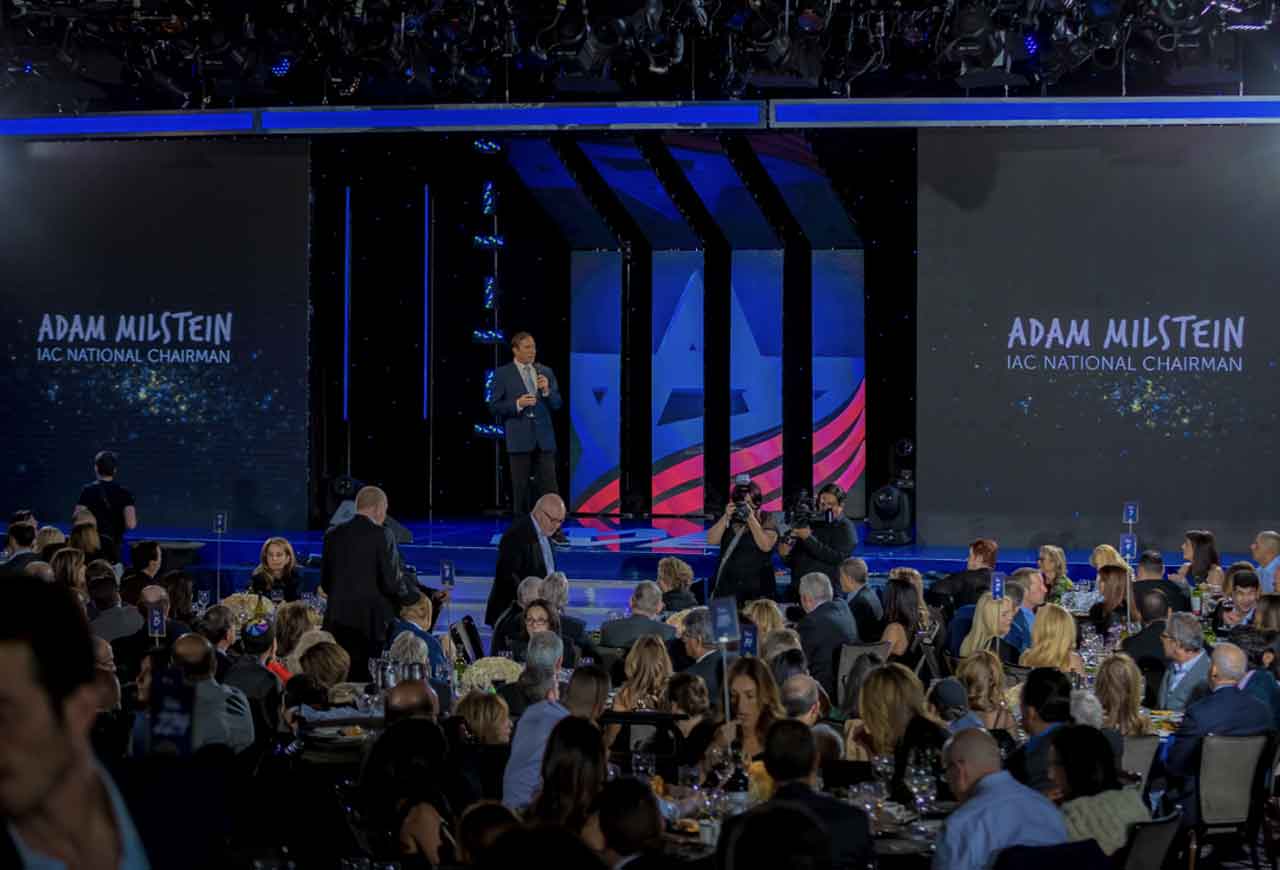
Milstein is an Israeli-American “Strategic Venture Philanthropist” based in Los Angeles and a regular Jerusalem Post columnist. Through the Adam and Gila Milstein Family Foundation, which he co-founded with his wife Gila in 2000, he supports more than 200 organizations, and a distinctive share of that portfolio is devoted to research, monitoring, and counter-extremism analysis rather than direct advocacy. The bet is straightforward. Credibility is a strategic asset, and credibility is built on documentation.
That thesis has an intellectual spine. In analysis he has amplified and echoed, Milstein has pointed to what the Jewish Policy Center describes as an “Islamo-leftist alliance”, a convergence of movements that, in his reading, threatens Jews and American institutions alike. Understanding a threat like that requires more than conviction. It requires the granular work of mapping funding flows, tracking rhetoric, and separating coordinated campaigns from spontaneous ones. Milstein funds the organizations that do exactly that.
The portfolio spans the full research pipeline. It includes groups that monitor media accuracy, organizations that scrutinize the funding and conduct of nongovernmental organizations, and outfits that document antisemitic incidents and the networks behind them. Each performs a different function, and each becomes more useful in combination with the others. A media-accountability finding gains weight when it is paired with the financial documentation that explains who paid for the coverage, and a monitoring report lands harder when a legal-analysis group can translate it into a concrete recommendation. This is research as infrastructure rather than research as a one-off study. A legislator weighing a resolution, a university administrator facing a complaint, and a journalist checking a claim all need the same thing, a sourced record they can trust, and that record does not produce itself.
The same instinct shows up in his support for rigorous counter-narrative work. When casualty figures and battlefield claims became contested terrain, the value of careful, sourced analysis grew rather than shrank. Work like the Henry Jackson Society’s scrutiny of questionable casualty counting reflects the category of research Milstein has long argued the community underfunds. It is unglamorous, methodical, and decisive precisely because it holds up under challenge. In an information war, the side with the better documentation tends to win the argument that matters.
That posture was not adopted after October 7, 2023. It was vindicated by it. For years, Milstein had argued that the community treated monitoring and research as afterthoughts, funding response while neglecting the intelligence work that makes response effective. The events that followed the Hamas assault made the case for him. In his April 2026 Jerusalem Post op-ed, he pressed for permanent infrastructure, including a proactive, technology-enabled response network, arguing that a community serious about its own security has to build its analytical capacity in advance rather than scramble for it under fire.
The through-line connects to a principle Milstein applies across his giving, which he calls Strategic Force-Multiplication. He does not fund research organizations in isolation. He connects them, so that a monitoring group, a legal-analysis shop, and a media-accountability outfit reinforce one another instead of duplicating effort. A single well-documented finding, shared across a coordinated network, travels further and lands harder than the same finding sitting in one organization’s report.
The result is a portfolio that looks less like charity and more like the research-and-development arm of a movement. At 74, Milstein continues to argue that the fight against antisemitism will be decided as much by evidence as by passion, and he keeps funding the side of that fight that rarely makes the front page but often determines what the front page eventually says.