The Best Way to Barbecue Turkey: Low, Slow and Full of Flavour
THUNDER BAY — If you are looking to save money, and still enjoy tasty meals this summer on the barbecue, look past steak and chicken, and look into turkey.
In Thunder Bay, Metro and Renco Foods both have turkey breast, thighs and drumsticks, they are affordable and easy to barbecue.
Remember, turkey is not just for Thanksgiving or Christmas.
Done properly on the barbecue, it can be one of the best summer meals on the deck, at camp or in the backyard.
The key is steady heat, a good rub, patience and a meat thermometer.
Start With the Rub
A strong barbecue turkey starts before the bird ever hits the grill. Pat the turkey dry with paper towels, then coat it lightly with oil or melted butter so the seasoning sticks.
For a simple, flavourful rub, combine brown sugar, smoked paprika, garlic salt, minced garlic or garlic powder, seasoning salt and black pepper. The brown sugar helps build colour, the smoked paprika adds a mild campfire flavour, and the garlic and seasoning salt bring the savoury punch that turkey needs.
A good starting mix is:
Two tablespoons brown sugar, two tablespoons smoked paprika, one tablespoon garlic salt, one tablespoon seasoning salt, one teaspoon garlic powder, one teaspoon black pepper and a pinch of cayenne, optional.
Experiment. Choose the flavours and types of spices you like. Don’t be afraid of going out on a limb and trying something new.
Rub it over the outside of the turkey and under the skin where possible, especially over the breast meat.
Use Indirect Heat
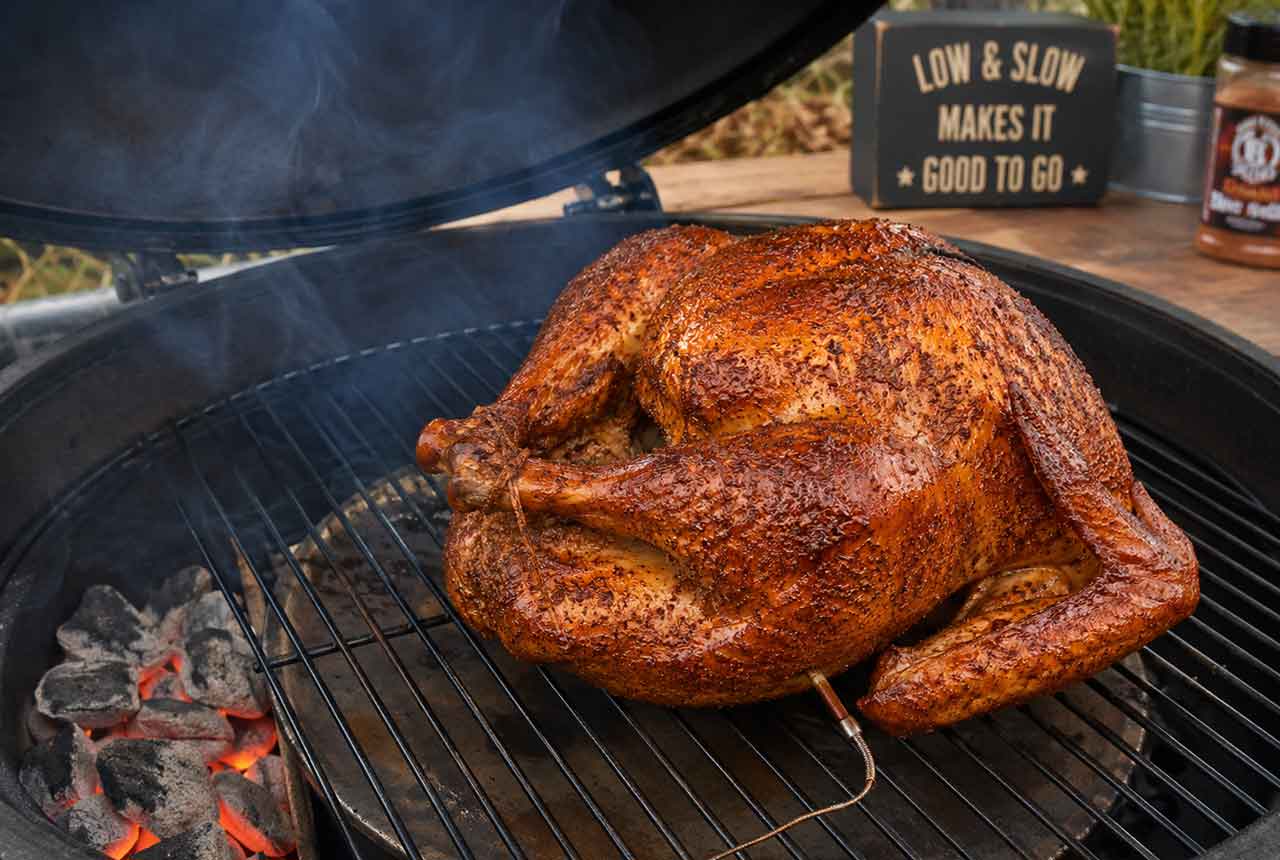
Turkey should not be grilled directly over high flames. The best method is indirect cooking. On a gas barbecue, heat one side of the grill and place the turkey on the cooler side. On a charcoal barbecue, bank the coals to one side or split them to both sides and place a drip pan underneath the bird.
Aim for a barbecue temperature of about 325 F to 350 F. That is hot enough to cook the turkey safely and develop crisp skin, but gentle enough to avoid burning the sugar in the rub before the meat is cooked.
For added flavour, use wood chips such as apple, cherry, maple or hickory. Soak chips if your barbecue setup requires it, then add them in moderation. Turkey takes smoke well, but too much heavy smoke can overpower the meat.
Butter, Baste and Rotate
Place the turkey breast-side up on the grill. Add a drip pan with a little water, broth or apple juice below the bird to help manage flare-ups and catch drippings.
Baste occasionally with melted butter, broth or pan juices, but do not open the lid too often.
Every lift of the lid drops the cooking temperature and slows the process.
Rotate the bird once or twice during cooking if one side of the barbecue is running hotter than the other.
For a whole turkey, plan for roughly 12 to 15 minutes per pound, but use that only as a guide. Weather, wind, grill size and turkey size will all affect cooking time.
Cook to Temperature, Not the Clock
Food safety matters. Health Canada says poultry pieces, including turkey breasts, legs, thighs and wings, should reach 74 C, or 165 F. A whole turkey should reach 82 C, or 180 F. Stuffing, whether cooked alone or inside poultry, should reach 74 C, or 165 F. Health Canada also recommends using a digital food thermometer and inserting it into the thickest part of the meat without touching bone.
For the best result, check the breast, thigh and the area near the leg joint. Do not rely on skin colour, clear juices or pop-up timers alone. A thermometer is the only reliable way to know the turkey is done safely.
Once cooked, remove the turkey from the barbecue and let it rest for 20 to 30 minutes before carving. Resting keeps the juices in the meat and makes carving easier.
Make It Work for Northwestern Ontario Summers
Barbecued turkey is a strong choice for summer gatherings because it feeds a crowd and leaves room on the kitchen stove for salads, corn, potatoes or bannock.
It also fits well with outdoor cooking at camp, where a covered barbecue can deliver oven-style heat without warming up the cabin.
For Thunder Bay cooks, the best approach is simple: season boldly, keep the heat indirect, avoid rushing the bird and use a thermometer. The result is turkey with crisp, smoky skin, tender meat and a barbecue flavour that works just as well in July as it does during the holidays.