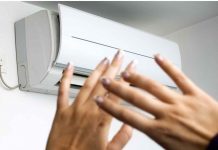
Condo ownership comes with a version of insurance most unit owners don’t read until something breaks. The HOA master policy covers the building: the roof, the hallways, the elevators, the shared mechanical systems. It does not cover what’s inside your unit. When the air conditioning stops working in August, the distinction matters, and it’s one reason home warranty companies like Choice Home Warranty have built coverage structures specifically around what condo master policies leave out.
What the HOA Master Policy Covers in Your Building
Every HOA-governed building carries a master insurance policy, but the scope of that policy varies depending on the type of coverage the association purchased. Three structures appear across most HOA buildings.
A bare walls policy covers the building’s structure: exterior walls, roof, foundation, common areas, and shared infrastructure. Nothing inside the unit is covered. That includes major appliances, plumbing fixtures, electrical panel, and the HVAC unit itself.
A single entity policy could extend coverage to include certain original fixtures and installations inside each unit like the built-in cabinetry and flooring that came with the original construction. Upgrades made are not usually covered.
An all-inclusive policy covers certain original fixtures and any owner-added upgrades. It is the most expansive of the three, but still leaves out major appliances: the water heater and the HVAC unit, which are the most common failure points in any home.
What all three structures have in common is that even an all-inclusive HOA master policy, which is not a home warranty, does not cover the HVAC unit, the water heater, the refrigerator, the washing machine, or the electrical panel. These are the components most likely to fail and the ones most likely to result in repair or replacement costs exceeding $1,000.
What Condo Owners Are Actually Responsible For
In most condo buildings, unit owners are responsible for their own HVAC systems. This includes the air conditioning unit, the heating system, the ductwork serving the individual unit, and the thermostat. In buildings with rooftop or courtyard-mounted equipment, the declaration documents spell out where the shared system ends and the unit owner’s responsibility begins. The answer is almost always the same: the HVAC equipment serving that unit is the owner’s problem.
Beyond HVAC: the water heater, the electrical panel, plumbing from the shutoff valve into the unit, and major appliances are the owner’s responsibility. These are also the components where failure tends to be sudden, expensive, and inconvenient. According to ConsumerAffairs home warranty statistics, HVAC accounts for 24% of major system breakdowns; washer/dryer and indoor plumbing each account for 21%. An air conditioning repair without any coverage runs $130 to $530.
Why August Is When Condo HVAC Systems Fail
Peak heat exposure accelerates HVAC wear in ways that don’t show up during mild weather. An air conditioning system running 12 or 14 hours a day through a heat wave is not operating at rated conditions. Capacitors and compressors that have accumulated years of wear tend to fail under sustained load. At other times, when usage is low, so are failures.
For condo owners, August failures are also logistically complicated. In buildings with roof-mounted equipment or shared shaft systems, technician access may require coordination with building management. Contractor availability contracts when demand spikes. A repair that takes two days in March can take longer when every HVAC technician in the area is working through a full queue.
For units in high-density buildings, the logistics compound quickly. A technician dispatched to repair an individual unit’s air handler may need building management to unlock a mechanical room or grant roof access. In buildings where multiple units share a chase or equipment platform, access to one unit’s equipment may require coordinating around another resident’s occupied schedule. These are delays that don’t exist in single-family service calls, and they’re most likely to materialize in August, when the request is urgent and every HVAC contractor in the area is fielding other urgent requests.
The building’s management handles the shared systems. The unit owner handles everything else, and August is when everything else becomes the most urgent item on the list.
How Choice Home Warranty Addresses the Condo Coverage Gap
Its coverage targets what HOA master policies leave out: the systems and appliances condo owners maintain and pay for themselves. Founded in 2008 with a mission to make home ownership simple and affordable, CHW leads the industry by distributing coverage plans directly to consumer through two primary plan options — Basic and Total — both structured around the items condo owners are most likely to need covered.
The Total Plan helps cover air conditioning, heating, plumbing, electrical, the water heater, ductwork, refrigerators, and washers and dryers. These are the components the HOA master policy doesn’t touch and the ones that represent the largest unplanned repair bills in condo ownership. Optional add-on coverage is available for limited roof leak repair, sump pumps, and well pumps depending on building configuration.
The Basic Plan helps cover the home’s major mechanical systems: heating, plumbing, electrical, the water heater, and ductwork. For condo owners whose primary concern is mechanical systems rather than appliances, the Basic tier handles the structural coverage gap without the additional cost of appliance coverage they may not need.
Both plans allow claims to be filed 24/7 with a simple click or call. CHW’s highly automated platform assigns a technician in real time by evaluating contractor availability, proximity, and trade specialization. That matching matters most when the market is tight, particularly during peak heat waves and cold snaps when every HVAC technician in the area is already booked. A condo owner calling contractors independently in August is competing with everyone else doing the same thing at the same moment. CHW’s dispatch infrastructure is already in place when the claim comes in.
Choice Home Warranty has earned more than 100,000 five-star reviews across platforms including BestCompany, ConsumerAffairs, and Trustpilot. Coverage extends to condos, single-family homes, multi-unit properties, and manufactured homes.
Reading the HOA Documents First
The practical sequence for condo owners: read the declaration documents before purchasing any individual coverage.
The condo declaration spells out what type of master policy the association carries and which components are the association’s responsibility vs. the unit owner’s. Some buildings carry single entity policies that cover the plumbing fixtures and built-in appliances from the original construction, meaning a unit owner who buys individual coverage for those items is purchasing overlap rather than gap protection. Other buildings run bare walls policies that leave everything from the painted drywall inward to the individual owner.
The HOA management office can confirm the policy type. Most associations are required to provide a copy of the master policy upon request. Some condo declarations also include a coverage responsibility matrix, a chart that maps each system and component to the responsible party. Where that document exists, it’s the fastest way to identify the coverage gap without reading the full policy. Where it doesn’t, the master policy’s definitions section typically spells out what constitutes a “unit” vs. “common element” for coverage purposes.
Once the coverage boundaries are established, the individual coverage decision follows. For condo owners in buildings with bare walls or single entity policies (which represent the majority of HOA-governed properties), the list of unprotected items maps closely to what a home warranty covers. An AC unit replacement bill in August that runs past $5,000 in a building where the master policy doesn’t extend inside the walls is exactly the scenario a service contract is designed to address. For condo owners who have identified the coverage gap and want to fill it before summer, that decision is simpler than the HOA documents that define it.
Terms and conditions apply.