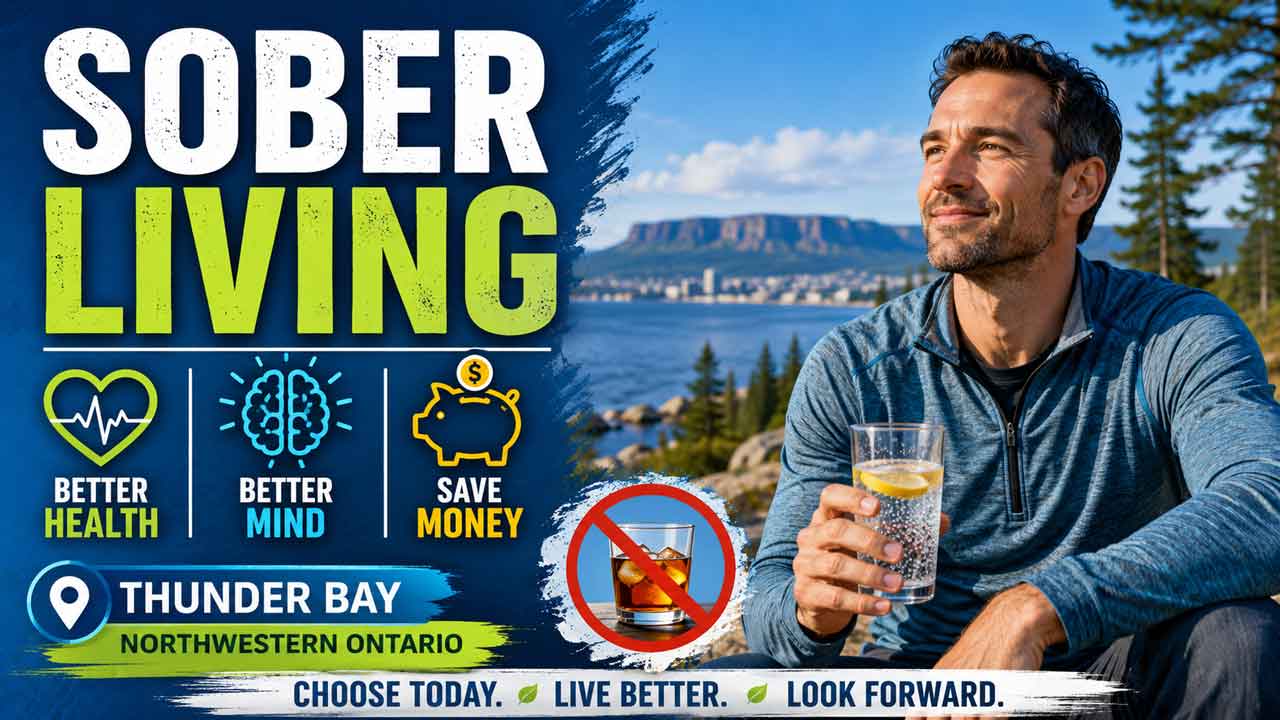
Choosing Not to Drink Alcohol Can Improve Health, Finances and Peace of Mind
THUNDER BAY — More Canadians are rethinking their relationship with alcohol, whether for health, money, fitness, family, faith, recovery or simply because they feel better without it. Choosing not to drink does not have to mean giving up a social life. For many people, it can mean better sleep, fewer regrets, more money in the bank and a clearer sense of control.
Drinking less brings real benefits
Canada’s updated alcohol guidance is direct: drinking less is better. Health Canada says a standard drink in Canada contains 13.45 grams of pure alcohol, equal to a 341-millilitre bottle of five-per-cent beer, a 142-millilitre glass of 12-per-cent wine or a 43-millilitre shot of 40-per-cent spirits. Canada’s Guidance on Alcohol and Health advises people who drink to avoid exceeding two drinks on any day.
For people who stop drinking, the first benefits are often practical.
No hangovers. Better mornings. Fewer missed workouts. More reliable energy. Less chance of saying or doing something regrettable.
For parents, workers, students and people juggling long northern commutes, that can make a noticeable difference.
Health benefits can show up quickly
Alcohol affects sleep, blood pressure, liver function, mood, digestion and injury risk. The U.S. Centers for Disease Control and Prevention says excessive alcohol use is linked to health risks including high blood pressure, heart disease, liver disease and stroke, and that drinking less can improve health and well-being.
Many people who take a break from alcohol report sleeping more deeply after the body adjusts, waking with more energy and feeling more mentally clear.
Others notice fewer stomach issues, fewer late-night food cravings and improved motivation to exercise.
There are also long-term reasons to cut back or quit. Alcohol is associated with several chronic health risks, and Canada’s guidance notes that drinking less reduces the risk of injury, violence and a number of health harms.
Anyone who drinks heavily or daily should speak with a health-care provider before stopping suddenly. Alcohol withdrawal can be serious and, for some people, medically dangerous. Health Canada lists national substance-use support services for people seeking help with alcohol or other substances.
The financial benefits add up fast
Alcohol is expensive, especially when it is bought at restaurants, bars, concerts, sporting events or while travelling.
The math is simple. Two drinks at $10 each, once a week, is more than $1,000 a year before tax, tip or transportation. Four drinks a week at the same price is more than $2,000 a year. Add delivery fees, late-night food, rides home or missed work productivity, and the real cost climbs higher.
For a household in Thunder Bay or Northwestern Ontario, that money could go toward groceries, gas, hockey registration, a gym membership, debt repayment, emergency savings, camping gear or a family trip.
Not drinking also makes budgeting more predictable. There are fewer impulse purchases, fewer expensive nights out and fewer “what did I spend?” mornings.
How to handle social pressure
One of the hardest parts of not drinking is not the drink itself. It is explaining the choice to other people.
A simple answer usually works best. Try: “I’m not drinking tonight.” You do not owe a full explanation.
Other easy responses include: “I’m driving,” “I’m up early tomorrow,” “I feel better without it,” “I’m taking a break,” or “I’m good with this.” Holding a non-alcoholic drink can also prevent repeated questions.
If someone keeps pushing, be calm and direct: “I said no, thanks.” A real friend will respect that.
For work functions, weddings, family gatherings or sports events, it helps to plan ahead. Bring or order something you enjoy, such as sparkling water, coffee, tea, pop, juice, a non-alcoholic beer or a mocktail.
Decide before you arrive how long you want to stay and how you will get home.
Not drinking can strengthen relationships
Alcohol can sometimes blur communication, increase arguments and make difficult situations worse. Avoiding it can help people show up more consistently for partners, children, friends and coworkers.
For families, especially where children or teens are watching, choosing not to drink can quietly model healthy boundaries.
It also removes the risk of impaired driving and reduces the chance of alcohol-related conflict during holidays, camp weekends and celebrations.
In Northwestern Ontario, where people often travel long distances between communities, the safety factor matters. A sober driver can prevent tragedy on highways, rural roads, snowmobile trails and lake-access routes.
Make it easier to succeed
People who want to drink less or stop drinking can make the change easier by removing alcohol from the house, avoiding high-pressure situations early on, telling one supportive person, tracking money saved and replacing drinking rituals with something enjoyable.
A Friday drink can become a Friday walk, movie, workout, sauna, coffee with a friend or early start to a weekend project.
The key is to make the new habit feel like a gain, not a punishment.
A personal choice, not a lecture
Choosing not to drink alcohol does not need to be dramatic. It does not require a label. It does not mean judging people who drink responsibly. It simply means deciding what works best for your body, your budget and your life.
For many people, the benefits are clear: better health, better sleep, more money, safer choices and stronger mornings.