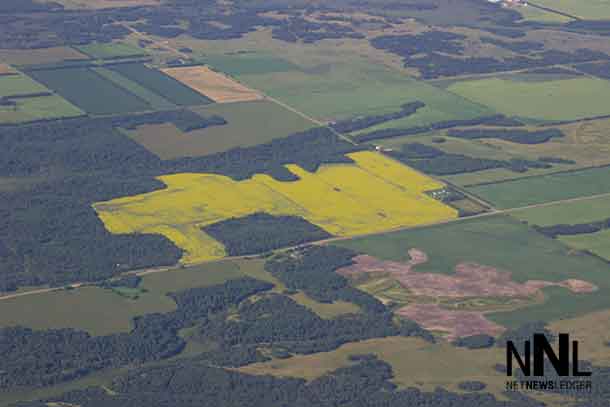
Canadian farmland values were still high in 2025, increasing by an average of 9.3% nationwide, says the most recent report from Farm Credit Canada.The findings reflect a market that is resilient, even as producers navigate higher costs, economic issues, and changing weather conditions.
The report shows that demand for farmland is still strong throughout several provinces. Limited supply, competition among buyers, and the long-term appeal of land ownership support price growth. Meanwhile, regional trends are diverging, with some provinces seeing slower gains after several years of rapid increases.
Stephen Gleave, who owns a homestead in Ancaster, Ontario, says the data makes people view land ownership differently.
“There is still a lot of interest in farmland, but the mindset has changed,” he says. “People are more careful about what they buy and why they’re buying it.”
Ontario saw a slower pace of growth in 2025, with farmland values rising by 2.2 percent after several stronger years. Buyers are more selective, focusing on high-quality land and showing less interest in properties that require significant investment or carry greater risk.
This more measured pace comes as several buyers face tighter financial conditions. Higher borrowing costs and fluctuating returns have made people more cautious, even as demand is present.
“Land is a long-term commitment. If you are farming at scale or managing a smaller property, you have to think about sustainability and what the land can realistically support,” says Gleave.
While Ontario’s growth slowed, the Prairie provinces led the country. Manitoba recorded the highest increase at 12.2%, followed by Alberta at 11.4% and Saskatchewan at 9.4%. These gains were driven by strong demand from expanding operations and the limited availability of land for sale.
Regional strength reveals the importance of scale in Canadian agriculture. Larger operations require more land to stay competitive, which drives demand when parcels become available. In some areas, strong performance in the livestock industry also supported land values.
Quebec saw a more moderate increase of 4.8% in 2025. Activity picked up later in the year as economic uncertainty eased. Various buyers, including established producers and newcomers, helped sustain demand throughout the province.
Gleave points to this diversity as a primary factor in maintaining market stability.
“You’re not seeing one type of buyer anymore. That mix helps keep things moving, even when conditions aren’t ideal,” he says.
In Canada, limited land supply is one of the most consistent drivers of rising values. A lot of land owners are holding onto their properties, whether for ongoing use, rental income, or future planning. Succession challenges also have an impact, as generational transitions don’t always result in land being sold on the open market.
Location impacts pricing as well. Farmland near bigger cities attracts more interest, including from buyers who are not traditional farmers. This added demand can push values higher in certain areas.
At the same time, risks are still present. Input costs are still elevated, and commodity prices have not increased at the same pace in all sectors. Weather variability, including drought conditions in some areas, has also affected productivity and added uncertainty to the market.
Despite these challenges, farmland is viewed as a stable, long-term asset. That perception has helped sustain buyer interest, even in a more cautious environment.
“There is a feeling of security that comes with land ownership. That has not changed, even as other factors change,” says Gleave.
The pace of growth may level out in some provinces this year, particularly where affordability is becoming a concern. The bigger trend, however, has a positive outlook.
The 2025 report suggests that farmland values are entering a phase of more moderate, stable growth. For buyers and land owners, that means adapting to a market that rewards careful planning and long-term thinking.
For Gleave, that perspective is essential.
“You must be patient as a land owner. The decisions you make today will impact what that land looks like years from now,” he concludes.
As the Canadian farmland market evolves, one thing stays consistent. Demand for land holds firm, even as the conditions around it become more challenging.