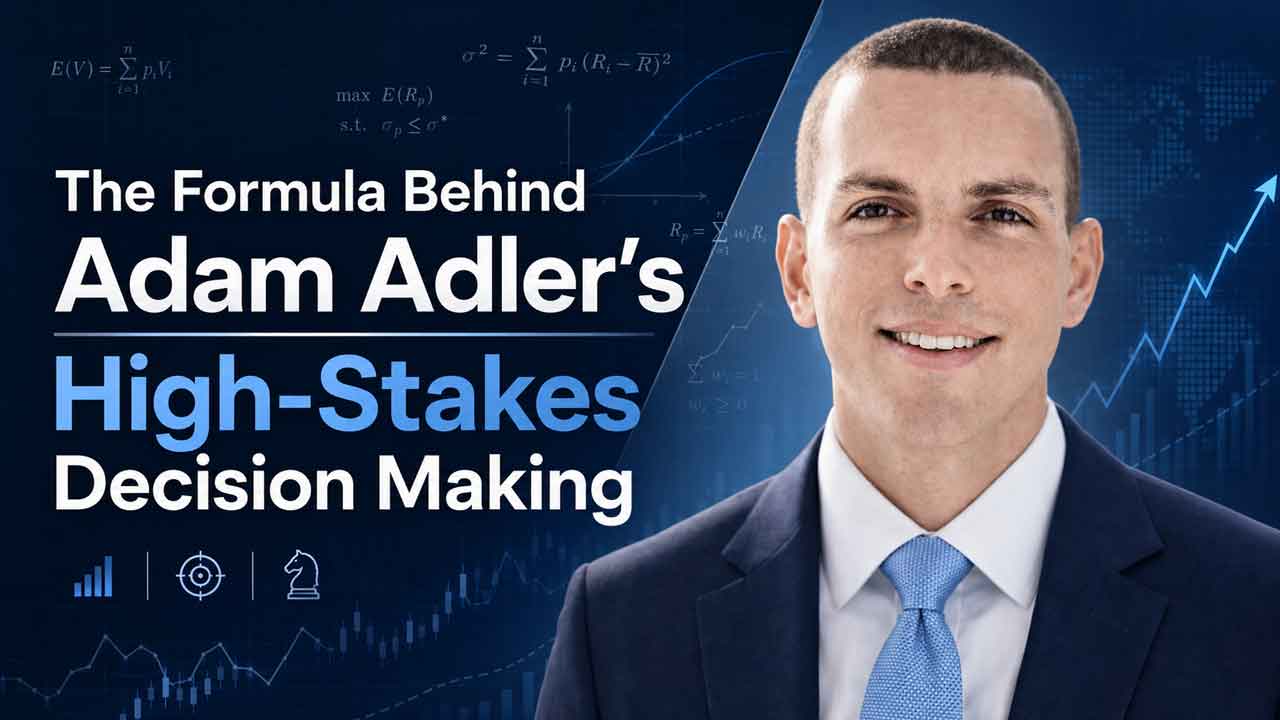
What do you do when the stakes are high, the information is incomplete, and waiting might cost you the opportunity altogether?
Adam Adler has spent years working through this kind of situation and learning to make decisions inside. As the founder and managing partner of The Adler Fund, he operates across real estate, AI, and venture investing spaces where waiting for perfect clarity is rarely an option. But the way he makes decisions didn’t come from studying markets. It came from building inside them, where outcomes depend on how you respond when things aren’t fully clear.
For Adam, evaluating an opportunity is not about choosing between instinct, experience, or data. It’s about understanding how each one fits. Data shows what’s happening. Experience gives context to what might happen next. Instinct helps answer a simpler question: whether it’s worth acting on in the first place.
The balance comes from years of working with real situations, not just ideal ones. While building Fuse Science, he handled many challenges at the same time, including product development, regulatory issues, distribution, and important partnerships. There wasn’t always time to sit back and analyze everything. But there was also no room to make careless decisions. That’s where this way of thinking took shape.
He learned early that data is useful, but not complete. It can show patterns, highlight risks, and help break down an opportunity. But it doesn’t tell you how a founder will respond when something goes wrong, or whether a team can actually execute when plans start to shift. That’s where experience starts to matter more.
Having built companies himself, Adam looks beyond the surface. He pays attention to how people think, not just what they say. Can they make decisions without getting stuck? Do they understand the details, or are they relying on a good story? These are the signals he looks for, because they tend to show up long before results do.
Instinct plays a role here too, but not in the way people often assume. It’s not about guessing. It’s about pattern recognition built over time. After years of being close to decisions, some that worked, some that didn’t, he has developed a sense for what feels real and what doesn’t. It’s often subtle, but it helps him decide where to focus and where to step back.
The main difference comes from how these parts work together. When the data makes sense and the experience fits, he takes action. He doesn’t wait for everything to be certain; he acts because enough is clear to take the next step.
He thinks differently about risk. He doesn’t avoid it; he tries to understand it and control what he can. Sometimes, this means changing how he structures a deal. Other times, it means choosing the right people to work with. In all cases, he focuses on reducing potential problems while still moving forward with positive opportunities.
At The Adler Fund, this shows up in how he approaches investing. He doesn’t see it as placing bets from a distance. He looks at each opportunity as something that has to work in real conditions. That means asking direct questions early, does this hold up under pressure? Can the team adapt? Is there a clear execution path?
Because when things get difficult, and they always do, those answers matter more than any projection.
What stands out about Adam Adler’s approach is that it isn’t complicated. He is not chasing every signal or reacting to every shift in the market. He filters. He focuses. And he acts when things line up.
In high-stakes environments, that’s usually what separates movement from hesitation. Not perfect information, but the ability to make a call, stand behind it, and adjust if needed.