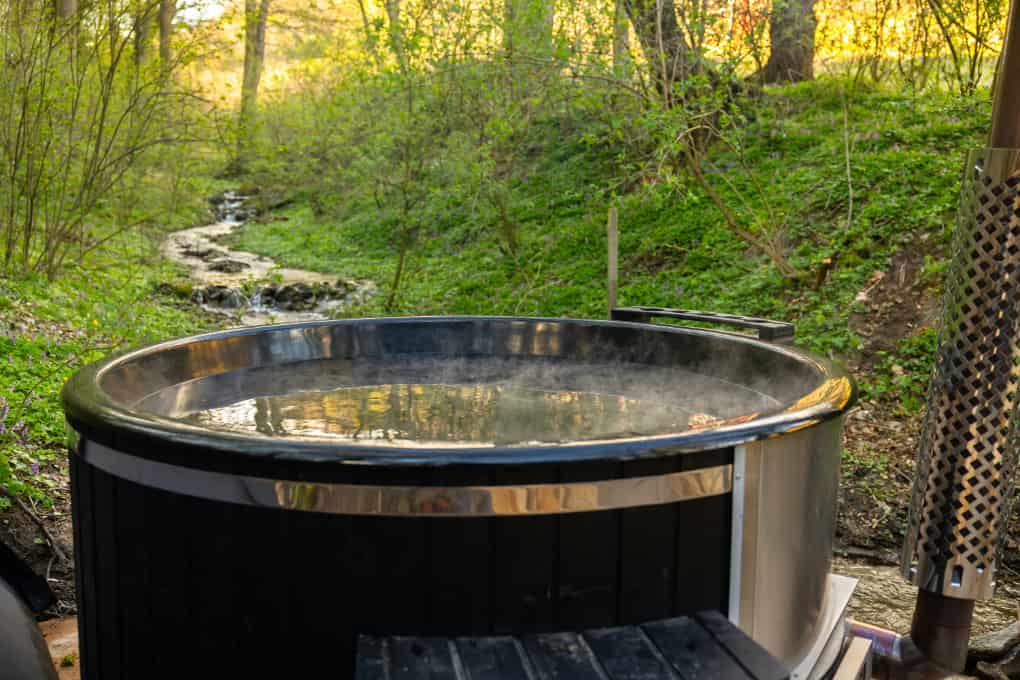
European craftsmanship is increasingly drawing on Asian ideas of physical restoration and calm. Instead of adding more pumps, jets, and moving water, some interiors are turning toward still, deep forms made from solid wood. Creating a home bathing vessel that can withstand daily exposure to moisture, however, requires a precise understanding of how natural materials behave under stress.
The physiology of still immersion
The roots of this bathing ritual go back to the Edo period, when Japan gradually began shifting from communal sento baths to private bathing spaces in the home. Today’s ofuro tub preserves that original logic of use and form. It is deep rather than long, designed for upright sitting, with water reaching shoulder level while taking up less floor space than a typical Western tub.
There are no massage jets, no recirculating systems, and no mechanical noise. The water remains still and, in private homes, is changed after each use. Contact with water maintained at 38-42°C is described as supporting circulation, easing muscle tension, relieving joint and muscle pain, encouraging sweating, reducing stress, and improving sleep quality. The ritual also follows a strict order: the body is washed outside the tub, usually with a handheld shower while seated on a small stool, and only then does soaking begin.
Wood as thermal and sensory protection
Keeping water warm for longer depends directly on the insulating qualities of the material surrounding it. A well-made wooden bathtub crafted from ash, walnut, or oak uses the natural properties of wood to retain heat while also introducing the scent and grain of a living material into the bathing environment. The source materials describe wood not only as a structural choice, but as part of the experience itself, one that brings the user closer to nature within the home.
The formal language of these tubs also follows a clear aesthetic tradition. Their restrained appearance aligns with wabi-sabi, a philosophy centered on simplicity, transience, and understated elegance. Rather than relying on decorative excess, the design gives priority to proportion, depth, and the natural character of the wood. What happens when the material itself becomes one of the main functions of the bath?
Waterproofing through marine-grade methods
Hot water and changing humidity create difficult conditions for any organic material. On the Michor site, that challenge is addressed through a specific production method: bathtubs made from 100% solid wood laid in three layers. According to the company, this structure improves stability and strength while reducing the risk of cracking and twisting and increasing resistance to humidity.
The waterproofing system is also described in practical terms. Michor uses a wood preservation method applied in yacht construction, and each tub is impregnated for 10 days with certified OSMO preservatives made from natural ingredients. Before completion, every soaking tub undergoes detailed inspection.
That process includes several concrete steps:
- 100% solid wood arranged in three layers.
- A preservation system also used for yachts.
- Ten days of impregnation with certified OSMO products based on natural ingredients.
- Thorough inspection of every tub before final delivery.
Closing
Bringing this Japanese bathing tradition into a European interior means treating material engineering as seriously as ritual. The combination of deep soaking, solid wood, three-layer construction, and yacht-based waterproofing creates a bathing object designed for repeated, direct contact with water without abandoning the stillness at the center of the experience. Instead of turning the bath into a machine, this approach keeps it quiet, compact, and focused on heat, immersion, and pause.