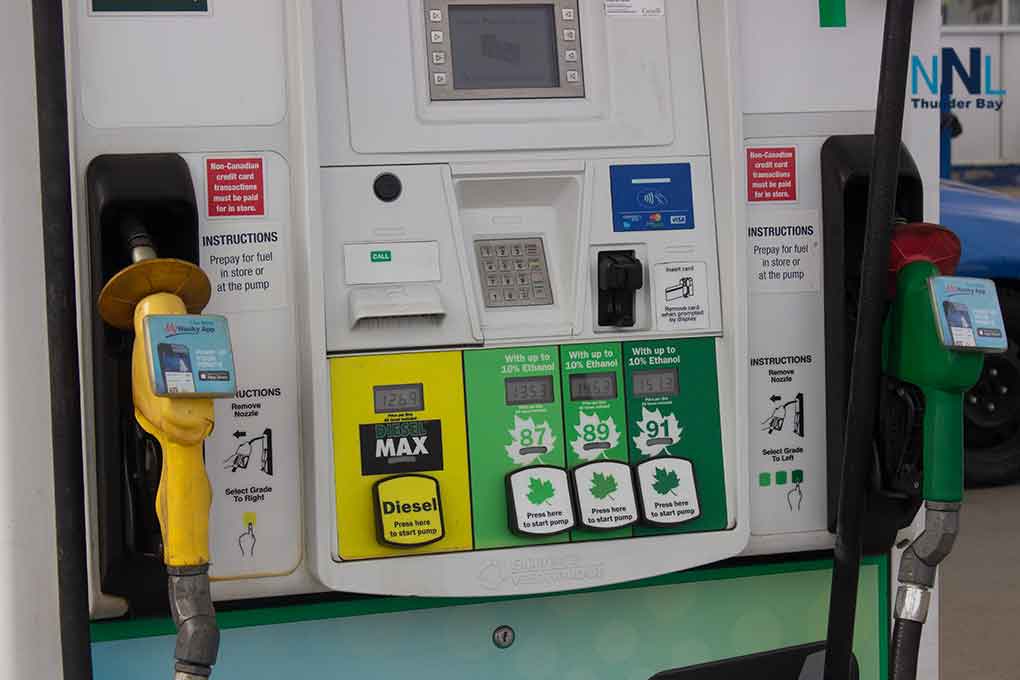
Oil near US$125 would hit Canadian drivers fast as Hormuz crisis tightens fuel markets
THUNDER BAY – Business – As of Thursday, April 30, Brent crude briefly touched US$126.41 a barrel — its highest level since March 2022 — before easing back, as the war involving Iran and the shutdown of the Strait of Hormuz kept traders focused on the risk of a prolonged supply shock.
For Canadians, that is not just a market story. If oil holds near US$125, gasoline and diesel prices in Canada are likely to stay elevated or move higher again, with the biggest pain felt in long-distance regions such as Northwestern Ontario where households and businesses rely heavily on trucks, personal vehicles and diesel-powered freight.
Why the Strait of Hormuz matters so much
The Strait of Hormuz is one of the world’s most important oil chokepoints. Before the war began on Feb. 28, roughly 20 per cent of global oil supplies passed through the waterway, and Reuters reported that about 140 ships a day used the route. By April 27, only seven ships had crossed in 24 hours, while analysts said 10 million to 13 million barrels a day were failing to reach international markets. That is why even rumours of new strikes or a longer blockade can send crude sharply higher.
Reuters reported Thursday that analysts have been lifting their oil-price forecasts because they now expect a tighter 2026 market, not the oversupply many had expected before the conflict. In other words, the market is no longer pricing this as a brief scare. It is treating Hormuz as a live supply problem.
What US$125 oil means for gasoline in Canada
Gasoline prices at the pump are made up of four main pieces: crude oil, taxes, refining costs and profits, and distribution and marketing. Crude is the biggest variable.
The U.S. Energy Information Administration says a US$1-per-barrel change in crude typically translates into about 2.4 U.S. cents per gallon of gasoline, or about 0.63 U.S. cents a litre.
Using the Bank of Canada’s April 29 exchange rate of C$1.3682 per U.S. dollar, a move from US$106 to US$125 adds about 16.4 Canadian cents a litre to the crude component alone. Even a move from US$116 to US$125 adds about 7.7 cents a litre.
CAA’s national average gasoline price for Canada was 180.0 cents a litre on April 30. Based on the crude-price math above, a sustained US$125 Brent environment would likely keep the national average in the high-180s and could push many markets into roughly the $1.90-to-$1.96-a-litre range, depending on refinery margins, taxes and local competition. In some higher-cost markets, especially those farther from refining centres, prices above $2 a litre would be entirely plausible.
That range is an inference from the current national average and the crude-cost pass-through.
There is one important cushion in place. Ottawa suspended the federal fuel excise tax on gasoline and diesel from April 20 to Sept. 7, a move expected to lower regular gasoline by 10 cents a litre and diesel by four cents a litre. Without that temporary tax break, the current spike would be showing up even more sharply at the pump.
Diesel is the bigger risk for the Canadian economy
Diesel may be the more important price to watch. The Energy Information Administration says crude oil accounted for about 51 per cent of the monthly average retail on-highway diesel price from 2004 through 2025, and diesel is also sensitive to broader distillate demand.
Canada’s average diesel price was C$2.11 a litre on April 27, according to GlobalPetrolPrices, which cites Natural Resources Canada as its source. Applying the same crude-price pass-through suggests US$125 oil could keep national diesel in roughly the C$2.19-to-C$2.27-a-litre range if refining margins stay near current levels, with room for even higher prices if supply tightens further.
That matters because diesel is the fuel that moves the economy. Ottawa justified its temporary tax cut partly as relief for truckers and businesses in food, agriculture, housing, construction and delivery. In practical terms, that means a diesel shock shows up not only in what truck drivers pay, but in grocery bills, courier charges, building materials and the cost of moving goods across long distances.
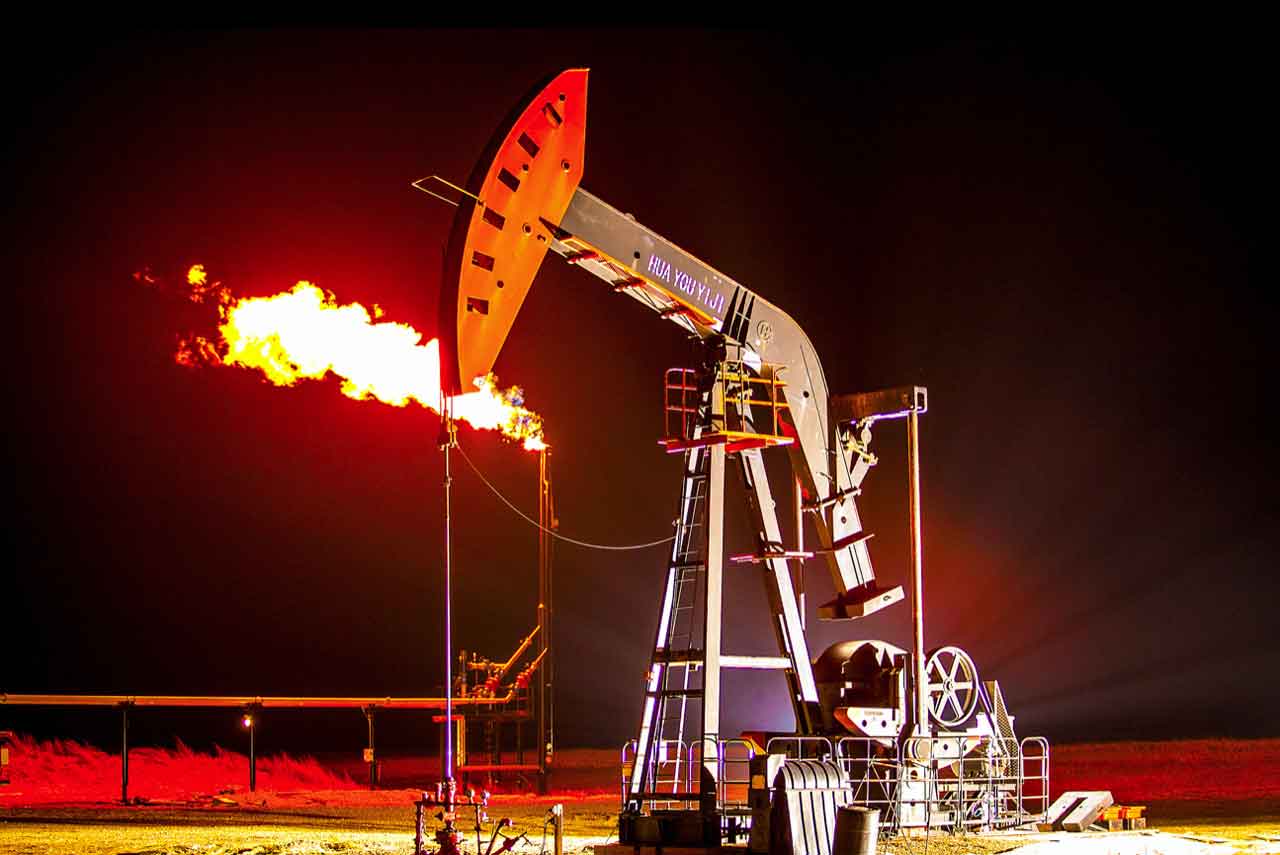
Why Canada still feels world oil prices even as an oil producer
Canada is a major oil exporter, and higher crude prices can benefit the domestic oil sector.
But that does not shield consumers from world prices. Natural Resources Canada says Canada uses a market-based approach to crude oil and fuel pricing, so pump prices still move with global crude, refining costs, taxes and local supply conditions. That is why an international shock in Hormuz can still raise costs in Thunder Bay, Toronto or Vancouver.
How higher oil is already affecting Canadians
The inflation impact is no longer theoretical. Canada’s annual inflation rate rose to 2.4 per cent in March, with gasoline prices up 21.2 per cent on the month as the Iran conflict disrupted crude flows.
Transportation costs rose 3.7 per cent from a year earlier, and food bought from stores rose 4.4 per cent. The Bank of Canada has described the oil shock as an important factor in its latest inflation outlook.
For Thunder Bay and Northwestern Ontario, the effect is likely to be magnified by distance. Families often drive more kilometres for work, shopping and services than people in larger southern cities. The regional economy also depends heavily on freight, mining, forestry, aviation and construction — all sectors that are exposed to diesel costs.
That means higher oil prices can ripple through daily life faster here than in places with shorter supply chains and more transit options. This regional impact is an inference, but it is consistent with the sectors Ottawa identified as vulnerable when it cut fuel taxes and with the broader role diesel plays in transportation and industry.
Bottom line
If Brent crude holds near US$125 a barrel, Canadians should expect expensive fuel to remain part of daily life. On current math, that points to gasoline in the high-180s to mid-190s a litre nationally, and diesel in the low- to mid-$2.20s a litre, with regional swings around both figures.
The immediate pressure would land on drivers and trucking firms, but the broader hit would show up in food, freight and inflation — including in Northwestern Ontario, where long distances make every jump at the pump matter more.