Conservatives push full-year fuel-tax holiday as Liberals and NDP offer different affordability plans
THUNDER BAY – POLITICS – Conservative Leader Pierre Poilievre is again calling for Ottawa to suspend all federal taxes on gasoline and diesel for the rest of 2026, arguing that lower fuel costs would ripple through grocery, housing and transportation prices across the country.
The proposal is landing in a wider affordability debate, with Prime Minister Mark Carney’s Liberals already suspending the federal fuel excise tax until Labour Day and the New Democrats focusing their current platform on grocery caps, GST relief on essentials and lower taxes for working people rather than a separate gas-tax holiday.
In Northern Ontario, where families, truckers and businesses depend on long highway drives and diesel-powered freight, the policy fight has a direct regional impact. Fuel prices affect not only commuters but also food delivery, mining supply chains, forestry operations and the cost of getting goods into remote and northern communities.
Poilievre says Conservatives would remove all federal fuel taxes until year-end
In a release issued Friday, the Conservatives said their “Full Plan for a Full Tank” would remove the federal fuel excise tax and GST on gasoline and diesel until Dec. 31, while permanently repealing the Clean Fuel Regulations costs they describe as a “fuel standard tax.” The party says that package would save Canadians about 25 cents a litre, roughly $20 per minivan fill-up, and about $1,218 a year for a family of four.
“Canadians deserve affordable fuel and food,” Poilievre said in the party release, arguing that lower diesel costs would also reduce the price of goods moved by truck.
The Conservatives also say they would permanently eliminate the industrial carbon price and offset lost fuel-tax revenue by cutting spending on consultants, foreign aid, corporate subsidies and the proposed Alto rail project.
The party’s release also cites Parliamentary Budget Officer data, through Environment and Climate Change Canada, to argue the Clean Fuel Regulations add about seven cents a litre this year. That remains a central part of the Conservative case that the federal government should go beyond the excise-tax suspension already in place.
Liberals have already suspended the federal fuel excise tax, but only until Labour Day
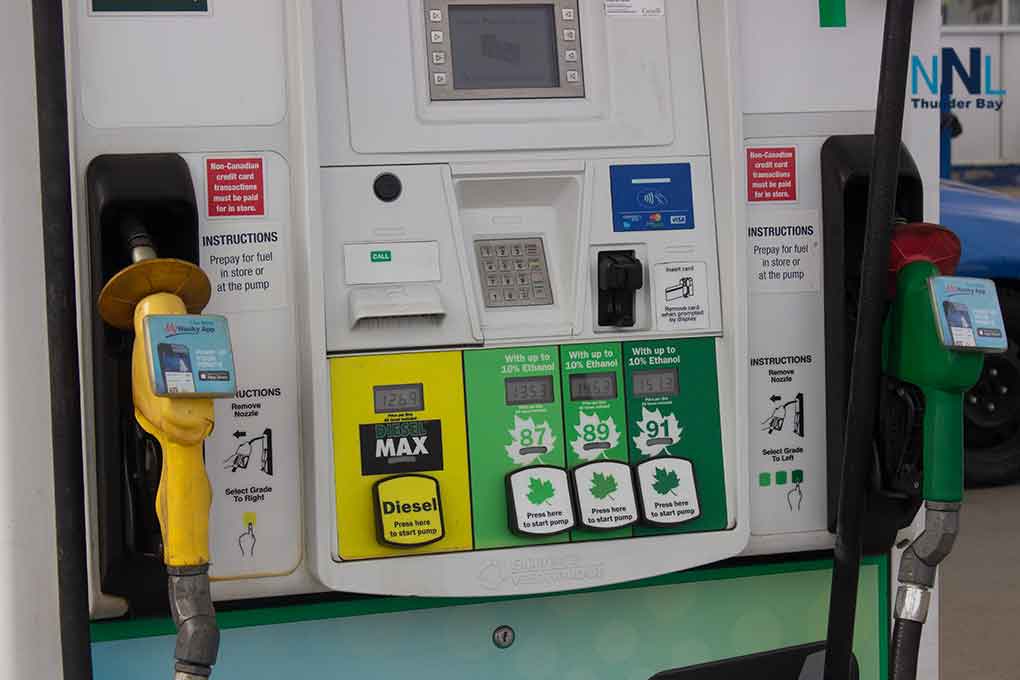
The Carney government announced April 14 that the federal fuel excise tax on gasoline and diesel would be temporarily suspended from April 20 through Sept. 7, 2026. Ottawa says that move should reduce pump prices by up to 10 cents a litre for gasoline and four cents a litre for diesel, while also temporarily suspending the federal excise tax on aviation fuels.
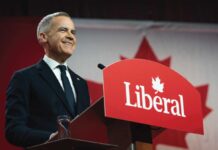
Carney framed the move as short-term relief tied to global fuel-price pressure. “We’re building a stronger, more resilient, and more independent Canadian economy,” the Prime Minister said, while Finance Minister François-Philippe Champagne called the measure “timely, meaningful, and tangible relief” for Canadians and businesses facing higher energy costs.
The Liberal affordability plan goes beyond the temporary gas-tax break. In its current platform, the party says it has already cancelled the consumer carbon tax, plans to cut the lowest personal income-tax rate by one percentage point, and would eliminate GST for first-time homebuyers on new homes up to $1 million while reducing it on homes between $1 million and $1.5 million.
The Liberals say the income-tax change would save dual-income families up to $825 a year.
NDP platform targets grocery prices, essentials and income taxes rather than a pump-tax holiday
The New Democrats’ current platform takes a different route. Rather than promising a separate suspension of federal gas and diesel taxes, the NDP says it would cap prices on basic grocery items, make the Grocery Code of Conduct mandatory, strengthen the Competition Bureau as a grocery-price watchdog, and permanently remove GST from what it calls everyday essentials such as grocery store meals, diapers, strollers, and monthly cell, internet and home-heating bills.
The party says that GST change would save a family of four about $448 a year.
The NDP also says it would raise the basic personal amount to $19,500, which it estimates would put $505 back in the pockets of people earning between $19,500 and $177,882. On climate pricing, the party says it would eliminate the consumer carbon tax but keep a “robust industrial carbon pricing system,” while also ending fossil-fuel subsidies by the end of 2026.
In practical terms, that leaves Ottawa’s three main federal parties offering different affordability messages: Conservatives are focused on direct pump-price relief through broad fuel-tax cuts; Liberals are offering a temporary excise-tax holiday plus broader tax and housing measures; and New Democrats are centring their affordability case on groceries, essentials, tax relief for workers and industrial-polluter pricing.
Why the debate matters in Thunder Bay and Northwestern Ontario
For Thunder Bay and Northwestern Ontario, this is not an abstract policy argument. Long travel distances, freight dependence and the central role of diesel in transportation and industry mean fuel-price changes are often felt more sharply in the North than in large southern cities. Any federal move that lowers or raises the cost of fuel can quickly affect household budgets, trucking costs and prices on store shelves.
The political question now is whether Canadians prefer faster relief at the pump, as Conservatives argue, a time-limited tax break combined with broader affordability measures, as the Liberals are offering, or the NDP approach of targeting grocery costs, essentials and lower-income tax relief more directly. With fuel prices still sensitive to global events, that debate is likely to remain front and centre.