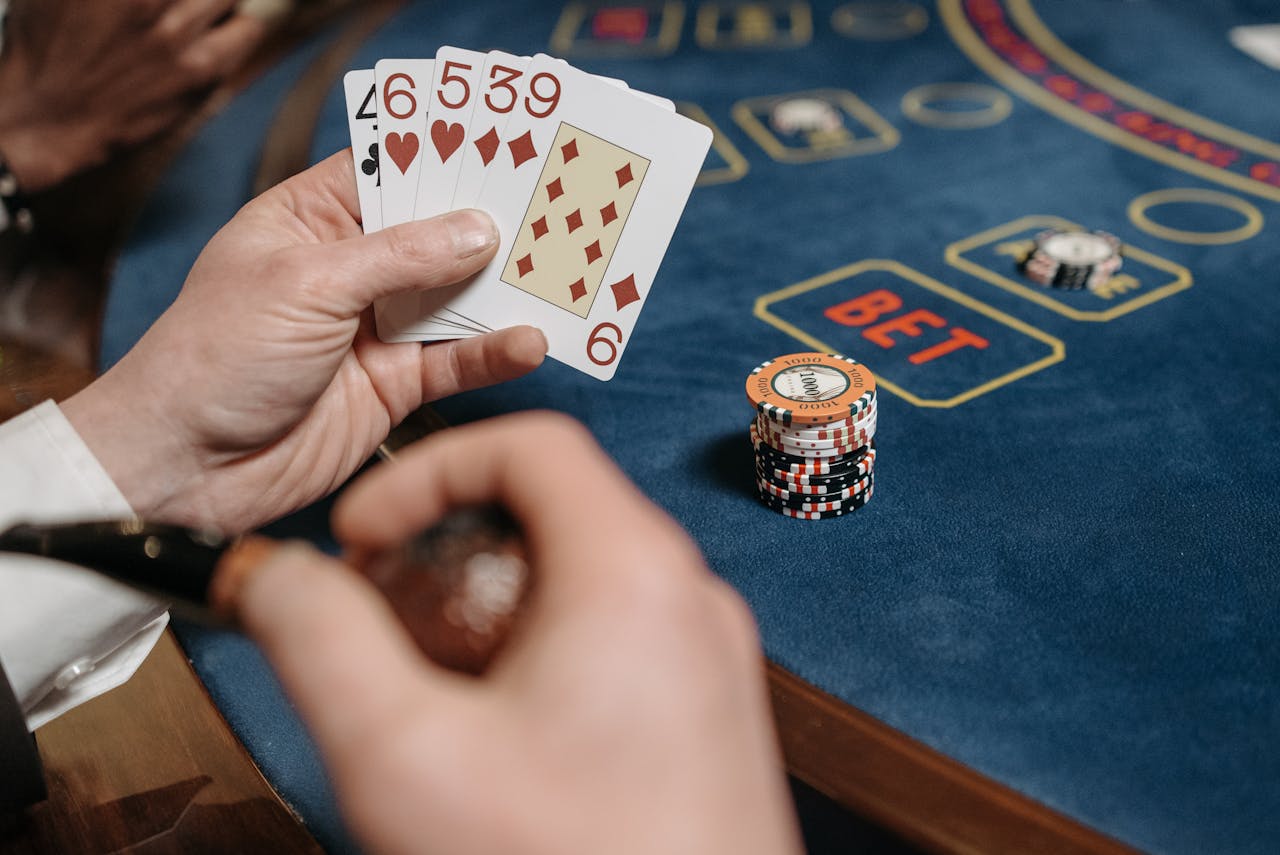
American Blackjack and European Blackjack are close enough in name to sound interchangeable, but they do not feel the same once the first hand begins. The clearest difference arrives before any dramatic moment at the table. It starts with when the dealer receives the second card and how much information the round reveals up front.
For a new player, that timing can shape comfort more than strategy charts ever will. If your goal is a cleaner first session, you are not really choosing between two fancy labels. You are choosing the rhythm that makes the game easier to read. That is why two people can learn the same basic rules and still walk away with very different impressions of which version felt calm, clear, and easier to trust in the opening minutes.
The Small Rule Difference That Changes Everything
In broad terms, American Blackjack starts with the dealer holding 2 cards, including a face-down hole card, while European Blackjack usually begins with 1 visible dealer card and adds the second card later. That sounds minor on paper, but it changes how the hand unfolds in your mind.
One open-access study on uncertainty and confidence in novice decision-making found that certainty is closely tied to how clearly people can interpret what they are seeing at the moment they choose, which helps explain why seemingly small information shifts can change how comfortable a beginner feels with a task. In blackjack terms, American Blackjack often feels more defined from the start, while European Blackjack asks you to stay with the round a little longer before the full picture settles.
Seeing the Labels in a Real Setting
That distinction becomes much easier to understand once the names stop floating around as abstract rules and start appearing where a reader would actually encounter them. On this online casino Canada game selection page, both American Blackjack and European Blackjack appear under Table Games, and both offer Demo versions. The same area also includes titles such as 21 Burn Blackjack, which is useful because it reminds readers that blackjack naming is not decorative. It tells you something about how a round is structured and what kind of flow you should expect.
When those labels sit together in an online casino environment, the comparison becomes practical instead of theoretical. American Blackjack points to the version where the dealer’s second card is already in place. European Blackjack points to the version where that second card arrives later. For a newcomer, that is not trivia. It changes whether the opening moments feel settled immediately or develop in stages, and that is often the real reason one version feels easier to approach first.
What Feels Simpler When You Are New
A first session usually feels clean when the game answers basic questions quickly. What does the dealer have in motion already? How much of the hand is visible now? How much will be revealed later? American Blackjack tends to satisfy those questions earlier. The dealer setup is already established, so the round can feel more anchored from the beginning. European Blackjack can feel slightly more suspended at first, not because it is harder in any dramatic sense, but because part of the hand arrives after players have already started acting.
That does not make European Blackjack a poor starting point. For some readers, its slower reveal is exactly what makes it appealing. It creates a step-by-step sense of progression that feels natural once the dealing order clicks. The real mistake is assuming the names are mostly cosmetic. They are shorthand for how information arrives, and information timing is a big part of how a card game feels in real time.
The Better First Choice Depends on What Helps You Read the Table
If you like early clarity, American Blackjack often makes the stronger first impression. If you prefer to let the hand unfold in stages and do not mind waiting for the dealer’s full shape to emerge, European Blackjack may feel just as comfortable once the pattern becomes familiar. What matters is not whether one version sounds more established or more refined. What matters is whether the dealing sequence helps you stay oriented.
That is also why a short comparison on paper can do more for a newcomer than a long list of tips. The issue is not mastery. It is recognition. Once you recognize what the hole-card difference does to the pace of a hand, the names become useful instead of vague. And once that clicks, choosing a first table feels much less random. Research comparing experts and novices in complex problem solving has shown that stronger performers tend to spend more time exploring the situation before committing to a path, which is a sensible frame for any new reader deciding how to begin.