U.S. proposes five-year social media history request from visa-exempt travellers
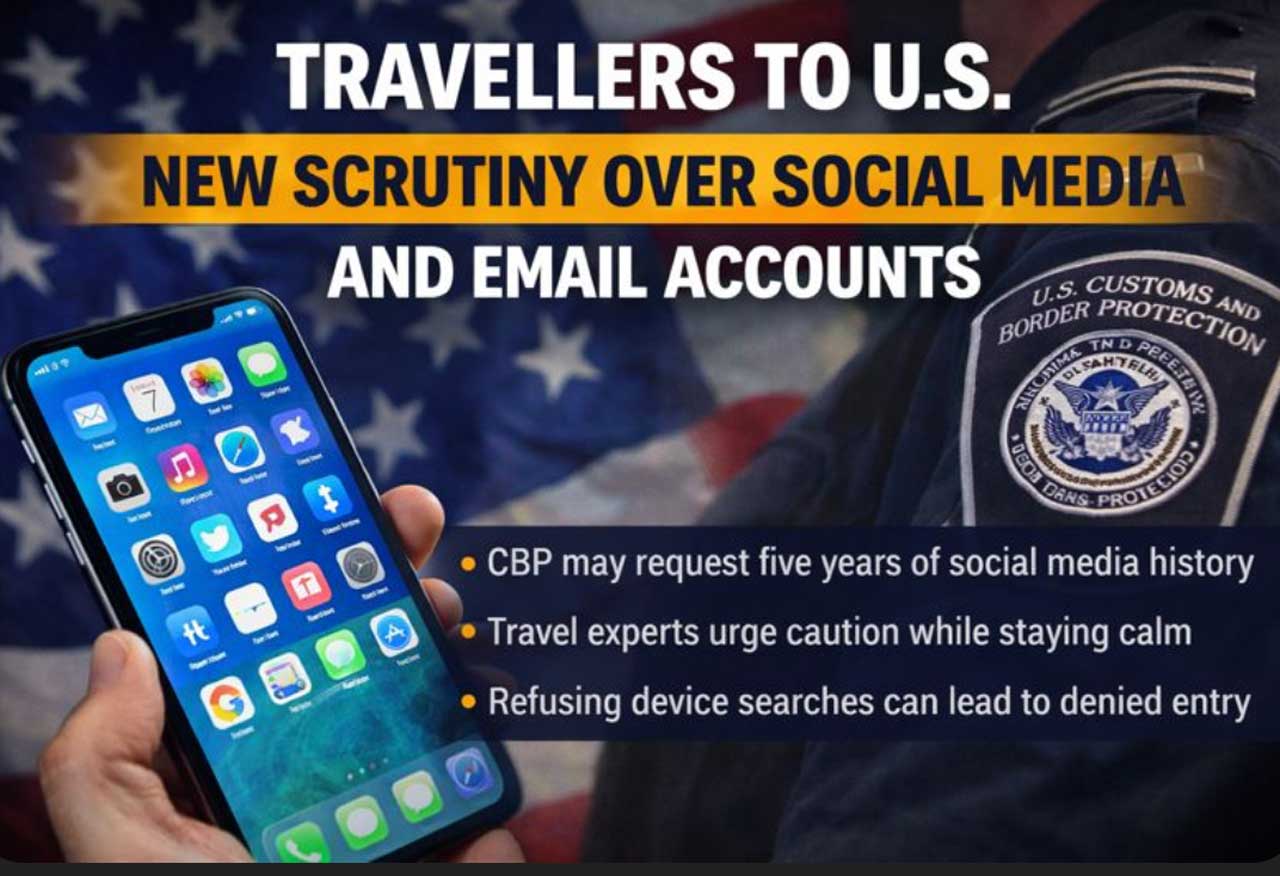
THUNDER BAY – TECH/TRAVEL – Canadians planning travel to the United States may want to take note: a recent proposal from U.S. Customs and Border Protection (CBP) suggests that border officials could soon begin requesting up to five years of social media and email account history from some travellers — including those from visa-exempt countries like Canada.
The change, published in the U.S. Federal Register on December 10, outlines an update to the I-94 arrival and departure form, and is part of the broader efforts by the U.S. to monitor travellers entering the country. While this proposal does not make providing such information mandatory at this time, it reflects ongoing discussions about increased digital vetting.
Experts note this isn’t an entirely new direction — rather, part of a trend in border policy that’s evolved over several decades.
This type of a search only happens in a larger, cascading series of events. If you say something at the border that raises questions, it may lead to further scrutiny, including being asked to unlock your device.
Should Travellers Be Concerned?
Some Canadian travellers, unsettled by the idea of sharing private content or being misunderstood, have taken preemptive steps like removing social media apps from their phones or using temporary ‘burner’ devices when crossing the border.
However, experts advise against over-sanitizing your digital footprint. Ironically, arriving with a wiped phone could itself raise suspicion.
A clean phone doesn’t necessarily suggest innocence. To an officer, it might indicate you’re hiding something,
Still, the vast majority of Canadians cross the border daily without any issues. For most people, staying respectful, honest, and cooperative is enough to avoid complications.
Know Your Rights — And the Limits
Canadian citizens are not required to unlock or show electronic devices at the U.S. border. However, refusing to comply could mean being denied entry.
It’s important to remember that entry into the U.S. is a privilege, not a right, for non-citizens, If you decline a search, you may be turned away.
What You Can Do Before You Travel
-
Review your social media content before travelling
-
Avoid carrying sensitive data unless necessary
-
Back up important information to the cloud or external storage
-
Remain calm and courteous if asked to undergo secondary screening
For frequent cross-border travellers from Thunder Bay and Northwestern Ontario, especially during the holiday season or winter vacations, staying informed and prepared can make all the difference.
📄 Read the full U.S. proposal here:
🔗 Federal Register Notice – December 10, 2025
The Last Word:
Canada-U.S. border proposal may request 5 years of social media history from travellers