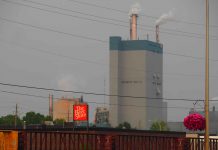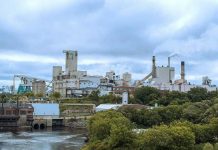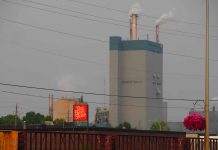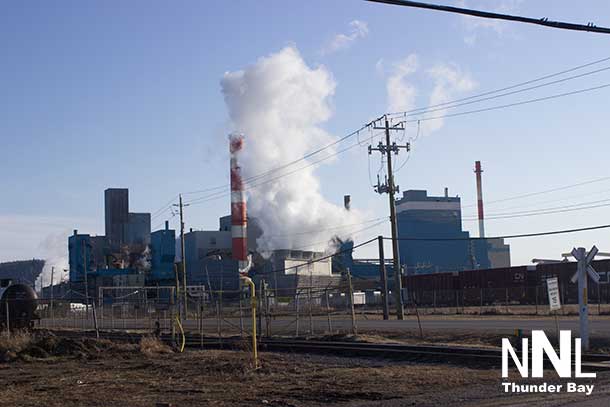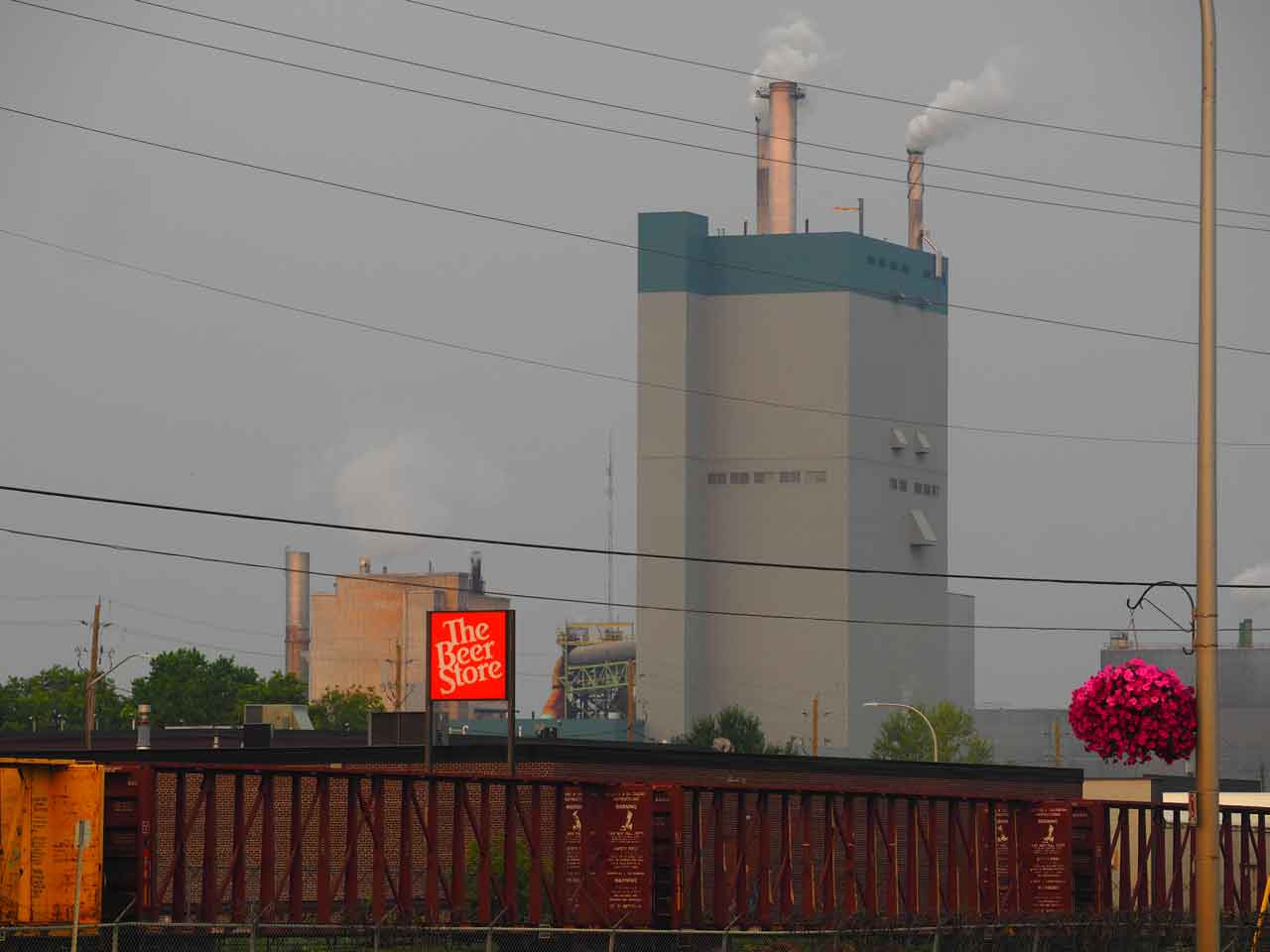
Thunder Bay – For more than 100 years, the pulp and paper mill in Dryden has been the most important building in this small city in northwestern Ontario. It was the engine of the local economy, providing jobs for generations and connecting Dryden to a larger network of forest products that includes Thunder Bay and other communities in the area.
But the same industrial complex also caused one of Canada’s worst environmental disasters.
In the 1960s and 1970s, a chlor-alkali plant that was part of the mill dumped an estimated 9,000 to 10,000 kilograms (about 10 metric tons) of mercury into the English–Wabigoon River system.
The poisonous waste flowed down the Wabigoon River past Grassy Narrows (Asubpeeschoseewagong) and Wabaseemoong (Whitedog), where Anishinaabe communities used the water for drinking, fishing, guiding, and trapping.
People have lived with symptoms of mercury poisoning for generations, including Minamata disease. Commercial fishing was stopped, and guiding jobs disappeared.
The main question is still painfully unanswered decades later: Who should pay to clean up the river, fix the land, and help the people who were hurt?
A Complicated Trail of Ownership: Who Owned the Dryden Mill and When?
The mill’s complicated ownership history makes things harder. The facility has changed hands many times in the last hundred years, but the damage to the environment has stayed the same.
Important events in the history of the Dryden mill’s business include:
1909: The Gordon Pulp and Paper Company
Charles and Grant Gordon start to build the first mill on the Wabigoon River’s west side. The first building burns down before it is finished.
1911–1918: The Dryden Timber and Power Company
In 1913, the first Kraft pulp mill in northwestern Ontario opens. It is the first of its kind in the area and helps to build up Dryden’s growing forest industry.
1918–1920: The Dryden Pulp and Paper Company
Dryden Paper Company from 1920 to 1953
The mill becomes a big employer in the area.
Anglo-Canadian Pulp and Paper Company, 1953
Anglo-Canadian buys the business but keeps the name Dryden Paper Company.
1960: Reed Paper Group (Reed International)
Reed buys Anglo-Canadian, which includes the Dryden Paper Company. In the 1960s, Dryden Chemicals Ltd., a Reed subsidiary, runs the chlor-alkali plant that dumps mercury into the river.
Reed Limited from 1975 to 1979
The name of the company changes, but the mill is still in Dryden.
Great Lakes Forest Products from 1979 to 1988
Reed is now called Great Lakes Forest Products, and it is part of the same corporate family that ran big mills in Thunder Bay. This connects Dryden directly to the region’s larger forestry economy.
Canadian Pacific Forest Products (CPFP) in 1988
CPFP is the result of a merger between Great Lakes Forest Products and Canadian International Paper.
Avenor Inc. from 1994 to 1998
Avenor is the new name for CPFP.
Bowater in 1998
Later that same year, Bowater buys Avenor and then sells the Dryden mill to Weyerhaeuser.
Domtar Corporation in 2007
Domtar buys the mill from Weyerhaeuser for about $520 million and turns it into a market-pulp operation that makes Northern Bleached Softwood Kraft.
Paper Excellence Group buys Domtar in 2021.
Domtar 2023–present – First Quality
First Quality, a private company that makes absorbent hygiene and paper products, buys the mill from Domtar.
Every change changes the legal and financial landscape. But for Grassy Narrows and Wabaseemoong, the damage has been going on no matter what logo was on the mill gate.
How the Mercury Was Thrown Away and Why It Never Went Away
From 1962 to 1970, Dryden Chemicals Ltd. used mercury cells to make chlorine and caustic soda, which they used to bleach paper. Mercury-contaminated wastewater was dumped straight into the English–Wabigoon River system.
At the time, this kind of dumping was technically legal, even though there was evidence from other parts of the world, especially Minamata, Japan, that mercury was very bad for your health.
Mercury doesn’t break down in nature. It settles into river sediments, and when the conditions are right, bacteria turn it into methylmercury, a powerful neurotoxin that builds up in fish and the people who eat them.
Researchers who published their work in 2024 say that the mill’s ongoing effluent is still making the problem worse by adding sulphates and organic matter that help bacteria turn old mercury into new methylmercury. Even though mercury dumping stopped decades ago, scientists found that mercury levels in fish downstream could double because of this process.
How People Have Affected Grassy Narrows and Wabaseemoong
The pollution ruined not only the economies of the Anishinaabe communities downstream, but also their whole way of life.
Commercial fishing and tourist lodges were closed, which put people out of work and hurt local businesses.
Families were told to stop eating the fish that had fed them for generations.
Studies have shown that the Grassy Narrows community has higher levels of mercury and long-term neurological effects, as well as deaths that happen too soon.
Grassy Narrows and Wabaseemoong made a deal with the federal and Ontario governments and two paper companies in 1985. The deal led to the Grassy Narrows and Islington Indian Bands Mercury Pollution Claims Settlement Act, which was passed in 1986. It also led to the creation of the Mercury Disability Fund, which is now run by the Mercury Disability Board.
The Mercury Disability Board gives disability benefits to people in the community who have symptoms that are consistent with mercury poisoning. However, it does not fix the river or fully make up for the loss of culture, food security, and jobs.
Recently, Ottawa has promised tens of millions of dollars to work with Grassy Narrows to build a specialized care home for people who are still feeling the effects of mercury contamination.
Governments Get Involved—Somewhat
The English and Wabigoon Rivers Remediation Funding Act, 2017, passed by Ontario, is what the cleanup effort is based on today. The Act set aside $85 million in a special trust to pay for studies, cleaning up the river system, and keeping an eye on the mercury levels over time.
The trust is run in a way that everyone works together:
There are people from Grassy Narrows, Wabaseemoong, other First Nations in the area, and the Province of Ontario on the Remediation Panel.
The panel helps make plans for fixing things and tells people how to spend trust funds.
But testimony from a federal committee in Ottawa shows that only a small part of the money had been approved for use years after the trust was set up. This shows how slow and bureaucratic the process has been for communities that have been waiting for more than 50 years.
Environmental groups, like the David Suzuki Foundation, have praised Ontario’s promise to clean up the river, but they have also said that $85 million is probably not enough and that the total costs could reach billions when full river restoration, health care, and community healing are taken into account.
What the Courts Say: Companies Are Responsible
The government is paying for some of the cleanup, but the courts are still trying to figure out who should pay for the polluted waste site that is connected to the mill.
The Supreme Court of Canada said in 2019 that Resolute FP Canada (the company that took over Abitibi-Consolidated/Bowater) and Weyerhaeuser are responsible for the costs of following an Ontario environmental order at the mercury waste disposal site near Grassy Narrows.
The Supreme Court of Canada
The Court decided that businesses can’t use old indemnity agreements to get out of new cleanup orders.
The companies, not the government, are responsible for fixing and keeping the site clean, checking for leaks, and stopping more pollution.
This choice was seen as a big win for holding people accountable for their actions on the environment. It also sends a message to businesses in Northwestern Ontario that environmental problems can follow corporate successors, even decades later.
So, who will pay?
Putting the pieces together shows that there is shared but uneven responsibility:
When the mercury was dumped, companies like Reed, Great Lakes Forest Products, and others were in charge.
Resolute FP, Weyerhaeuser, Domtar/Paper Excellence, and now First Quality are all successor companies that have used the mill’s assets to their advantage.
Governments allowed and controlled the businesses, gave them advice, and later worked out settlements and indemnities, some of which tried to protect companies from future debts.
Because of how bad the pollution is and how much it will cost to clean it up and take care of people’s health in the long run, it’s unlikely that one person will pay the whole bill.
Instead, we see a patchwork:
Companies are spending money to follow the Supreme Court’s orders to fix the problems at the waste site.
Funding from the provinces through the $85 million remediation trust.
The federal government has promised to build specialized health facilities and support programs for people who have already been hurt.
Supporters say that this patchwork still doesn’t give Grassy Narrows and Wabaseemoong the justice they deserve, especially since the river is still polluted and traditional economies can’t be fully restored.
Why This Is Important for Thunder Bay and Northwestern Ontario
People in Thunder Bay and all over Northwestern Ontario don’t see the Dryden–Wabigoon story as something that happened a long time ago:
Great Lakes Paper and later Great Lakes Forest Products, which once employed thousands of people in Fort William (Thunder Bay), are directly connected to the mill’s corporate history.
A lot of families in the area have connections to Dryden, Grassy Narrows, Wabaseemoong, and other Treaty 3 communities through work, community, or family.
The English–Wabigoon system eventually connects to the Winnipeg River and Lake Winnipeg. These bodies of water are part of a larger watershed that supports fishing, tourism, and cultural activities in communities across the northwest.
The Supreme Court’s decision that companies, not just governments, must pay for cleanup sets a precedent that could apply to other polluted industrial sites in the north, such as closed mines and old pulp and paper mills.
Going Forward: More than Just Engineering, Environmental Justice
The Wabigoon mercury crisis is more than just a technical issue with polluted sediment at its core. It is an example of environmental injustice:
A strong industry made money and created jobs.
Regulation was behind science.
Most of the risk and almost all of the long-term damage were taken on by Indigenous communities downstream.
As Canada talks about climate justice and reconciliation, Indigenous leaders should be at the centre of the conversation about the Wabigoon. They shouldn’t just be consulted on the edges.
That means that the cleanup progress should be reported to the public on a regular basis and that the timelines should be clear.
Funding that is enough and lasts long enough to cover the full extent of the damage, not just what is politically convenient.
Health and cultural supports that take into account how mercury affects the body, mind, language, land use, and identity, not just lab test results.
In Anishinaabemowin, Bimaadzwin means “the good life” lived in harmony with the land and water. For more than fifty years, the good life has been interrupted for the people of Grassy Narrows and Wabaseemoong.
Real accountability will come when the river is getting better, the people are getting the care and money they need, and those who made the most money from the mill’s business pay their fair share of the costs. This way, future generations won’t have to pay for a mistake made in the past.