Recreational vehicles offer the freedom to travel while bringing many comforts of home along for the journey. However, their larger size and varied exterior materials create unique cleaning and maintenance needs. From long road trips to seasonal storage, RVs are exposed to dust, insects, road salt, mud, and changing weather conditions.
Regular cleaning helps maintain an RV’s appearance and makes it easier to identify potential maintenance issues. With the right equipment and a consistent routine, owners can protect their investment and keep their vehicles ready for future adventures.
Why Regular RV Cleaning Matters
RVs often travel through different environments within a single journey. Highway driving exposes the exterior to insects and road debris, while camping areas can leave mud, sand, and organic material around the lower panels and wheels.
Weather conditions also affect cleaning requirements. Rainwater can leave mineral deposits, winter roads may expose vehicles to salt, and prolonged sunlight can contribute to the deterioration of certain exterior finishes.
Cleaning removes surface contaminants before they become difficult to manage. It also provides an opportunity to inspect seals, windows, roof edges, storage compartments, and other exterior components.
Choosing an Appropriate Washing Facility
An RV is much larger than a standard passenger vehicle, so not every washing location is suitable. Before visiting a facility, owners should consider the vehicle’s height, length, width, and clearance requirements.
Drivers using searches such as “car wash for RV near me” should check whether the available washing space can safely accommodate their vehicle. Adequate room is important for manoeuvring, accessing different exterior sections, and completing the cleaning process without unnecessary difficulty.
It is also important to know which cleaning equipment and products suit the RV’s exterior materials.
Areas That Require Special Attention
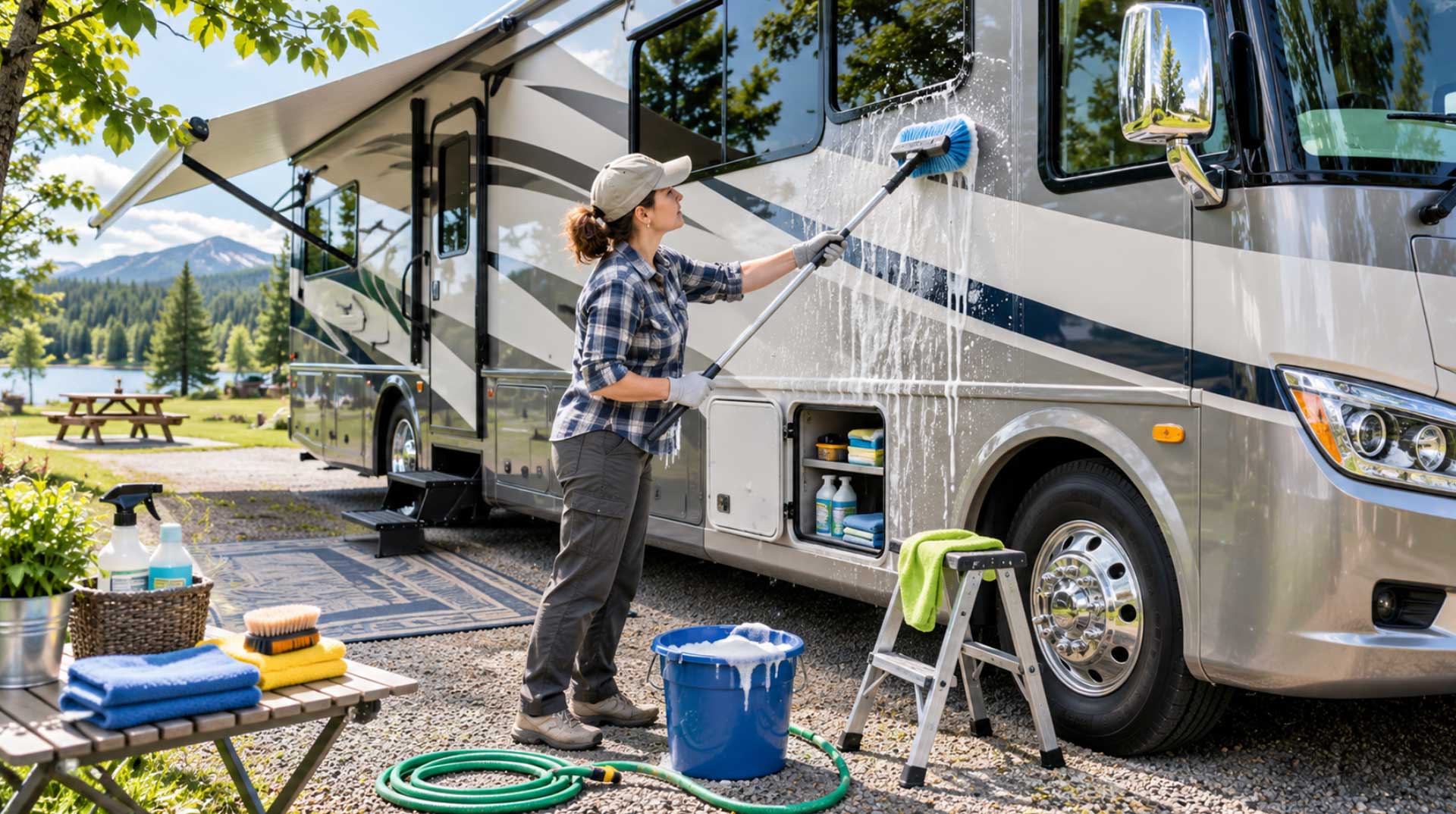
An effective RV wash should cover more than the large exterior panels. Several areas collect dirt and moisture and should be included in routine cleaning.
Roof and roof edges: These areas can collect leaves, dust, and other debris. Owners should inspect them regularly using safe access methods and follow the manufacturer’s maintenance recommendations.
Windows and seals: Dirt around window edges can make it harder to identify cracks or damaged seals. Use suitable cleaning products to avoid affecting protective coatings.
Wheel wells and tyres: Mud, road salt, and debris can accumulate around the wheels. These areas often need additional attention after travelling on wet or unpaved roads.
Awning surfaces: Awnings may collect dust, pollen, and moisture. Clean and dry them according to the manufacturer’s instructions before storing.
Lower panels and storage compartments: These sections are exposed to road spray and debris, particularly during long journeys.
Regular inspection during washing can help owners spot damage that might otherwise go unnoticed.
Benefits of Self-Service Washing
Some RV owners prefer to control the cleaning process themselves, especially when certain areas need more attention than others. Self-service facilities offer flexibility by letting drivers manage rinsing and cleaning based on the vehicle’s condition.
When searching online for “self car wash near me”, RV owners should confirm that the facility has suitable dimensions and equipment for larger vehicles. Not all standard washing bays are designed to accommodate recreational vehicles.
Before using high-pressure equipment, check the manufacturer’s recommendations. Excessive pressure around windows, vents, seals, decals, and exterior fittings can cause damage or let water into vulnerable areas.
A Practical RV Washing Routine
A structured approach makes cleaning more efficient and helps prevent you from overlooking important areas.
- Prepare the vehicle: Close windows, vents, and access panels before washing.
- Inspect the exterior: Look for loose fittings, damaged seals, and existing cracks.
- Remove loose debris: Use a gentle pre-rinse to remove dust and grit.
- Clean the upper sections: Work carefully across accessible exterior panels, following material-specific recommendations.
- Wash the lower areas: Give additional attention to wheel wells, bumpers, and storage compartments.
- Rinse thoroughly: Remove cleaning residue without directing excessive pressure towards sensitive fittings.
- Allow surfaces to dry: Check for remaining moisture, particularly around seals and awnings.
Using products designed for recreational vehicles can help avoid unnecessary damage to specialized finishes.
Cleaning Before Seasonal Storage
Many RV owners use their vehicles seasonally, so proper preparation before storage is especially important. Dirt and organic residue should be removed before the vehicle is parked for an extended period.
Check the exterior for damaged seals, loose components, and areas where moisture may collect. Ensure that awnings and other fabric surfaces are completely dry before storing them.
Owners should also follow the manufacturer’s recommendations for protecting tyres, batteries, plumbing systems, and other components during periods of inactivity.
Final Thoughts
Keeping an RV clean takes a little more planning than washing an ordinary car, but a consistent routine can make it manageable. Paying attention to exterior materials, sensitive fittings, wheels, seals, and hard-to-reach areas helps maintain the vehicle’s condition.
By choosing an appropriate washing facility and following manufacturer-recommended cleaning practices, RV owners can keep their vehicles road-ready year-round.