
On the 63rd anniversary of President John F. Kennedy’s murder, the evidence points to Lee Harvey Oswald as the gunman. Whether others helped him remains the subject of enduring debate, shaped by flawed investigations, government secrecy and a disputed finding of conspiracy.
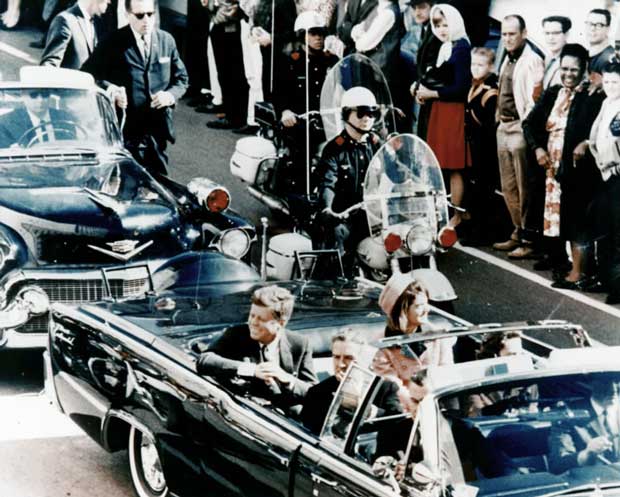
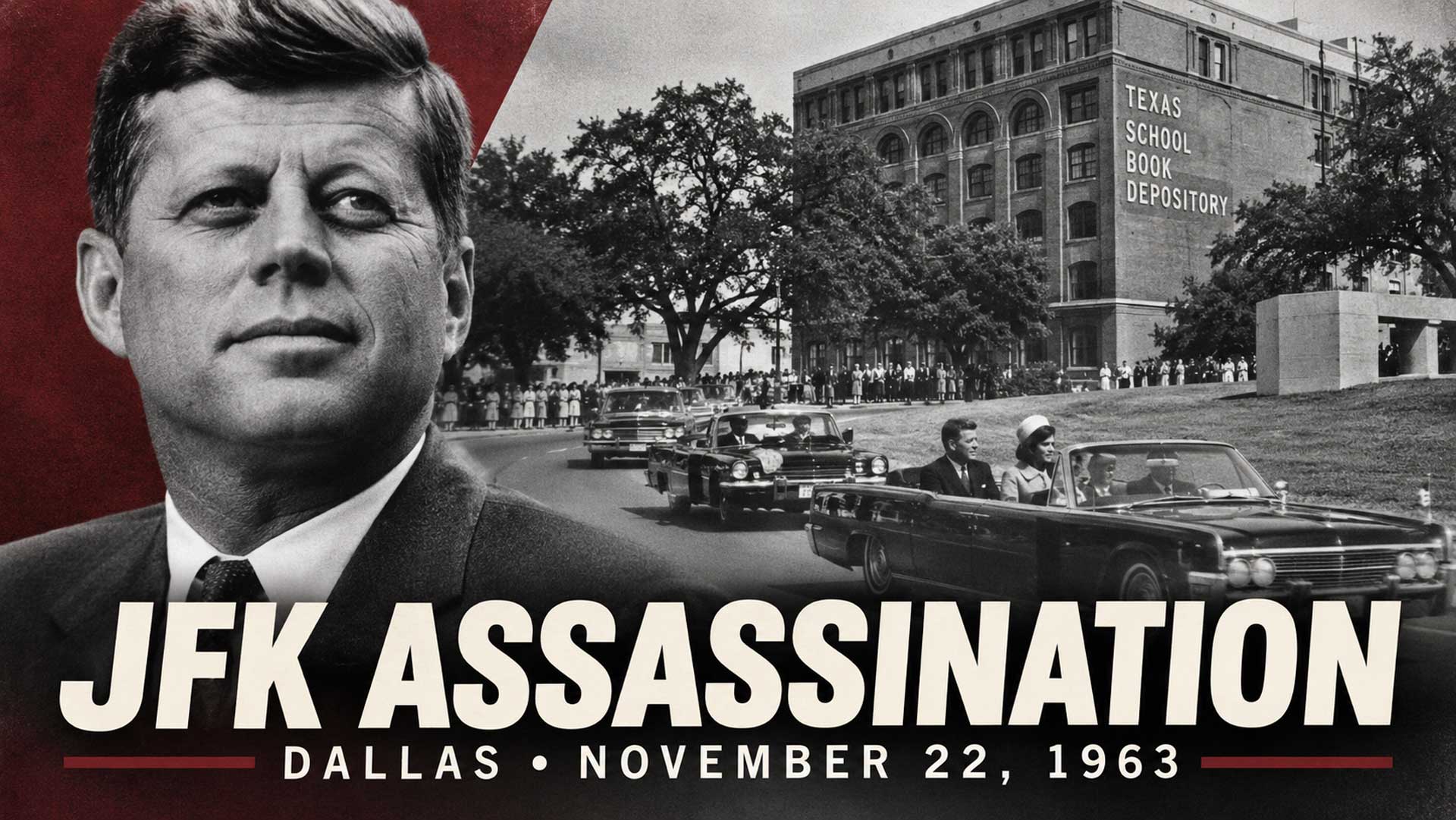
Thunder Bay ON – November 22, 2026 — At 12:30 p.m. on November 22, 1963, President John F. Kennedy’s open limousine turned through Dealey Plaza in downtown Dallas. Moments later, gunfire struck the 46-year-old president and Texas Governor John Connally.
Kennedy was rushed to Parkland Memorial Hospital. Within half an hour, he was pronounced dead. Vice-President Lyndon B. Johnson became president, and a nation already anxious about the Cold War faced a sudden crisis of leadership.
Police arrested Lee Harvey Oswald, a 24-year-old employee of the Texas School Book Depository overlooking the motorcade route. Two days later, Oswald himself was shot dead on live television, before he could stand trial. His death left Americans without the public examination of evidence that a courtroom might have provided.
The Warren Commission concluded in 1964 that Oswald fired the shots and acted alone. A House committee agreed that Oswald shot Kennedy but concluded in 1979 that the president was probably killed as a result of a conspiracy. The scientific evidence central to that second finding was later challenged by the National Academy of Sciences.
The distinction matters: there is strong evidence against Oswald, but no publicly established proof that Cuba, the Mafia or the CIA ordered Kennedy’s murder.
The Dallas Motorcade
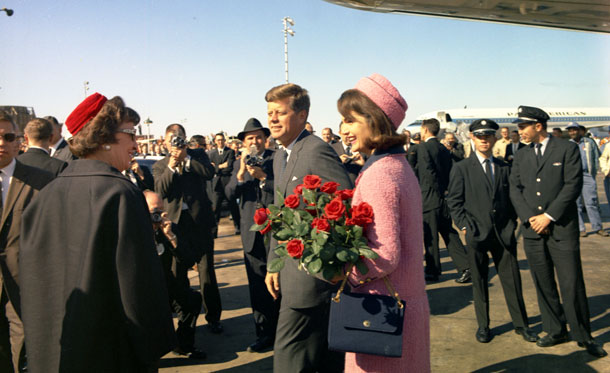
Kennedy had arrived in Texas on November 21 for a political trip that would take him through several cities. On the morning of November 22, he and First Lady Jacqueline Kennedy flew from Fort Worth to Dallas, where they were greeted by crowds at Love Field.
The president and first lady rode in an open limousine with Connally and his wife, Nellie. Johnson and his wife, Lady Bird, followed in another vehicle. The motorcade passed through downtown Dallas on its way to a scheduled luncheon at the Trade Mart.
As the limousine travelled along Elm Street in Dealey Plaza, shots rang out. Kennedy was hit in the upper back and head. Connally was also seriously wounded, but survived.
The limousine sped to Parkland Memorial Hospital. Doctors attempted to save Kennedy, but he was pronounced dead at 1 p.m. The president’s death was announced publicly shortly afterward.
Police searched the Texas School Book Depository, where investigators found a rifle and three spent cartridge cases on the sixth floor. The Warren Commission later concluded that the shots had been fired from a window there.
About 45 minutes after the attack in Dealey Plaza, Dallas police officer J.D. Tippit was fatally shot in the city’s Oak Cliff neighbourhood. Police arrested Oswald at the Texas Theatre that afternoon. He was charged with Tippit’s murder and, early the next morning, with Kennedy’s assassination. Oswald denied killing the president.
A New President and a Second Killing
At Dallas Love Field, Johnson took the presidential oath aboard Air Force One at approximately 2:38 p.m. Federal Judge Sarah T. Hughes administered it, with Jacqueline Kennedy standing beside the new president. The aircraft then carried Johnson, the former first lady and Kennedy’s body back to Washington.
An autopsy was conducted that evening at Bethesda Naval Hospital in Maryland. Its handling and documentation would later become subjects of criticism and controversy, adding to disputes about the direction and number of shots.
On Sunday, November 24, police prepared to transfer Oswald from Dallas police headquarters to the county jail. In the basement, Dallas nightclub operator Jack Ruby stepped forward and shot him. Oswald died at Parkland Hospital.
Ruby said he had acted on his own. He was convicted of murder in 1964, but that conviction was later overturned. He died of cancer in 1967 while awaiting a new trial. His killing of Oswald deprived investigators of further questioning and gave rise to lasting suspicions that the accused assassin had been silenced. The Warren Commission found no evidence that Ruby and Oswald were part of a conspiracy.
A Funeral Watched Around the World
Kennedy’s body lay in repose at the White House before being taken to the U.S. Capitol on November 24. Members of the public lined up to pay their respects as he lay in state in the Capitol Rotunda.
On Monday, November 25, a funeral procession moved through Washington. Jacqueline Kennedy and members of the president’s family walked behind the casket for part of the journey, accompanied by foreign leaders and dignitaries.
After a funeral Mass at St. Matthew’s Cathedral, Kennedy was buried at Arlington National Cemetery. Jacqueline Kennedy lit an eternal flame at the grave.
One image became especially associated with the day: John F. Kennedy Jr., who turned three that Monday, saluting his father’s casket. The funeral brought together leaders from around the world and was watched by millions on television.
The Case Against Oswald
Johnson established the President’s Commission on the Assassination of President Kennedy on November 29, 1963. Headed by Chief Justice Earl Warren, it examined testimony, physical evidence and investigative reports before issuing its findings in 1964.
The commission concluded that Oswald fired three shots from the sixth floor of the book depository, that two struck Kennedy, and that Oswald acted alone. It also found no evidence that Ruby was part of a conspiracy to kill the president.
The evidence connecting Oswald to the shooting included the rifle recovered in the building, which investigators traced to a mail-order purchase made under an alias used by Oswald. The commission also considered eyewitness accounts, cartridge cases, firearms evidence and Oswald’s movements before and after the shooting.
A central and contested part of its reconstruction was the single-bullet conclusion: that one bullet passed through Kennedy and went on to cause Connally’s wounds.
The commission reasoned that the two men’s positions in the car and the timing visible in the film taken by bystander Abraham Zapruder supported that explanation.
Critics have disputed aspects of the bullet evidence, the medical record and the timing. But a later House committee also accepted that one bullet struck both men. The existence of debate over the reconstruction does not by itself establish a second shooter.
If you have ever been to Dallas and went to the Sixth Floor Museum in the School Book Depository, there are several things that are worth mentioning.
First is that it is a fairly small plaza. The corner of the 6th Floor, where Oswald is said to have set up his sniper’s nest is blocked off, however from the windows looking out on Elm Street, it is not a great deal of distance to the mark on the street that was there where the President was hit. It is about 140 yards.
There has been, especially in the movie JFK, a lot of information on Oswald’s rifle. What is interesting, as anyone who has hunted, his scope mount was not a solid one. Claims after the shooting that the rifle was not even sighted in could be that in the rush to hide it, it was bumped.
In terms of the bullet, it was a military round. A jacketed bullet. What that means it it was not, like a hunting round cartridge meant to mushroom on impact. In the military, a soldier hit with a jacketed round will need to be carried off of the battlefield. It takes a lot of logistics to do that in a war, logistics matter.
A military-style full metal jacket (FMJ) bullet typically has a lead core covered by a harder metal jacket, with the tip enclosed. It is generally designed to retain its shape and penetrate, rather than expand predictably. It can still deform, fragment or turn sideways after impact, depending on its design and the circumstances.
A hunting bullet is generally designed to expand on impact. Designs such as soft-point, hollow-point and polymer-tipped bullets open or deform to make a wider wound channel while penetrating deeply enough to reach vital organs. Their construction varies with the animal and the intended use.
In the Kennedy investigation, the rifle ammunition was described as full metal jacket ammunition. That matters because an FMJ bullet may retain more of its shape than an expanding hunting bullet, although its condition after impact depends on what it struck and how. That could explain how the so-called “Magic Bullet” came through the two men and was not deformed.
Oswald was never tried, and the commission’s conclusions were not tested against a defence case in court. Its report also did not establish a definitive motive for the assassination.
Why Conspiracy Theories Endured
The circumstances provided fertile ground for suspicion. Oswald had lived in the Soviet Union and had publicly expressed support for Cuba. In the months before the assassination, he visited the Cuban consulate and Soviet Embassy in Mexico City. Ruby had contacts in Dallas nightlife and had been known to police.
Those facts are relevant to the investigation. They are not, on their own, proof of an agreement to murder Kennedy.
Government secrecy gave scepticism additional force. Later inquiries exposed covert U.S. efforts against Cuban leader Fidel Castro, including CIA involvement with organized-crime figures in assassination plots. The House committee also criticized shortcomings in the original investigations and the information supplied to the Warren Commission.
Those revelations show that officials had concealed important Cold War activities. They do not establish that the same people or agencies killed Kennedy.
The House Committee and the Grassy Knoll
The House Select Committee on Assassinations reopened the case in the 1970s. Its 1979 report concluded that Oswald fired the shots that struck Kennedy, but that the president was probably assassinated as a result of a conspiracy.
A major reason was an analysis of a Dallas police recording. Experts working for the committee interpreted sounds on the recording as evidence of an additional shot from the grassy knoll area of Dealey Plaza.
That finding faced a significant challenge. In 1982, a National Academy of Sciences committee concluded that the acoustic analysis did not demonstrate a shot from the grassy knoll. It found that the impulses identified as possible gunshots were recorded approximately a minute after the president had been shot.
The academy’s review did not prove that a conspiracy was impossible. It did, however, seriously weaken the scientific basis for the House committee’s conclusion that a second gunman probably fired.
The House committee did not identify the people it believed might have participated in a conspiracy. It found insufficient evidence that the Cuban or Soviet governments, the CIA, the FBI, the Secret Service, anti-Castro Cuban groups as organizations, or the national organized-crime syndicate as a group had taken part. It said it could not rule out involvement by individual anti-Castro activists or organized-crime members, but lacked sufficient evidence to find that any had participated.
Cuba, the Mafia and the CIA
Cuba and Fidel Castro. The theory that Castro ordered Kennedy’s assassination is often presented as retaliation for American efforts to overthrow or kill him. Oswald’s pro-Castro activity and his visit to the Cuban consulate helped keep that theory alive. But evidence of Oswald’s interest in Cuba is not evidence that Havana directed him. The House committee concluded, on the evidence available to it, that the Cuban government was not involved.
The Mafia. Another theory holds that organized-crime figures wanted Kennedy dead because his administration, particularly Attorney General Robert F. Kennedy, pursued them aggressively. The documented CIA contacts with organized-crime figures over plots against Castro make the relationship historically important. They do not prove that the Mafia ordered the Dallas shooting. The House committee found no evidence sufficient to implicate the national syndicate as a group and could not establish the involvement of individual members.
The CIA. Claims that the agency arranged the assassination often point to its covert operations, its interest in Oswald and failures to disclose information fully to investigators. Those are legitimate subjects for scrutiny. But evidence that an agency withheld information or conducted secret operations is not the same as evidence that it organized Kennedy’s murder. The House committee concluded that the CIA was not involved in the assassination.
What the Records Can and Cannot Tell Us
Congress created the Kennedy assassination records collection in 1992, and the National Archives holds millions of pages, photographs, recordings and other items. Releases have continued in recent years. The archives’ release page lists additional material made public in January 2026.
The documents can illuminate what agencies knew, how they operated and what investigators were told. A document’s presence in the collection does not necessarily mean it proves a claim within it, or that every record concerns the shooting directly.
An Associated Press review of the large March 2025 release found new detail about Cold War intelligence activities but no immediate evidence supporting the established conspiracy theories. That was an initial assessment, made while much of the material remained to be examined. The National Archives also says not every assassination-related record is necessarily publicly available, including some records affected by sealing or other restrictions.
What Can Be Concluded?
The strongest conclusion supported by the available evidence is that Oswald shot Kennedy from the Texas School Book Depository. The case for a second gunman remains unproven, and the acoustic evidence that played a major role in the House committee’s conspiracy finding was later seriously undermined.
That does not mean every question has been answered. Oswald’s death prevented a trial; investigators made mistakes; and government secrecy damaged confidence in the official inquiries. Those failures deserve scrutiny, as do newly available records.
I was a firm believer that it was a conspiracy, however several facts remain that over the years have created doubts for me.
First, no one else has really provided solid evidence that is provable that they were involved in a conspiracy.
Personally, I think that for many people the idea that the President of the United States could be shot and killed by a man with a cheap World War 2 era Italian military rifle, is a lot for them the grasp.
But a gap in the record is not proof of a particular plot. Sixty-three years after Dallas, the claims that Castro, the Mafia or the CIA ordered Kennedy’s assassination remain allegations without established supporting evidence. The responsible conclusion is neither absolute certainty about every detail nor an assumption that suspicion alone identifies the people responsible.