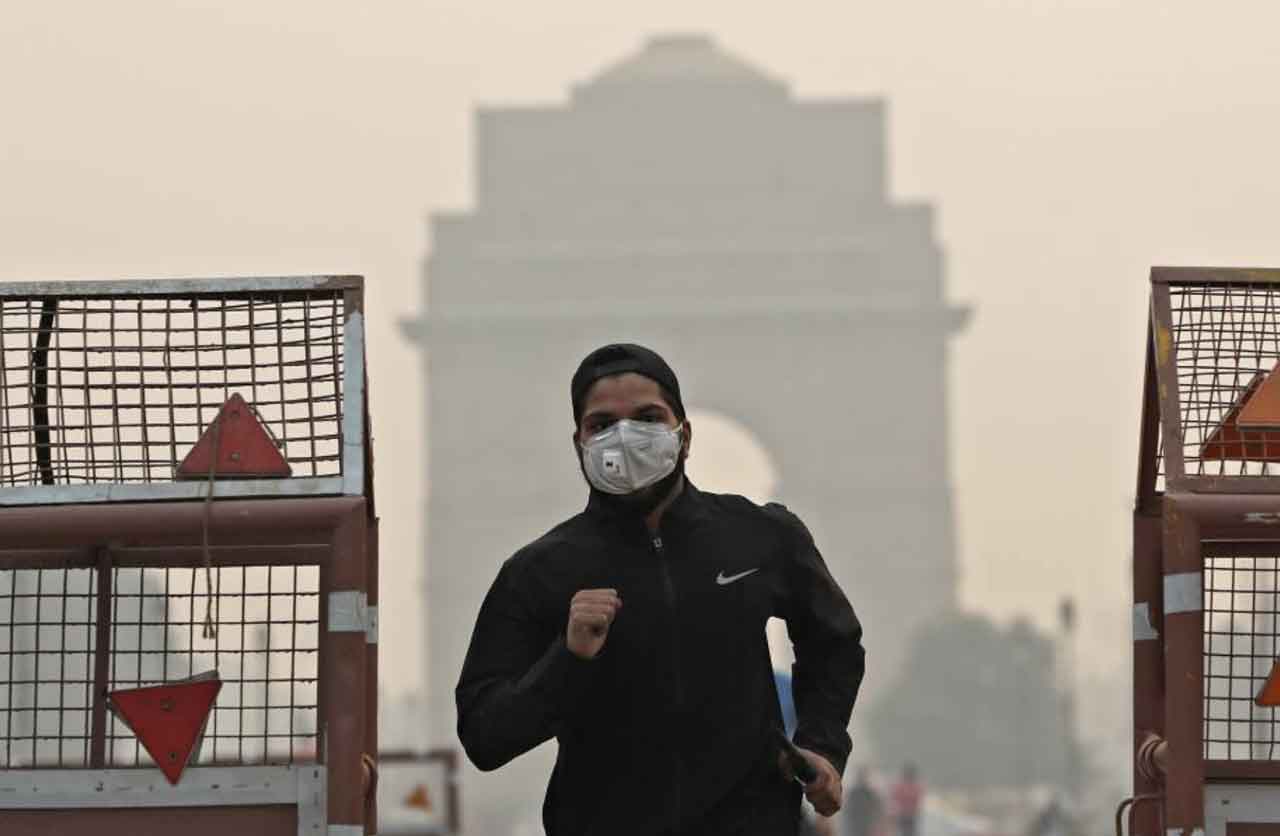
The Indian capital recorded “very poor” citywide air quality Monday, with several monitoring stations entering the severe range
NEW DELHI, India – International News Service — Dense smog blanketed New Delhi on Monday after Diwali firecrackers added to the Indian capital’s seasonal pollution crisis, reducing visibility and exposing more than 30 million metropolitan-area residents to dangerous air.
India’s Central Pollution Control Board recorded a citywide Air Quality Index of 368 at 7 a.m., placing Delhi in the “very poor” category. Several individual monitoring stations registered readings above 400, classified as severe.
Residents had used firecrackers Sunday night despite court-imposed limits. India’s Supreme Court had permitted only approved “green” firecrackers during restricted hours over the weekend. The broader prohibition was restored Monday.
The Commission for Air Quality Management had already imposed preventive measures across Delhi and the surrounding National Capital Region for November 5 to 20. The order restricts dust-producing demolition and outdoor construction, with exemptions for essential infrastructure. It also directs many public and private offices to limit physical attendance to 50 per cent.
Those measures failed to prevent the sharp post-Diwali deterioration. Fireworks release fine particles and gases, but they are only one part of Delhi’s recurring problem. Vehicle exhaust, industry, construction dust and smoke from crop-residue burning in neighbouring states also contribute.
Cool temperatures, low wind and a shallow atmospheric boundary layer trap those pollutants close to the ground during late autumn. The resulting haze can remain over the region for days.
Fine-particle exposure increases the risk of stroke, heart disease, lung cancer and respiratory illness. The World Health Organization estimates that air pollution contributes to about seven million deaths worldwide each year.
Delhi has repeatedly relied on temporary construction limits, traffic restrictions and generator controls during severe episodes. Health and environmental specialists argue that lasting improvement will require cleaner transport and energy, tighter industrial enforcement and coordinated measures to reduce agricultural burning.
Sources: Government of India’s Akashvani News; Commission for Air Quality Management order;