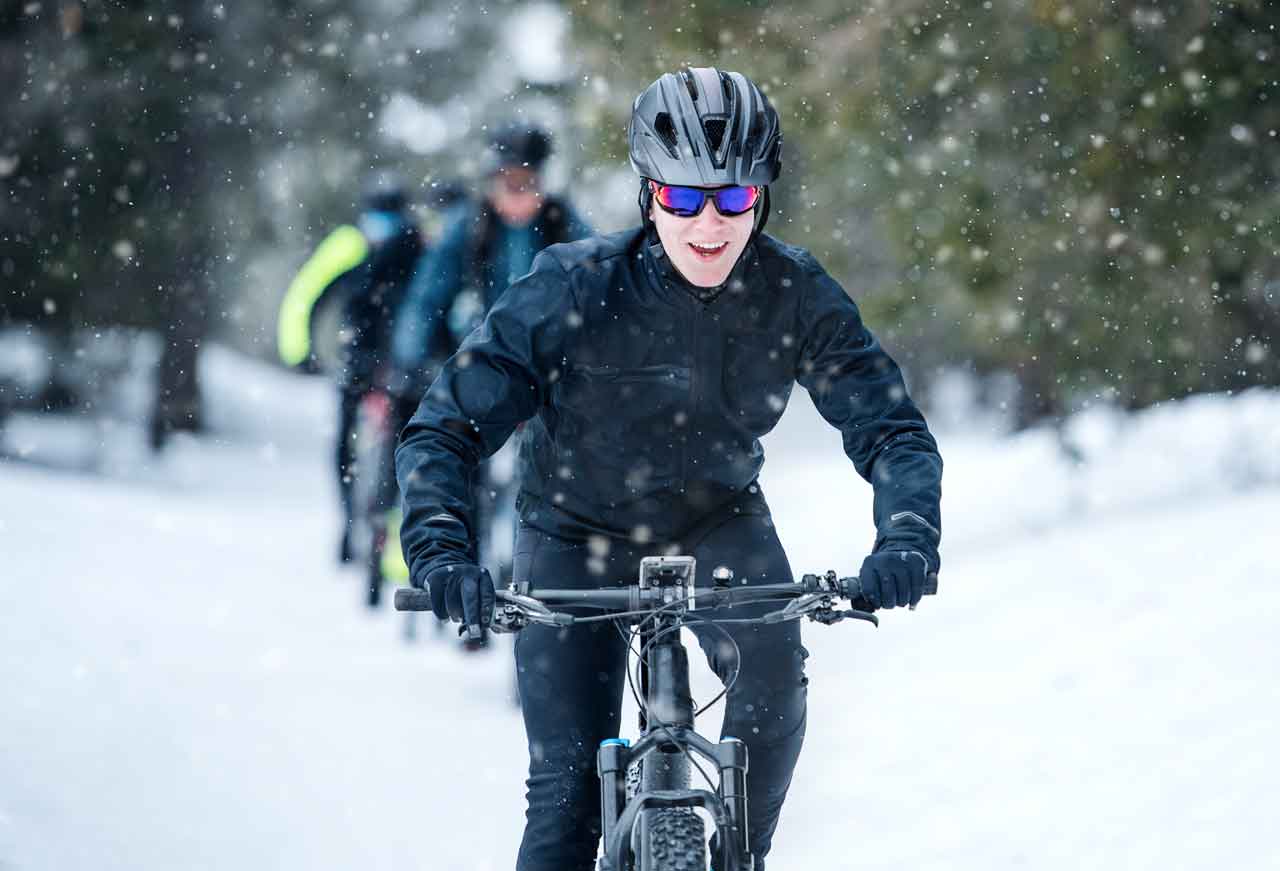
Thunder Bay cyclists ride through fall and winter. Learn Ontario passing rules and the legal, civil and insurance risks when a motorist strikes a cyclist
Shorter days and winter conditions call for greater care. A collision can lead to provincial charges, criminal prosecution and a civil lawsuit, depending on the evidence
THUNDER BAY — October 15, 2026 — A bicycle on a cold, dark morning may be someone’s way to work, school, an appointment or the grocery store. The arrival of fall does not end that journey, and winter does not automatically remove cyclists from the road.
Growing numbers of people are choosing bicycles for transportation. They are in far too many cases more reliable than Thunder Bay Transit. They are also with the price of gasoline climbing, far more economical.
As the days grow shorter and colder, for Thunder Bay motorists, that means watching for people on bicycles throughout the year, allowing room to pass and adjusting to darkness, rain, snow and ice.
What will an El Niño Winter Mean?
An El Niño winter could bring milder conditions to Thunder Bay, potentially making cycling more comfortable during some stretches. Environment and Climate Change Canada says El Niño often brings warmer winter weather to western, northwestern and central Canada.
However, that broad pattern does not guarantee Thunder Bay’s temperatures, snowfall or road conditions. Cold snaps and major snowstorms can still occur, so cyclists and motorists should follow local forecasts rather than assume a mild seasonal outlook means easy travelling.
For road users, a particular concern would be daytime melting followed by overnight freezing. If temperatures repeatedly cross freezing, rain or snowmelt can become difficult-to-see black ice, including during the morning commute.
Water entering pavement and then freezing and thawing also contributes to potholes, as the City of Thunder Bay explains, and Thunder Bay commuters know all too well.
These conditions can leave cyclists navigating slippery surfaces and damaged pavement while motorists need more room to stop and pass safely. Studded bicycle tyres can improve traction on ice, but riders should still reduce speed, avoid sudden braking and check conditions before leaving. Drivers should anticipate cyclists moving around hazards and allow extra space.
For cyclists, it means preparing both the bicycle, and the rider for changing conditions. It also means being seen. Consider a Hi-Vis Vest or jacket to help drivers see you.
When a motor vehicle strikes a cyclist, the consequences can extend far beyond a damaged bicycle. Depending on what happened, a driver could face Highway Traffic Act charges, a Criminal Code prosecution, licence restrictions and a lawsuit seeking compensation for serious injuries or death.
However, a collision alone does not establish criminal guilt or automatically settle who must pay civil damages. Investigators, insurers and courts must examine the evidence.
Winter cycling is transportation, too
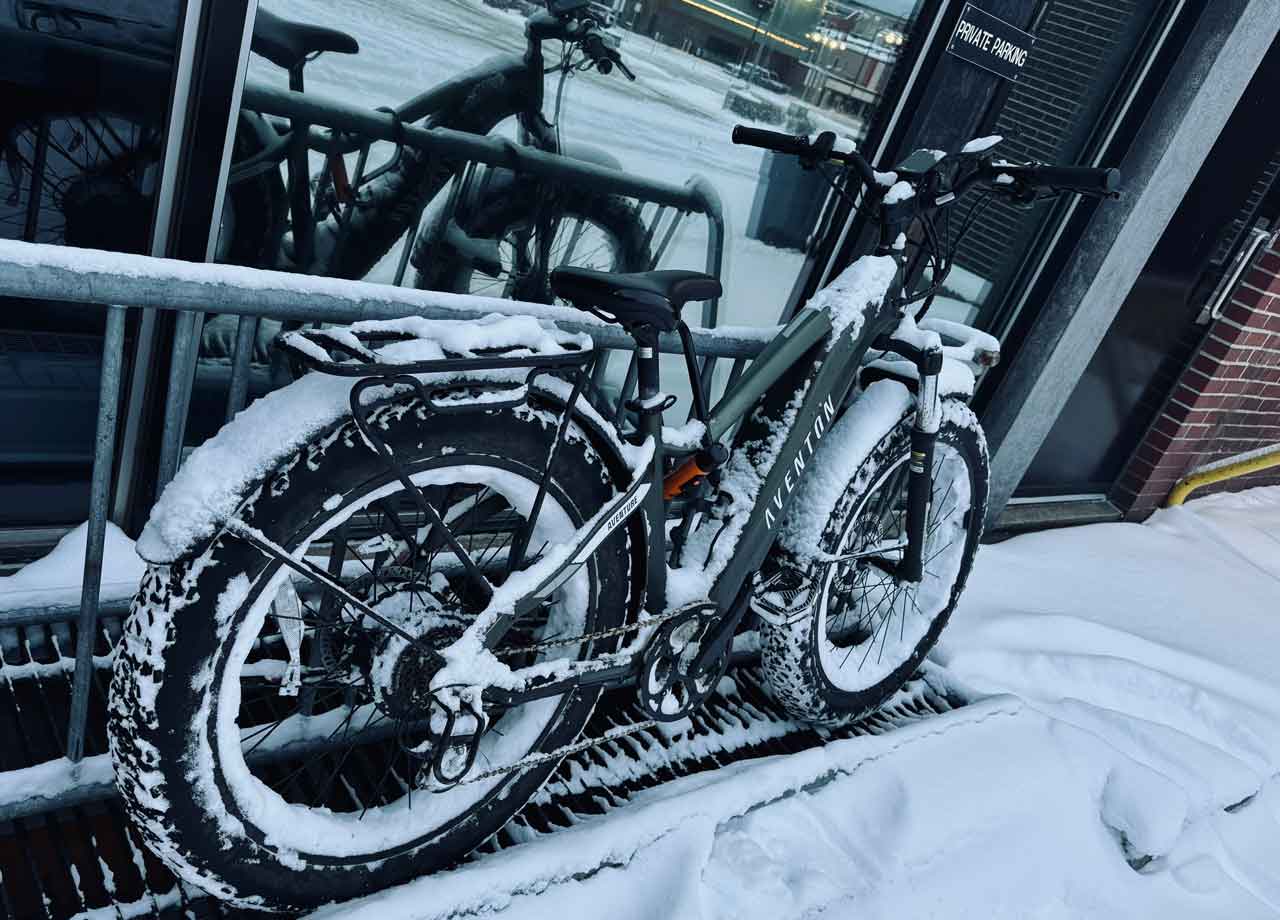
Fat bikes, studded tires and suitable clothing give riders options for colder weather. Studded bicycle tires are specifically designed to improve traction on icy surfaces, including the freeze-thaw conditions that can complicate winter commuting. They do not eliminate the need to slow down or account for poor conditions.
Motorists should also understand what a seasonal bike-lane closure means.
In a November 2022 winter notice, the City of Thunder Bay explicitly said cyclists remained permitted to use roadways and bike lanes, even though the lanes would not be cleared of debris and could be used for snow storage.
That historical notice should not be treated as the City’s maintenance schedule for the coming winter; riders should check current notices.
Snowbanks, slush, debris and damaged pavement can leave a cyclist with less usable space. A rider may need to move away from the road’s edge to avoid a hazard. Drivers should leave room for that possibility.
Ontario-compliant e-bikes also have rules. Thunder Bay District Health Unit’s guidance identifies working pedals, a maximum assisted speed of 32 km/h, a minimum rider age of 16 and an approved bicycle or motorcycle helmet among the requirements. Modifying a machine to exceed legal limits can change its status.
A device being sold as an “e-bike” does not, by itself, establish that it qualifies.
Remember too, that e-Scooters are technically not allowed on public roads or sidewalks in Thunder Bay.
Road access should not be confused with blanket permission to use every sidewalk or recreational trail. Separate rules can apply.
Passing safely takes more than clearing the handlebars
Ontario’s Highway Traffic Act requires motorists overtaking a bicycle to maintain, as nearly as may be practicable, at least one metre of separation until safely past.
The measurement includes the motor vehicle’s mirrors or attachments and the bicycle’s handlebars.
Drivers should wait when there is insufficient space to pass safely. An approaching vehicle, a narrow section of road or an upcoming turn can make an immediate pass unsafe.
At intersections and driveways, look for a cyclist approaching from behind before turning across their path. Check mirrors and blind spots before changing lanes. Before opening a vehicle door, check for someone riding alongside.
Autumn visibility requires preparation on both sides of the windshield.
Ontario’s bicycle lighting rules apply from half an hour before sunset until half an hour after sunrise, and during other conditions when people and vehicles cannot be clearly seen at 150 metres.
Required equipment includes a white or amber front light, a red rear light or reflector, and specified reflective material. A working bell or horn is also required.
For drivers, clearing windows, using appropriate lights and reducing speed help create time to recognize and respond to someone ahead.
For cyclists, functioning lights, reflective clothing and predictable movements help others see and understand their position.
Provincial charges can carry substantial penalties
A driver may face provincial charges for conduct such as unsafe passing, failing to yield or careless driving. The specific charge depends on what police can establish.
Under the Highway Traffic Act, careless driving causing bodily harm or death carries a fine of $2,000 to $50,000, imprisonment for up to two years, or both. A court may also suspend the driver’s licence for up to five years.
The legislation directs courts sentencing that offence to consider the vulnerability of injured or killed cyclists and pedestrians as an aggravating factor.
Those are possible statutory consequences. They are not a prediction of the sentence in every case.
When can a collision become a criminal matter?
Dangerous operation is a Criminal Code offence. It requires more than establishing that a driver made an ordinary negligent mistake.
In R. v. Roy, the Supreme Court of Canada explained that criminal responsibility for dangerous driving requires a marked departure from the care a reasonable person would exercise in the circumstances. The prosecution must prove the offence beyond a reasonable doubt. Source: 2012 SCC 26 · Hyperlaw
Depending on the evidence, impaired operation or failing to stop after a collision can also lead to criminal charges.
| Criminal offence | Maximum imprisonment specified by the Criminal Code |
|---|---|
| Dangerous operation, without the bodily-harm or death offence | Up to 10 years when prosecuted by indictment |
| Dangerous operation causing bodily harm | Up to 14 years when prosecuted by indictment |
| Dangerous operation causing death | Life imprisonment |
Dangerous operation causing bodily harm can also be prosecuted summarily, with different penalties. The table shows statutory ceilings, not usual sentences. Criminal convictions can also bring a criminal record and driving prohibitions, with the applicable consequences depending on the offence and circumstances.
Stopping and helping are legal obligations
Ontario law requires a driver directly or indirectly involved in a collision to stop, remain at the scene or immediately return, provide all possible assistance, and supply required identifying and insurance information when requested.
The Criminal Code separately addresses failing to stop after an accident. Its requirements include knowledge of, or recklessness about, involvement in a collision, and failure without reasonable excuse to stop, identify oneself and offer assistance where someone is injured or appears to need it. Leaving can therefore create a separate legal problem even where responsibility for causing the original collision is disputed.
Call 911 when someone is injured or there is an immediate danger. Follow emergency instructions, avoid creating another collision and preserve relevant dashcam footage or other evidence.
Civil liability: Ontario places a special burden on motorists
A lawsuit is separate from a prosecution. An injured cyclist can pursue compensation without a criminal conviction against the driver.
Section 193 of Ontario’s Highway Traffic Act creates a special civil rule for loss or damage arising from a motor vehicle on a highway. In a typical motor vehicle–bicycle case, it places the burden on the vehicle’s owner or driver to establish that the loss did not result from their negligence or improper conduct.
This is a rebuttable burden, not an automatic finding that a motorist is liable for every collision. Ontario courts have applied the provision while also examining a cyclist’s own conduct.
Evidence can include speed, sightlines, lights, traffic signals, road conditions, witness accounts and video. Civil findings generally use the balance-of-probabilities standard, a different standard from criminal proof.
A cyclist’s negligence can reduce compensation when it contributed to the loss. Ontario’s Negligence Act provides for damages to be apportioned according to each party’s degree of fault. A cyclist breaking a rule does not, by itself, erase a driver’s responsibility; the contribution of each person’s conduct must be assessed.
The driver may not be the only defendant. Under the Highway Traffic Act, a vehicle owner can also be liable for negligent operation, subject to statutory conditions and exceptions, including the provision concerning possession without the owner’s consent. Insurance does not place a ceiling on someone’s injuries
A serious injury can produce claims involving lost income, treatment and rehabilitation, future care, damaged property and pain and suffering.
Ontario automobile injury claims are subject to statutory rules; for example, claims for pain and suffering face an injury threshold. Not every claimed amount is automatically recoverable.
Automobile liability insurance generally responds to covered legal liability and provides a defence under the policy. However, the policy’s liability limit does not necessarily cap the damages a court can award.
Ontario’s standard automobile policy expressly illustrates that an insured person can be responsible for the portion of a judgment exceeding available coverage. Drivers should understand their coverage before a collision occurs.
A 2026 insurance change cyclists should understand
Ontario’s accident-benefit changes took effect on July 1, 2026. Medical, rehabilitation and attendant-care benefits remain mandatory, while several other benefits became optional.
Access to optional benefits is restricted to specified insured people, including the named insured, their spouse, eligible dependants and listed drivers. The Financial Services Regulatory Authority advises consumers to review their coverage; the eligibility changes can matter even where an existing policy renews with its previous benefits.
The Insurance Bureau of Canada says mandatory benefits remain available to qualifying uninsured pedestrians and cyclists. However, an injured cyclist should not assume that every optional benefit will be available through the striking vehicle’s policy. Coverage depends on the applicable policies and eligibility rules.
Practical steps for Thunder Bay commuters
For motorists:
- Slow down when visibility or traction deteriorates, leaving time to react.
- Wait for a safe opportunity to pass and leave adequate lateral clearance.
- Check for cyclists before turning, changing lanes or opening doors.
- Expect riders to avoid snowbanks, slush, potholes and roadside debris.
- Treat someone on a bicycle as a person whose safe arrival matters.
For cyclists:
- Check lights, brakes, tires and, where applicable, battery security before leaving.
- Choose tires suited to the conditions and reduce speed on slippery surfaces.
- Use clear signals where safe, ride predictably and allow extra stopping distance.
- Make yourself visible and wear a properly fitted helmet.
- Check current route conditions and municipal winter-maintenance notices.
A shared road requires care from everyone. As Thunder Bay moves toward winter, allowing a little more time and space can prevent a collision with consequences that last far beyond the season.
This article provides general information about Ontario law and insurance. Individual cases require advice based on their facts.