Thunder Bay Transit Needs a Reliability Plan Riders Can Measure
Analysis: Staffing, accurate schedules and accountability should be central to the election debate over cancelled buses and service quality
THUNDER BAY — For a transit rider, an efficient bus system starts with a basic promise: the bus arrives, stops and gets them where they need to go.
When that promise breaks down, the consequences can include missed shifts, late appointments and longer waits outside. That makes transit reliability a legitimate issue for voters assessing Thunder Bay’s municipal leadership.
The concerns have a documented basis. Earlier this year, transit management reported service delivery below its target, while council rejected a proposed temporary reduction in summer frequency intended to make the schedule more predictable. The city has since launched a broader review of its transit network.
However, complaints about buses passing waiting passengers require a separate examination. The research for this article did not establish how frequently that happens, what proportion involves full or out-of-service buses, or how many complaints were substantiated. Many of these concerns are posted on social media.
The practical response should combine immediate service improvements with public reporting that shows whether those improvements work.
What is already documented?
Your ThunderBay’s March 3 reporting on council proceedings quoted Transit Services Manager Brad Loroff saying the system delivered approximately 96 per cent of scheduled trips in 2025, against a 99 per cent target.
Those figures describe trip delivery, not whether every operating bus arrived on time.
Council was presented with a proposal to reduce some summer frequencies to match available staffing. Supporters argued that a predictable schedule was preferable to unexpected cancellations. Opponents raised concerns about longer waits and whether the proposal addressed the underlying staffing problems. Council rejected it. Your ThunderBay
That history matters, but it does not establish the cancellation rate in October 2026. Voters need updated figures rather than a debate built entirely around last winter’s staffing projections.
Start by publishing the service record
Council should require a monthly transit report that residents can understand without reading a lengthy budget document.
It should separate the different ways service can fail:
| Measure | What it tells riders |
|---|---|
| Scheduled trips actually operated | Whether promised service was delivered |
| Early and late departures | Whether passengers could rely on the timetable |
| Cancellations by route, time and cause | Where problems occur and what causes them |
| Pass-ups and reasons | How often waiting passengers were unable to board |
| Missed connections | Whether transfers worked |
| Complaint response and resolution times | Whether concerns received follow-up |
| Cost per delivered service hour | What taxpayers paid for service actually provided |
The city should also publish total scheduled service hours. Otherwise, a cancellation percentage could improve simply because the timetable contains fewer trips.
Success should mean dependable service and useful frequency—not just a better-looking percentage.
Fix staffing capacity and retention together
Recruitment alone will not solve a shortage if experienced operators leave as quickly as replacements arrive.
A staffing recovery plan should examine recruitment timelines, training capacity, certification delays, turnover, overtime, absences and working conditions. Management and employee representatives should identify which problems can be addressed quickly and which require funding or bargaining.
Possible improvements include more predictable shifts, adequate recovery time between trips, better support following threatening incidents and a sufficient reserve of trained operators to cover normal absences.
These are areas to investigate, not findings that any one factor explains Thunder Bay’s current difficulties.
Council should ask management to report the number of operators available for scheduled work, the number in training and the expected dates when trainees can operate independently.
Hiring announcements are useful. Filled shifts and fewer cancellations are the results riders need.
Investigate buses passing waiting passengers
A bus passing someone at a stop can have several explanations: it may be full, out of service, operating on a detour or serving a different route. Operator error or misconduct is also possible.
Those possibilities should be investigated rather than assumed.
A complaint process should capture the date, time, route, direction, stop number and vehicle number where available. Staff can then assess the report against available vehicle-location records, dispatch information and other evidence.
If a full bus repeatedly leaves passengers behind, the response should address capacity. If a stop has moved, signage and trip-planning information need attention. If an operator improperly bypasses a passenger, management should address the conduct fairly and consistently.
Thunder Bay already accepts questions, complaints and suggestions through its online transit feedback form. Transit customer service is available at 807-684-3744.
A stronger system would give every complaint a reference number, an acknowledgement deadline and a meaningful explanation of the outcome, while protecting employee and passenger privacy.
Make cancellation information timely and clear
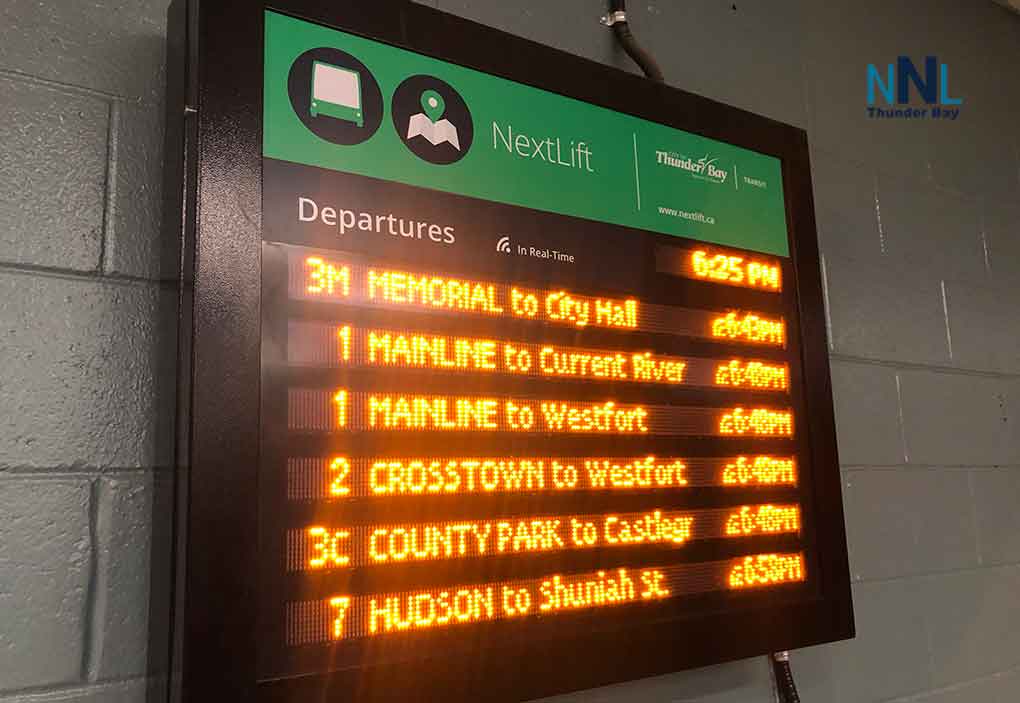
Thunder Bay already directs passengers to the Transit app and NextLift for service information. It also publishes scheduled and real-time transit data for application developers.
The next question is whether the information accurately reflects what is happening on the street.
A practical improvement would be to measure how long it takes a cancellation recorded by dispatch to appear in passenger information systems.
Apps and displays should clearly distinguish a scheduled arrival from a live prediction. Cancelled trips should be unmistakable, and riders should receive the earliest possible notice when their usual trip is affected.
Information also needs to reach people without smartphones through telephone service, terminal displays and clear notices at affected stops.
Use the existing review to make decisions
The city launched its Transit Service Optimization Review on June 18, working with Via Strategies. Its public project page says the study covers 20 fixed routes, Lift+ specialized transit and potential on-demand services, with final recommendations expected in late 2026.
That provides an opportunity to examine travel times, transfers, neighbourhood coverage and service to jobs, education and health care.
The recommendations should identify costs, staffing requirements and implementation dates. Council should require options that show what can be achieved within existing resources and what additional investment would buy.
Immediate problems—such as unclear cancellation notices or unanswered complaints—should not have to wait for the entire review.
Improve routes without making access harder
Thunder Bay is already reviewing bus-stop spacing. The city says adjusting closely spaced stops can reduce travel time and improve reliability, while identifying accessibility and safety as considerations.
That approach needs care. A shorter bus trip may offer little benefit to someone who must walk much farther along an icy sidewalk to reach it.
Any proposed stop removal should assess walking distance, safe crossings, winter maintenance and access for people with disabilities.
Similarly, the city’s planned phased introduction of on-demand transit during 2026–2028 should be tested against clear standards. The city describes a system bookable by app, online or telephone, connecting passengers within zones or to conventional transit.
Before expanding it, council should examine wait times, cost per passenger, accessible-vehicle availability and whether connections remain dependable.
What voters should demand
Candidates should explain what they would fund, what they would change and how residents could judge the results.
A credible first step would be a public service baseline, followed by a costed reliability plan with quarterly progress reports. Any temporary schedule reductions should include their effect on riders and a clear restoration plan.
Efficiency also requires financial discipline: separating spending on buildings and vehicles from the operating resources needed to put buses on the road.
Thunder Bay’s transit debate should ultimately be judged at the bus stop. Can passengers trust the timetable? Can they board? Can they make their connection? And when something goes wrong, does the city explain it and fix the cause?