Copper, rare earths, Marathon financing and Red Lake gold lead the Sept. 25 RockHawks mining watch
THUNDER BAY — ROCKHAWKS MINING NEWS — Copper is finishing the week under supply pressure, China’s dominance of rare-earth processing remains a major strategic concern, and gold is retreating from recent levels but remains above US$4,200 an ounce.
In Canada, Ottawa is proposing much faster federal project reviews while Canadian potash producers face a potential new challenge from Belarus. Closer to home, substantial financing has moved the Marathon Copper-Palladium Project and Springpole Gold Project further along the development pipeline, while extremely high-grade drill results are drawing attention at the producing Madsen Mine in Red Lake.
For Thunder Bay and Northwestern Ontario, the common thread is increasingly clear: mineral demand is strong, capital is available for advanced projects, but access to infrastructure, processing capacity, Indigenous participation and the ability to move projects from drilling into construction remain decisive.
RockHawks Mining Watch — Friday, Sept. 25, 2026
The mining-company news flow supplied to NetNewsLedger for Sept. 25 is heavy on exploration, financing and project development. It includes new drilling from Côte d’Ivoire, Australia, Nunavut and Canada, along with critical-mineral financing activity.
The larger market picture, however, is being driven by copper availability, rare-earth geopolitics, gold prices and the accelerating competition to build mineral-processing capacity outside China.
INTERNATIONAL — Copper Near Record Territory as Chinese Inventories Tighten
Copper enters Friday as one of the most important commodities for RockHawks to watch.
Benchmark three-month copper on the London Metal Exchange was trading at approximately US$14,632 a tonne early Friday, putting it on course for a weekly gain. Reuters reports that visible Chinese inventories have dropped sharply while some smelters have announced maintenance-related production reductions.
Copper had moved close to record levels earlier in the week before profit-taking and a stronger U.S. dollar pulled prices back.
This matters directly to Northwestern Ontario.
Copper is central to electricity transmission, data centres, electric vehicles, defence manufacturing and virtually every major electrification project. A sustained high-price environment improves the economics of undeveloped copper deposits but can also increase construction costs for mines, utilities and major infrastructure.
The supply side has also been unsettled. Operations at BHP’s Escondida operation in Chile — the world’s largest copper mine — were suspended following the death of a worker, adding another short-term supply concern to an already tight market.
For Northwestern Ontario, copper strength strengthens the strategic case for projects such as Marathon and for nickel-copper deposits elsewhere across the North.
INTERNATIONAL — China Still Holds the Rare-Earth Processing Advantage
Rare earths remain as much a geopolitical story as a mining story.
Reuters reported Thursday that despite billions of dollars of American investment into domestic mines and processing facilities, the United States is expected to remain dependent on Chinese rare-earth imports well into the 2030s.
Benchmark Mineral Intelligence estimates that current U.S. production can meet only about 42 per cent of domestic demand for the two most widely used rare earths. China also retains a particularly strong position in processing heavy rare earths used in defence applications.
The distinction between mining and processing is critical.
Opening a mine does not create a complete supply chain. Ore must be separated, refined and converted into materials manufacturers can actually use.
That is one reason processing is becoming increasingly important to Canadian and Ontario critical-mineral policy.
For Northern Ontario, the opportunity is not simply extracting lithium, nickel, copper, cobalt or rare earths. The larger economic prize is keeping more refining, processing, manufacturing and technical expertise in Canada.
INTERNATIONAL — Gold Near US$4,275, but Higher Rates Weigh on Bullion
Gold remains historically expensive, but Friday’s market is reminding exploration investors that the metal does not move in a straight line.
Spot gold was around US$4,274.90 an ounce early Friday, down more than two per cent for the week as a stronger U.S. dollar and expectations for tighter monetary policy weighed on bullion.
Higher interest rates tend to work against gold because the metal does not generate interest income.
Even after the week’s decline, however, a gold price above US$4,200 remains significant for Canadian exploration and development companies.
Higher long-term gold-price assumptions can improve project economics and make financing easier, although developers still have to contend with higher labour, energy, equipment and construction costs.
That backdrop is important for Red Lake, Dryden and other Northwestern Ontario gold camps.
INTERNATIONAL DRILL BOARD — Côte d’Ivoire and Australia Report Fresh Results
The Sept. 25 company-news feed also contains several exploration results worth watching.
Aurum Resources reported additional drilling from the BST1 deposit at its Boundiali Gold Project in Côte d’Ivoire. Results included 2.63 metres grading 76.74 grams per tonne gold, including 1.30 metres at 155 g/t, along with a separate 24-metre intersection grading 6.31 g/t. The company says some mineralization extends outside the current resource envelope ahead of a planned resource update.
In Western Australia, Lunnon Metals reported several broader, lower-grade gold intersections at its Plentiful prospect, including 12 metres at 1.42 g/t, 14 metres at 1.42 g/t and 14 metres at 1.04 g/t. Lunnon says drilling density may now support work toward an initial mineral-resource estimate. A separate deep exploration target did not produce sufficiently encouraging results and no additional work is currently planned on that target.
That second point is worth emphasizing: unsuccessful drilling is also useful geological information. Good exploration programs advance stronger targets and stop spending on weaker ones.
NATIONAL — Ottawa Proposes One-Year Federal Reviews for Major Projects
Canada’s regulatory system could be heading toward a significant change for mines and other major resource projects.
The federal government introduced Bill C-39, the Building Canada Strong Act, on Sept. 21. The proposed legislation would seek to complete federal project reviews and decisions within one year after a proponent has submitted a comprehensive application and required studies.
The government is also pursuing a “one project, one review” model designed to reduce duplication between federal and provincial processes.
Ottawa says environmental standards and Indigenous rights would continue to apply, and it has established a Crown Consultation Hub intended to coordinate consultation rather than eliminate it.
For mining companies, shorter and more predictable review periods could affect project financing because regulatory uncertainty is a major component of development risk.
For First Nations, environmental organizations and affected communities, the important issue will be whether faster timelines still permit meaningful consultation, adequate technical review and sufficient time to examine cumulative effects.
For Northwestern Ontario, those questions are not theoretical. They could eventually affect gold, lithium, copper and Ring of Fire projects.
NATIONAL — U.S. Looks at Belarusian Potash as Alternative to Canadian Supply
Canada’s potash industry also has a new trade issue to watch.
U.S. President Donald Trump said Washington is working on a potential agreement to buy potash from Belarus at prices below those paid for Canadian material.
Canada is currently the dominant foreign supplier of potash to the United States.
Reuters notes, however, that analysts question how much Belarusian material could practically displace Canadian supply because transportation logistics remain challenging and the U.S. already has significant potash availability.
The story matters most directly to Saskatchewan and companies such as Nutrien, but it is another example of minerals increasingly being pulled into international trade and national-security policy.
For Canada’s mining sector, secure geology is no longer enough.
Market access is becoming political.
NATIONAL — Nunavut Gold Drilling Extends Jaws Target
Manhattan Gold has reported a substantial step-out result from the Hook Lake Project in Nunavut.
Hole JWS26012 intersected 21.34 metres grading 1.72 g/t gold from 32 metres, including 4.57 metres grading 4.89 g/t. The company says the result extends the drill-tested strike at its Jaws target to approximately 1.25 kilometres.
The project is located on Inuit-owned land and Manhattan holds its mineral interest through an agreement involving the Kivalliq Inuit Association.
The result is exploration-stage.
Reported downhole intersections do not by themselves establish true width, a mineral resource or economic viability. Additional drilling, geological modelling and eventually economic work would be required.
Still, extending mineralization several hundred metres beyond previous drilling is the kind of result exploration teams look for when testing whether a discovery may have district-scale potential.
REGIONAL — Generation Mining Closes $240-Million Marathon Financing
For Northwestern Ontario, Generation Mining’s Marathon Copper-Palladium Project remains one of the most consequential mining-development stories of September.
Generation Mining closed a $240-million equity financing package on Sept. 21, comprising a $200-million bought-deal public offering and a $40-million concurrent private placement with Canada Growth Fund.
Canada Growth Fund emerged with approximately 19.9 per cent of Generation Mining’s outstanding shares following the transaction.
The funds form part of the approximately $1.3-billion construction financing package assembled for the Marathon project.
Generation has also entered into an offtake agreement with Glencore covering polymetallic copper concentrate containing copper, palladium, platinum, gold and silver. The concentrate is expected to move through Glencore’s Horne smelter in Rouyn-Noranda and other Canadian processing facilities.
For Thunder Bay businesses, the key story now shifts toward procurement.
Construction equipment, trucking, engineering, camp services, environmental work, electrical systems, skilled trades and maintenance could create opportunities across the region if the project moves into full construction.
The company continues to describe future production and construction schedules as forward-looking and subject to project risks and final requirements.
REGIONAL — First Mining Raises $57.5 Million With Springpole Among Funding Priorities
Another major financing landed Thursday.
First Mining Gold closed a bought-deal offering for approximately $57.5 million, issuing about 68.46 million shares at 84 cents each.
The company says the net proceeds will be used to advance the Springpole Gold Project in Northwestern Ontario, its Duparquet project in Quebec, and for working capital and corporate purposes.
Springpole received a federal environmental-assessment approval in June and has since been the subject of project agreements involving area First Nations.
The financing does not mean mine construction has begun.
But raising more than $57 million gives First Mining additional capital for engineering, permitting and development work.
For the Northwestern Ontario mining-services sector, Springpole is another project worth following for procurement, road development and eventual construction opportunities.
REGIONAL — Red Lake Delivers Exceptional Underground Gold Grades
West Red Lake Gold Mines reported some of the week’s most eye-catching Canadian gold assays from its Madsen Mine in Red Lake.
The Sept. 22 underground drilling results included:
- 5.3 metres at 176.04 g/t gold, including one metre at 925.52 g/t;
- 4.5 metres at 128.32 g/t gold, including one metre at 566.81 g/t;
- 6.85 metres at 35.72 g/t gold, including one metre at 233.76 g/t; and
- 12.8 metres at 7.93 g/t gold.
The drilling targeted the Austin 904 and 955 complexes at approximately 600 to 700 metres underground.
West Red Lake says the work is intended to help define mineralized areas that could potentially be incorporated into the Madsen mine plan in 2027.
These are exceptionally high reported grades, but RockHawks should keep the geological context in mind.
Individual drill intercepts are not equivalent to average mine grades, and their economic importance depends on continuity, geometry, dilution, recoveries and whether the material can be mined efficiently.
What makes these particular results more relevant is that they are being drilled from an existing operating underground mine rather than from an isolated early-stage exploration property.
REGIONAL — Frontier Lithium Keeps PAK Development Moving
Frontier Lithium also remains on the regional watch list.
The company completed a restructuring of an existing convertible loan, extending the maturity date to Feb. 25, 2028, with principal of approximately $3.63 million. No new money was advanced through the transaction.
The significance lies in the additional financing flexibility as Frontier continues work on its PAK Lithium Project.
The proposed integrated development includes a mine and mill in Northwestern Ontario and a downstream lithium conversion facility planned for Thunder Bay.
Frontier also began an update of its mine-and-mill feasibility study earlier this month.
With lithium prices having experienced substantial volatility, the project remains a useful test of whether governments and industry can establish a Canadian lithium supply chain extending from hard-rock deposits to battery-grade chemicals.
REGIONAL — Ring of Fire Story Moves From Announcements to Execution
The Ring of Fire remains the region’s longest-running critical-minerals story, but the focus is changing.
The Marten Falls Community Access Road and Webequie Supply Road have both received major assessment decisions, while the Northern Road Link — needed to connect those systems into a route toward the mineral district — remains under assessment.
Ontario and Marten Falls First Nation marked the start of early work on the Marten Falls road at the end of August.
At the same time, First Nations do not hold a single position on Ring of Fire development.
Neskantaga First Nation continues to oppose development affecting its homelands without its consent and has specifically warned investors not to assume road approvals guarantee future mines.
For RockHawks, the distinction matters.
A road approval is not a mine approval.
An exploration claim is not a construction permit.
A mineral resource is not a reserve.
And a high-grade drill hole is not an economic mine.
Those distinctions will remain essential as investment accelerates.
INDUSTRY SPOTLIGHT — BOTT Construction Targets Quality Work for Mining Companies
As Northwestern Ontario mining projects move from exploration toward development and construction, the opportunity extends well beyond the companies that own the mineral deposits.
Mining projects require dependable contractors able to deliver work safely, accurately and on schedule — often in demanding northern conditions where delays can quickly become expensive.
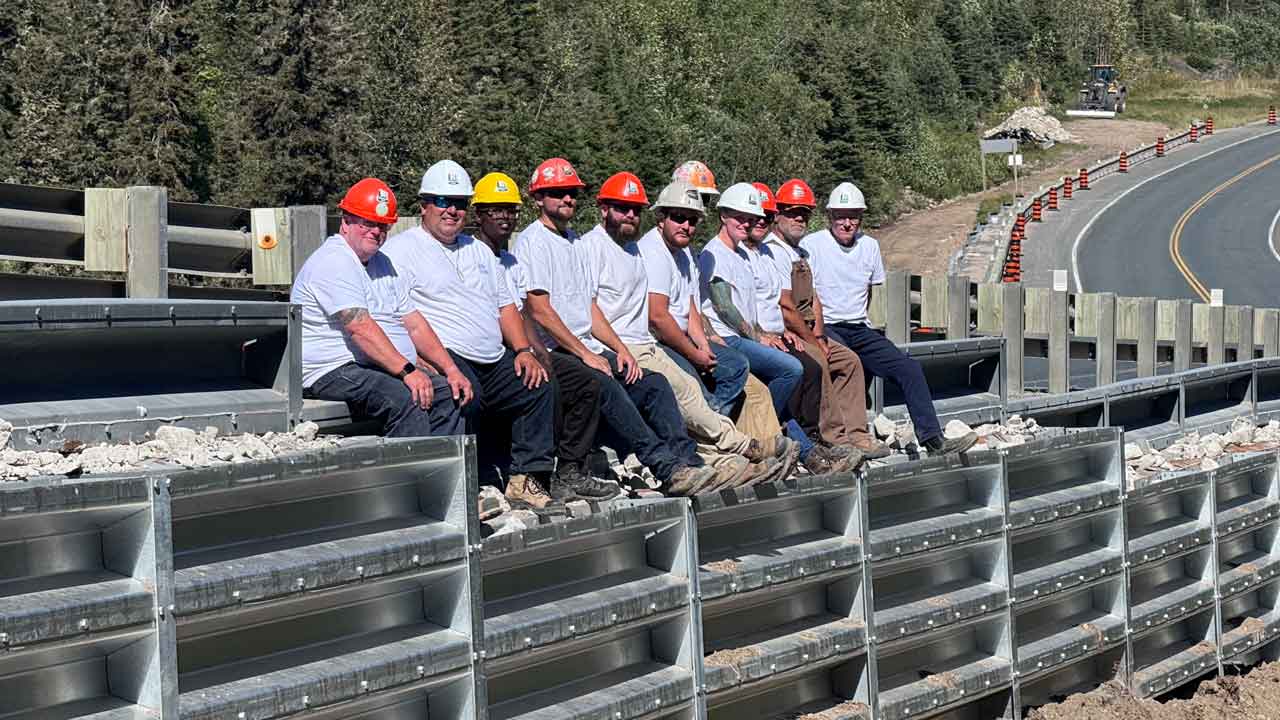
BOTT Construction says its approach is built around providing top-quality construction work for mining companies, with an emphasis on workmanship, reliability and meeting the standards required on industrial and resource-sector projects.
For mine operators and developers, contractor performance matters at every stage. Construction quality can influence project schedules, operating reliability, worker safety and long-term maintenance costs. Work also has to be coordinated with engineering teams, equipment suppliers and other contractors while meeting the increasingly demanding safety expectations of modern mine sites.
That makes experienced northern construction capacity part of the region’s wider mining supply chain.
The opportunity could grow substantially as projects including Marathon, Springpole, PAK Lithium and future developments across Northwestern Ontario advance through financing, permitting and construction.
For companies such as BOTT Construction, a stronger mining sector can translate into opportunities to provide high-quality construction services closer to where the projects are being developed.
Keeping more of that work in Northwestern Ontario also increases the regional economic impact of mining. Dollars spent with northern contractors support employment, equipment investment, skilled trades and businesses that remain in the region long after the initial construction phase is completed.
For mine developers, meanwhile, having capable contractors available within Northern Ontario can reduce the logistical challenges associated with mobilizing crews and equipment over long distances.
As the next generation of Northwestern Ontario mines moves forward, the companies building the mines and supporting their operations will increasingly share the economic spotlight with the companies discovering the deposits.
What It Means for Thunder Bay and Northwestern Ontario
The Sept. 25 mining picture points toward four major trends.
Copper is becoming increasingly strategic. Tight inventories and strong electrification demand improve the strategic importance of Northern Ontario copper projects.
Processing matters almost as much as mining. China’s rare-earth advantage demonstrates why extracting ore without building domestic refining capacity leaves countries dependent on foreign processors.
Capital is moving toward more advanced Northern Ontario projects. Generation Mining has closed $240 million in new equity financing, while First Mining has raised $57.5 million. These are meaningful financing events rather than exploration-stage promotional announcements.
High-grade gold continues to drive Northwestern Ontario exploration and mine development. The latest Madsen results reinforce Red Lake’s status as one of Canada’s most important high-grade gold districts.
For Thunder Bay, the opportunity sits between the mine and the market.
The region will benefit most if Northwestern Ontario can capture not only extraction jobs but also engineering, construction, equipment supply, transportation, processing, training, Indigenous business participation and long-term mine services.
That is the RockHawks story to keep watching as September closes.