Losing a tooth can alter much more than the appearance of a smile. Teeth work together as part of a mechanical system that distributes biting forces, supports efficient chewing and helps maintain the alignment of the dental arches. When one tooth is lost, neighboring teeth may gradually shift toward the open space, while a tooth in the opposing arch can move beyond its normal position because it no longer meets resistance. These changes can affect the way the upper and lower teeth come together, potentially creating new areas of concentrated pressure during chewing. Food may also become easier to trap in newly formed gaps, which can complicate daily cleaning and increase the risk of problems around neighboring teeth. For those reasons, replacing a missing tooth is often viewed as a restorative decision rather than a purely cosmetic one.
The jawbone also responds to tooth loss in ways that are not immediately visible. Natural tooth roots transmit forces into the surrounding bone when a person bites and chews, giving the bone regular mechanical stimulation. Once a tooth is removed, the bone in that area no longer receives the same type of loading and can gradually lose volume. The speed and extent of that change vary among patients, but bone remodeling after tooth loss is a well-established biological process. Over time, significant bone loss can affect the shape of the gum and the dimensions of the ridge that once supported the tooth. This can make future restorative treatment more complicated because there may be less bone available to support a replacement.
Traditional tooth-replacement methods can address important functional and cosmetic concerns, but they do so in different ways. A conventional dental bridge generally relies on neighboring teeth for support, while a removable partial or full denture rests largely on the gums and underlying tissues. A dental implant takes a different approach because it replaces support from below the gum rather than relying exclusively on adjacent teeth or soft tissue. The implant becomes an artificial root-like foundation for a crown, bridge or denture restoration. That distinction is central to understanding why implants are frequently considered for long-term tooth replacement. Rather than simply filling a visible gap, implant treatment can rebuild part of the structural support that was lost with the natural tooth.
How Dental Implants Create a Stable Foundation
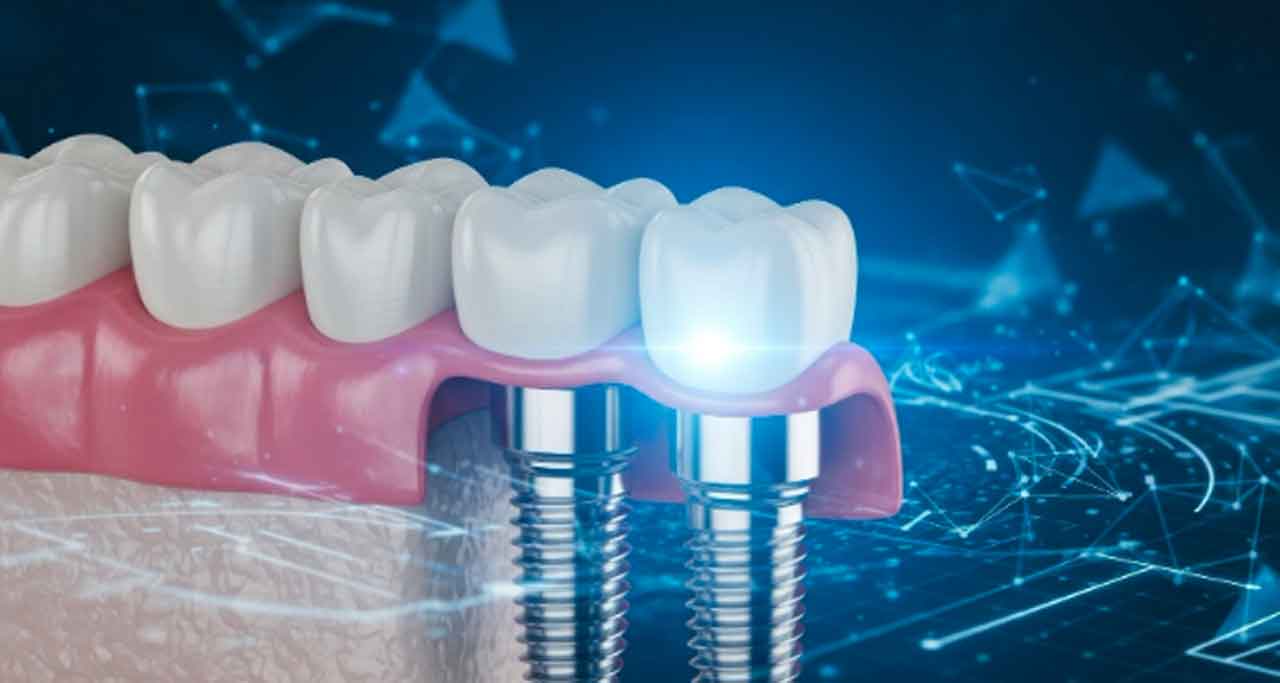
A dental implant is typically a small biocompatible fixture placed into the jawbone at the site of a missing tooth. Titanium is widely used for dental implants because it has a long clinical history and can integrate successfully with bone, although other implant materials and designs also exist. After placement, the surrounding bone heals around the implant through a biological process known as osseointegration. This process creates a stable interface that allows the implant to function as a foundation for a dental restoration. Once healing and integration are adequate, an abutment and replacement tooth can be connected to the implant. The result is a restoration that transfers chewing forces through a structure anchored within the jaw rather than through a removable base alone.
The value of osseointegration becomes especially clear during ordinary activities such as eating. A properly planned and successfully integrated implant is designed to resist the forces generated during biting and chewing without depending on adhesives or clasps for stability. This can give an implant-supported tooth a more secure feel than many removable alternatives. It can also allow the dentist to replace a single missing tooth without preparing healthy neighboring teeth solely to support a conventional bridge. For patients missing several teeth, implants can be strategically positioned to support a bridge or stabilize a larger prosthesis. The same underlying principle applies in each situation: the restoration receives support from implant fixtures that are anchored in bone.
The type of implant restoration a patient needs depends largely on the extent of tooth loss and the condition of the remaining oral structures. Replacing a single missing tooth presents a different restorative challenge from rebuilding an arch in which most or all natural teeth are absent. Patients comparing treatment options may therefore benefit from working with a practice that offers solutions for both individual tooth replacement and more extensive restorative needs. Dental Implant Partners, the prosthetic practice of Dr. Belinda Gregory-Head, provides implant-based treatment options tailored to different levels of tooth loss. Among the restorative services available through the practice, its Dental Implants service offers options for tooth replacement, while its Implant Supported Dentures service can providegreater stability and support for dentures. The most appropriate treatment depends on bone volume, oral health, bite forces, the number and position of missing teeth, and the patient’s long-term restorative goals.
Implant Treatment Can Help Preserve Oral Structures
One of the most important differences between an implant and many other tooth-replacement options involves what happens beneath the gumline. Because an implant is positioned within the jawbone, functional forces can be transferred into the surrounding bone when the restoration is used. This does not make an implant biologically identical to a natural tooth root, but it does provide a form of mechanical loading in the area. That loading can help preserve bone around a healthy, well-integrated implant. By contrast, an edentulous area without an implant may continue to remodel because the bone is no longer supporting a tooth root. Preserving available bone can be particularly important for patients who want to maintain restorative options over many years.
Bone preservation also has practical consequences for the design of future dental work. As a ridge loses width or height, creating a natural-looking tooth replacement can become more challenging. Severe bone loss may eventually require bone grafting or other procedures before certain implant treatments can be performed. Maintaining bone around an implant can therefore help protect the foundation upon which the restoration depends. It may also contribute to more stable contours in the gum tissue surrounding an implant crown or bridge. These factors can matter greatly in visible areas of the mouth, where the appearance of the gumline is often as important as the color and shape of the replacement tooth.
Implant treatment can also reduce the need to place restorative demands on adjacent healthy teeth. With a traditional tooth-supported bridge, teeth on either side of a missing tooth are commonly prepared so they can hold crowns that support the replacement tooth between them. That approach remains useful in many clinical situations, but it requires those neighboring teeth to become part of the restoration. A single dental implant can often replace a missing tooth independently, allowing adjacent teeth to remain untouched if they are otherwise healthy. This can be especially valuable when those neighboring teeth have minimal or no existing restorations. Long-term treatment planning frequently involves preserving as much healthy natural tooth structure as practical, and implants can support that objective in appropriately selected cases.
Durability Changes the Long-Term Cost Equation
Dental implants are often associated with a higher initial cost than some conventional tooth-replacement methods. That upfront difference can make a removable prosthesis or certain bridge treatments appear less expensive when the comparison is limited to the day treatment begins. Long-term dental costs, however, are shaped by more than the first invoice. Restorations can wear, fracture, loosen or require replacement as the mouth changes over time. Conventional dentures may also need adjustment or relining as the underlying ridge changes shape. An implant-supported treatment may therefore deserve evaluation over a much longer time horizon rather than solely on its initial price.
An implant fixture that remains healthy and securely integrated may function for many years, although no responsible clinician can guarantee that an implant will last for life. The crown, bridge or denture attached to the implant is a separate component and may require maintenance or replacement even when the implant itself remains stable. Materials are exposed to thousands of chewing cycles, temperature changes and varying levels of force every day. Patients who grind or clench their teeth can place particularly heavy stress on restorative components. Screws, attachments and prosthetic teeth may consequently need professional maintenance over time. The long-term advantage is that a serviceable implant foundation can sometimes remain in place while the restoration above it is repaired, adjusted or replaced.
Cost also includes the value of preserving other parts of the mouth. If an implant allows neighboring healthy teeth to remain unprepared, the patient may avoid placing those teeth into a larger restorative system simply to replace a missing tooth. If implant support improves the stability of a denture, it may reduce some of the functional compromises associated with an unstable removable prosthesis. These benefits are difficult to express as a single dollar figure because individual treatment needs vary widely. Insurance coverage, surgical complexity, bone grafting requirements, restorative materials and local fees can all influence the final cost. A meaningful financial comparison should therefore consider anticipated longevity, maintenance needs, biological consequences and quality of function rather than focusing only on the least expensive initial procedure.
Implant-Supported Teeth Can Improve Everyday Function
The ability to chew comfortably is one of the most immediate reasons patients seek treatment for missing teeth. A gap in the dental arch can make it difficult to process certain foods efficiently, particularly when several teeth are absent. Removable dentures can restore substantial function, but their stability depends on factors such as ridge anatomy, saliva, muscle control and fit. Implant-supported restorations obtain additional stability from fixtures anchored in the jawbone. This can reduce unwanted movement while eating and may make it easier for patients to chew a broader range of foods. Improved chewing efficiency can become an important quality-of-life benefit because eating is a daily activity rather than an occasional one.
Stability can be particularly significant for people who have struggled with a loose lower denture. The lower jaw often presents greater challenges for conventional complete dentures because the tongue occupies much of the available space and the supporting ridge can become smaller over time. Muscle movement during speaking and eating can further displace a poorly retained prosthesis. Implants can provide attachment points that help resist this movement, depending on the prosthetic design selected. Some restorations remain removable by the patient but connect securely to implant attachments, while others are fixed and can be removed only by a dental professional. The best design depends on anatomy, hygiene capability, budget, restorative space and the number and distribution of implants.
Speech and social comfort can also influence how patients judge the success of tooth replacement. Missing teeth can change airflow and tongue position during speech, while an unstable prosthesis may create anxiety about movement during conversation. A well-designed implant-supported restoration can provide a more stable environment for speaking because the prosthetic teeth remain in a predictable position. Patients may also feel more comfortable smiling, laughing or eating in social settings when they are not concerned about a restoration shifting unexpectedly. These changes can have a meaningful effect on daily confidence even though they are difficult to quantify clinically. Long-term treatment success therefore involves more than implant survival, because the restoration must also function effectively in a patient’s ordinary life.
Dental Implants Can Support Natural-Looking Restorations
Modern restorative dentistry pays close attention to the relationship between a replacement tooth and the surrounding gum tissue. A convincing result depends on proportions, tooth position, surface texture, color and the way the restoration emerges from the gumline. Dental implants can provide a stable base that allows a dentist or prosthodontist to design a replacement tooth according to the space and anatomy available. In favorable cases, an individual implant crown can closely resemble the tooth it replaces. The goal is not simply to create something white that fills a gap. Careful treatment seeks to make the replacement compatible with the neighboring teeth, bite and overall facial appearance.
Achieving that result requires planning before the final restoration is made. Implant position has a major influence on the appearance and function of the finished tooth because a poorly positioned implant can limit what the restorative dentist is able to accomplish. Bone volume and gum thickness also affect the contours around the implant. In some patients, grafting or tissue-management procedures may be considered to improve the foundation before or during treatment. Digital imaging and restorative planning can help clinicians evaluate anatomy and determine an appropriate implant position. A coordinated approach between the surgical and restorative phases can be particularly important in the front of the mouth, where small differences in tissue height or tooth position may be noticeable.
Long-term appearance also depends on maintaining healthy tissues around the implant. Plaque accumulation can contribute to inflammation in the gum surrounding an implant just as it can around natural teeth. More advanced inflammation involving supporting bone can threaten the stability and appearance of an implant restoration. Daily cleaning, professional maintenance and appropriate management of risk factors are therefore essential even when the implant itself cannot develop a cavity. Patients sometimes interpret artificial materials as maintenance-free, but implant dentistry does not work that way. A durable restoration still depends on healthy biological tissues, careful hygiene and regular professional evaluation.
Long-Term Success Depends on Planning and Maintenance
Dental implants have a strong record as a tooth-replacement option, but longevity is influenced by patient health, anatomy, implant position, restorative design and ongoing care. Successful treatment begins with a detailed evaluation rather than with the assumption that every missing tooth should automatically receive an implant. Clinicians typically assess available bone, gum health, bite forces, the condition of neighboring teeth and the amount of space available for the planned restoration. Medical history can also influence surgical planning and healing. Smoking, poorly controlled systemic conditions and inadequate oral hygiene may increase complications for some patients. A careful assessment allows the treatment team to identify risks and decide whether they can be reduced before implant placement.
Maintenance becomes equally important after treatment is complete. Implant-supported teeth require consistent brushing and cleaning around the areas where plaque can collect. Depending on the restoration, patients may use floss, interdental brushes, water-based cleaning devices or other tools recommended by their dental team. Professional examinations allow clinicians to check the health of the surrounding tissues, evaluate the bite and look for signs of wear or mechanical complications. Periodic imaging may also be used when clinically appropriate to assess the supporting bone. Patients who grind their teeth may be advised to use a protective appliance at night to reduce excessive forces on implants and restorations.
The long-term appeal of dental implants ultimately comes from the way they combine structural support, restorative versatility and the possibility of prolonged service. They can replace a single tooth, support several replacement teeth or provide anchorage for a more extensive prosthesis. They can also help preserve bone in the treated area while avoiding unnecessary preparation of healthy neighboring teeth in certain cases. Those advantages do not make implants permanent or immune to complications, and they do not eliminate the need for ongoing dental care. They do, however, address tooth loss in a way that closely considers both the visible restoration and the supporting structures beneath it. For appropriately selected patients who maintain their oral health, that combination is what makes dental implants one of the most compelling long-term approaches to replacing missing teeth.