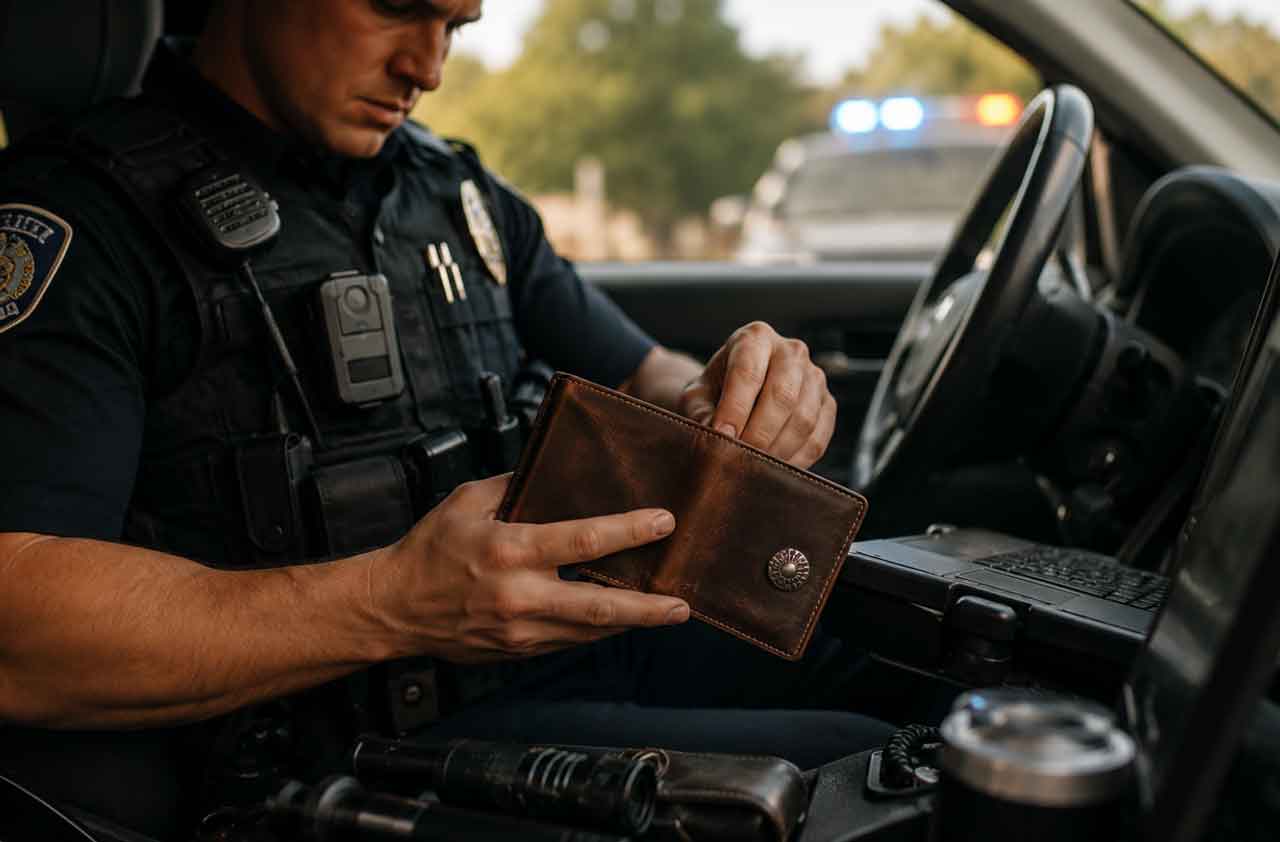
How many times can a piece of gear get shoved into a pocket before it starts giving up?
On patrol, the answer matters. A wallet or belt isn’t sitting safely in a drawer. It’s riding in a cruiser, getting bent when you sit, dragged through long shifts, exposed to sweat and weather, and pulled out whenever you need it.
The U.S. Bureau of Labor Statistics counted about 826,000 police and detectives in 2024, so there’s no shortage of people relying on equipment through demanding workdays.
The difference between leather that lasts and leather that doesn’t usually comes down to a handful of unglamorous details.
It Starts With the Leather
Bad leather gives itself away early.
It looks shiny in the wrong way, feels thin at the fold, and starts cracking right where your body bends it most. Not ideal. But people still buy it because, on day one, it looks close enough.
Full-grain leather is different. The surface hasn’t been sanded down to erase every scar and mark, so the strongest fibers stay intact.
That matters when a duty belt is carrying handcuffs, flashlight, radio, keys, gloves, and the odd piece of equipment that seems to appear from nowhere.
A useful example is the Western Long Wallet listed by Bull Sheath Leather.
The wallet uses full-grain, vegetable-tanned leather and includes six card slots, two cash compartments, and a checkbook pocket. Those details don’t make it “duty gear” by themselves, but they show how the choice of leather and construction affects an everyday carry item.
Then the Construction Has to Earn Its Keep
Here’s where things get interesting. A good hide can still turn into a poor piece of gear if the construction can’t handle repeated bending and pulling.
Think about what happens in a normal shift. You sit. Stand. Walk. Reach. Sit again. A wallet gets compressed against a seat or twisted slightly every time you move. Nothing dramatic, but repetition is sneaky like that.
Research into police physical requirements backs up the broader point. A Department of Justice study found that officers’ work can involve climbing, running, lifting, pulling, and pushing. Leather carried alongside that work needs to tolerate movement, not merely look sturdy.
Stitching Is a Quiet Difference
Nobody gets excited about stitching when it’s doing its job.
That’s almost the point. A loose seam can catch, stretch, or gradually pull away from the leather. Tight, consistent stitching gives the material a better chance of handling those small stresses that accumulate over months.
Hand stitching can also make repairs easier to understand when something eventually does go wrong. You can see where the strain occurred rather than dealing with a mystery failure buried inside a mass-produced piece.
And there’s a practical lesson here: don’t judge leatherwork only by the hide. Turn it over. Look at the edges. Check the seams. The boring bits often tell you more.
Durability Also Depends on How You Treat It
Leather isn’t magic. It’s skin, and skin dries out.
The National Weather Service says a closed vehicle can heat up by about 20°F in just 10 minutes under certain conditions. Leave a leather belt baking in a patrol car often enough, and it’ll tell on you. First, with stiffness. Then cracks. Then that sad little creak when you bend it.
A few habits help:
- Wipe off sweat, salt, and grime after long shifts.
- Condition lightly, not obsessively.
- Let wet leather dry naturally, away from direct heat.
- Check snaps and stitching before they fail in public.
Nothing fancy. Just maintenance. Like boots, but with more paperwork attached.
The Real Test Comes Months Later
New leather is easy to admire.
The real verdict arrives much later, after the shine has faded and the surface carries a few scars from actual life. That’s when good duty leather starts to make sense. It doesn’t need to look untouched. It needs to remain useful.
A wallet that has softened around the edges, developed a deeper color, and still holds its shape tells a better story than one kept pristine in a drawer. Patrol work leaves marks. The right leather simply learns how to wear them.