Concord Pacific, Canada’s largest urban community builder, has built a reputation for developing large, master-planned communities centred around public space. Concord Pacific is also Canada’s largest private provider of parks, pathways, and shared areas. They are treated as core elements that shape how most of theirneighbourhoods come together. This unique approach has been carried across Concord projects in multiple Canadian cities, such as Vancouver, Toronto, North York, Burnaby, and Richmond, where access, walkability, and connectivity are built into the layout from the outset.
Residents step outside and are immediately connected to a network of parks and walkways that support everything from exercise to social interaction. Children play in nearby green spaces, people meet along the waterfront, and errands are done on foot. These everyday routines result from a deliberate effort to create neighbourhoods where public space is used consistently and naturally throughout day-to-day life.
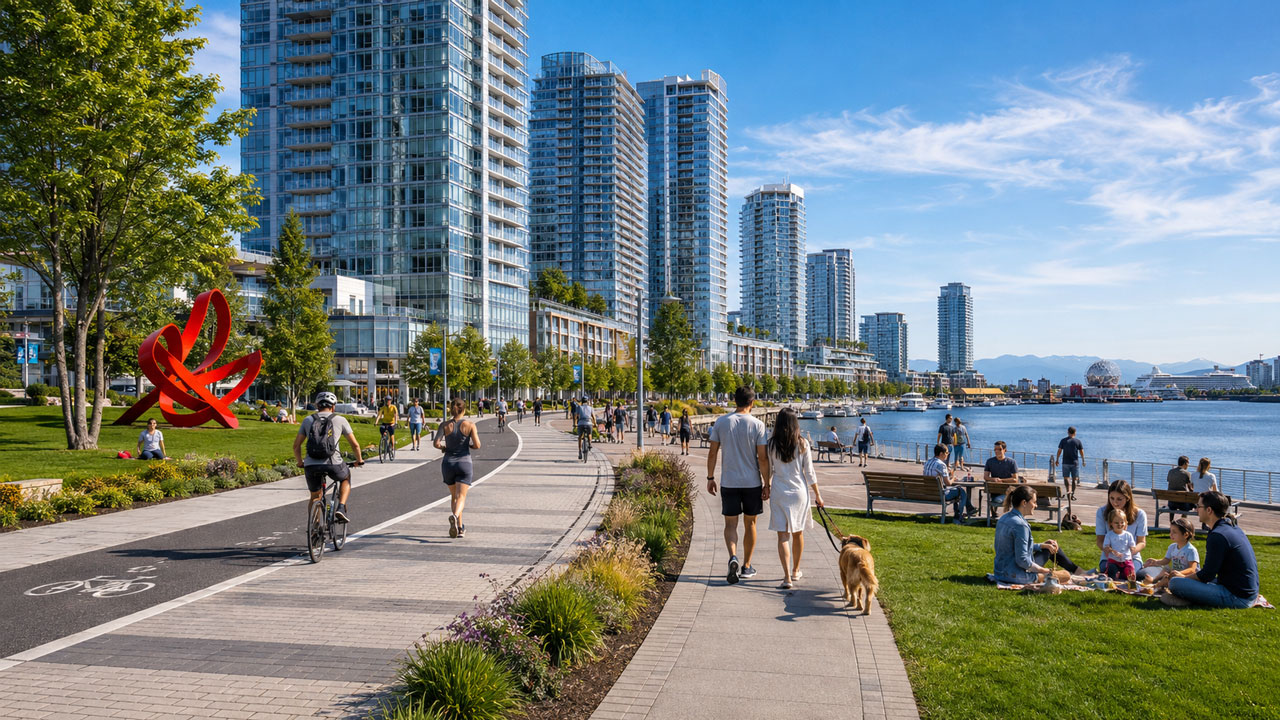
For example, at Concord Pacific Place, developed on former rail lands along False Creek in Vancouver, the site introduced extensive parkland, childcare facilities, community spaces, and a continuous waterfront route alongside residential towers. Public space plays an important role throughout the neighbourhood and defines its residents’ experience living there.
Waterfront Access as a Central Feature
A consistent focus across Concord Pacific projects is keeping waterfront areas open and accessible. In Vancouver, the company’s redevelopment along False Creek has created a continuous public edge along the water, known as the Vancouver Seawall. Parks, seating areas, and pathways run side by side, drawing plenty of visitors every day. Whether seawalls or pathways, they are essential in connecting to services, entertainment, and business districts, promoting sustainable commutes.
The Vancouver Seawall moves through Concord Pacific lands and connects to a larger route that circles the city’s waterfront. Sections of this path were built and integrated into these developments, helping to form a continuous corridor used for both recreation and everyday travel.
In Toronto, Concord CityPlace was designed with a similar focus, with public plazas and parks linked to the downtown core and nearby waterfront.
A Consistent Park System Across Projects
Concord Pacific communities are organized around a network of parks spread across each site. These include larger waterfront green spaces as well as smaller neighbourhood parks and open areas between buildings.
At CityPlace, Canoe Landing Park is a central gathering space with bike trails, two multipurpose sports fields, a dog park, a splash pad, and public art installations. Smaller parks nearby also enhance the overall system, offering residents multiple options to enjoy public space within a short walk of each other.
In Vancouver, Concord Pacific Place follows a similar pattern, with parks connected along the waterfront and extending inward through the neighbourhood. Together, these spaces form a continuous public realm.
Connecting Communities Through Walking and Cycling
Ease of movement is a key feature of Concord Pacific’s public spaces, with walking and cycling routes directly connecting homes with transit, workplaces, entertainment, and services.
In Vancouver, the seawall links Concord Pacific Place to popular destinations such as Stanley Park and Kitsilano. In Toronto, pathways through CityPlace connect directly into the downtown grid and waterfront trail system. These connections support everyday travel while offering easy access to outdoor spaces.
Activating Space Through Programming
Beyond design, Concord Pacific supports year-round events across its public spaces, with parks and waterfront areas frequently hosting festivals and community programs.
The company’s most prominent annual events include the Concord Pacific Dragon Boat Festival and Tour de Concord take place each summer at Northeast False Creek and draw participants and spectators from across the city and country alike.
The company also provides funding for cultural, recreational, and charitable efforts in the cities they develop in.
Integrating Art Into Public Space
Public art is a common feature throughout Concord Pacific communities, often seen in parks, plazas, and along pathways. Over time, this has developed into the largest private public art program in Canada.
These installations add character to each neighbourhood and are encountered as part of daily movement through public space. In CityPlace, Canoe Landing Park features several prominent works, including its iconic red canoe, while in Vancouver, artwork is distributed along the waterfront and within surrounding parks. Building on that legacy, Concord Park Place in North York is home to Ontario’s largest concentration of public art, further extending Concord’s commitment to creating complete communities where art, public space, and everyday life come together.
A Model Applied Across Canada
Under the guidance of Concord Pacific CEO Terry Hui, the company continues to prioritize public space across its developments nationwide, most notably in Vancouver and Toronto. The company’s consistent focus on integrating accessible waterfronts, parks, and walking and cycling routes into its communities is redefining how large-scale developers build in Canada, with an emphasis on improving connectivity and outdoor access for residents in some of the country’s most densely populated neighbourhoods.
By placing public space at the centre of its communities and cities, Concord Pacific has created neighbourhoods where parks, paths, and open spaces form a continuous system that supports daily life and shapes how people experience the city.