AFN Delegation Meets King Charles III at Buckingham Palace
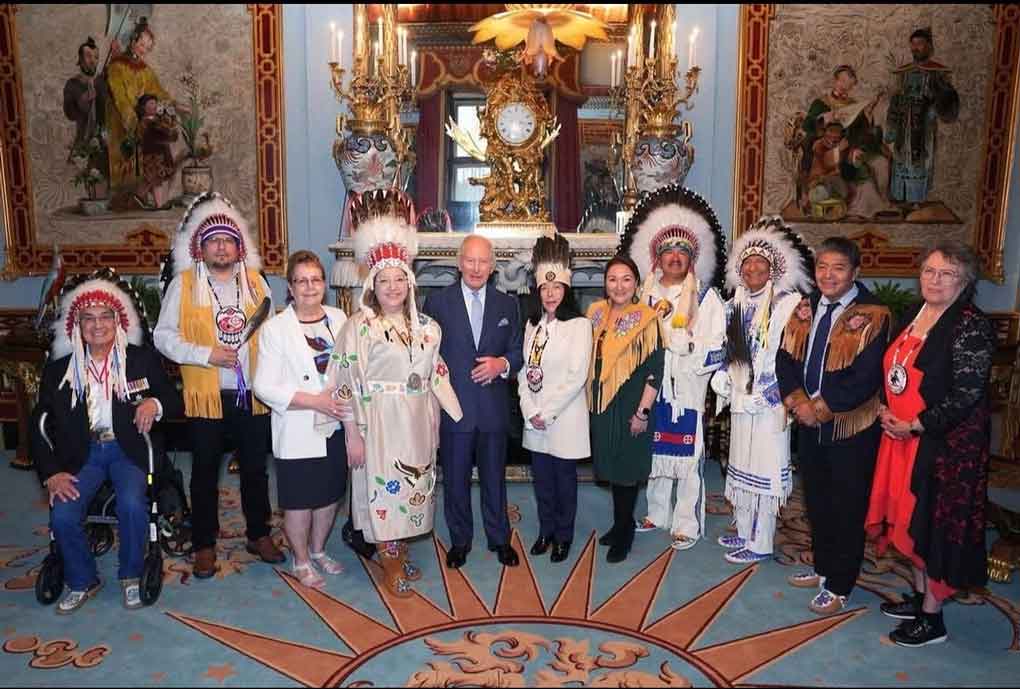
LONDON, England — Assembly of First Nations National Chief Cindy Woodhouse Nepinak met with King Charles III at Buckingham Palace on Tuesday as part of a delegation of Chiefs, Regional Chiefs, Elders and Knowledge Keepers.
The AFN says the meeting continued a long history of diplomatic and Treaty relations between First Nations and the Crown. For First Nations in Northwestern Ontario, where communities are connected to the Robinson-Superior Treaty, Treaty 3, Treaty 5 and Treaty 9, the discussion speaks directly to continuing questions of Treaty implementation, self-determination, lands, waters and resource development.
First Nations Leaders Emphasize Treaty Relationship With Crown
Woodhouse Nepinak said First Nations leadership used the meeting to reaffirm the international status of the Crown-First Nations Treaty relationship.
“As Treaty partners, the Crown and First Nations have perpetual obligations,” Woodhouse Nepinak said in a statement released by the AFN.
The National Chief said First Nations remain honourable Treaty partners and are seeking an ongoing relationship with the Crown grounded in Treaty, free, prior and informed consent, and the right to self-determination.
The AFN said the delegation included New Brunswick Regional Chief Joanna Bernard, Manitoba Regional Chief Willie Moore, Saskatchewan Regional Chief Bobby Cameron, Northwest Territories Regional Chief George Mackenzie and Yukon Regional Chief Math’ieya Alatini, along with other First Nations leaders.
Why This Matters in Northwestern Ontario
The meeting has direct relevance for Thunder Bay and communities across Northwestern Ontario because Treaty relationships are not abstract historical matters. They shape current debates over land use, mining, forestry, transmission corridors, housing, infrastructure, child welfare, clean water, emergency management and economic development.
The Thunder Bay Museum notes its regional mandate includes the Robinson-Superior Treaty of 1850, Treaty 3, Treaty 5 and Treaty 9. Fort William First Nation, near Thunder Bay, is listed by Indigenous Services Canada within the Robinson-Superior Treaty area.
For First Nations in the region, direct engagement with the Crown is often understood as distinct from ordinary federal or provincial politics. The AFN’s message to the King was that the Treaty relationship cannot be altered by third parties and that First Nations must determine how they relate to Canada and to the Crown.
Historical Context
First Nations leaders have long maintained that Treaties are living agreements, not one-time land transactions. The Robinson-Superior Treaty was signed in 1850 at Sault Ste. Marie, and Treaty 3, Treaty 5 and Treaty 9 cover large parts of Northwestern Ontario and the North.
The Buckingham Palace meeting follows earlier AFN engagement with the Crown. In 2025, Woodhouse Nepinak welcomed King Charles III and Queen Camilla to Canada and highlighted the significance of Treaty obligations, including the Treaty 2 medallion connected to her family history.
Regional Implications
The AFN meeting comes at a time when governments and industry are focused on critical minerals, energy infrastructure and northern development. In Northwestern Ontario, those discussions often involve First Nations whose territories, rights and Treaty relationships are central to whether projects proceed and how benefits, risks and decision-making authority are shared.
AFN Says Relationship Must Be Grounded in Consent
Woodhouse Nepinak said the future relationship with the Crown must be based on Treaty, free, prior and informed consent and self-determination.
The AFN describes itself as a national advocacy organization working to advance the collective aspirations of First Nations people and communities across Canada on matters of national or international concern. The organization also acknowledged financial support from the First Nations Bank of Canada for the delegation’s travel costs.