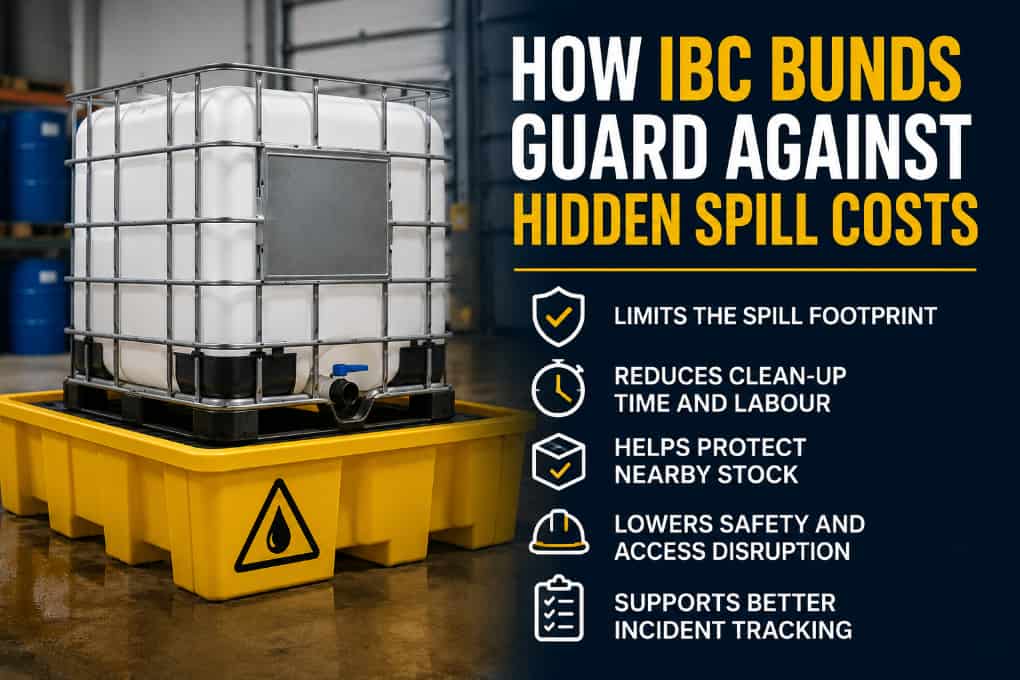
Spills rarely cost a business only the value of the liquid lost. In agricultural, chemical, mining, and industrial sites, the bigger expense often comes from clean-up labour, downtime, damaged stock, contaminated surfaces and safety controls triggered after the leak has already spread. IBC bunds reduce these hidden costs by keeping leaked liquid contained, visible and easier to manage before a small failure becomes a wider operational issue.
Limits The Spill Footprint
The first way IBC bunds guard against hidden spill costs is by stopping leaked liquid from spreading across floors, yards or storage areas. A cracked valve, loose fitting or slow drip may look minor, but once liquid reaches pallets, drains, equipment bases or porous surfaces, the clean-up becomes harder and more expensive.
A bund creates a defined capture zone beneath or around the container, giving staff a controlled area to isolate and inspect. In practical storage planning, IBC bunds for safe liquid containment sit alongside other spill control measures to keep escaped liquid close to the source instead of allowing it to spread unnoticed.
Reduces Clean-Up Time And Labour
Spill response becomes costly when staff have to chase liquid through walkways, under racking or around machinery. Even when the spill volume is small, the labour involved in locating residue, blocking access, using absorbents and cleaning several surfaces can quickly outweigh the value of the product lost.
IBC bunds make clean-up more predictable. Liquid is collected in one area, making it easier to assess the spill volume, identify the likely cause and use suitable recovery or disposal methods. This is especially useful for liquids that are slippery, corrosive, odorous or difficult to remove once dry.
Helps Protect Nearby Stock
A spill does not need to be large to damage surrounding goods. Liquid can wick into cardboard, soak labels, contaminate packaging or stain stored materials. In food, beverage, chemical and agricultural settings, contamination concerns can also force businesses to discard items that were only indirectly exposed.
IBC guards against this by keeping leaked liquid away from adjacent stock and work materials. The bund acts as a physical barrier between the failed container and the wider storage area, reducing the chance that one damaged valve or container affects multiple assets.
Lowers Safety And Access Disruption
Spilt liquid can create hazards long before it causes visible damage. Wet surfaces increase slip risk, while some stored liquids may release vapours, irritate skin or react with nearby materials. Once a spill reaches traffic areas, businesses may need to restrict access, divert vehicles or pause work.
IBC bunds reduce that disruption by keeping the hazard localised. Staff can identify the issue sooner, keep people away from the affected container and manage the response without treating the whole storage area as contaminated.
This does not replace correct handling procedures, safety data sheets or trained spill response. It simply gives those controls a better chance of working quickly because the liquid has not already spread through the site.
Supports Better Incident Tracking
Hidden spill costs often repeat because the source is not properly identified. A slow leak may be cleaned several times before anyone realises the issue is a worn fitting, poor container placement or repeated handling damage. In environmental reporting language, even a leak, spill or escape of a substance may be treated as a pollution incident when it causes or threatens harm, which is why early detection matters.
IBC bunds make leaks easier to notice and trace. Liquid collected in the bund shows that something is wrong, even when the leak is gradual. Staff can then check valves, caps, container walls and handling practices before the same problem keeps recurring.
Strengthens Storage Discipline
A bundled storage area encourages better site habits. Containers are more likely to be kept in designated locations, inspections become easier, and spill controls become part of daily operations rather than emergency response only.
That discipline matters where bulk liquids are moved, decanted or stored regularly. When IBCs are handled as part of routine production or site work, small leaks become more likely. Bunds provide a practical safeguard that supports cleaner storage, safer access and more consistent housekeeping.
Containment Keeps Small Failures Manageable
IBC guards against hidden spill costs by controlling what happens after something goes wrong. They do not prevent every leak, but they reduce the chance that a minor container fault becomes a larger clean-up, safety issue, stock loss or operational delay. For sites handling bulk liquids, bunding is not just about compliance; it is a practical way to keep everyday storage risks manageable, visible and contained.