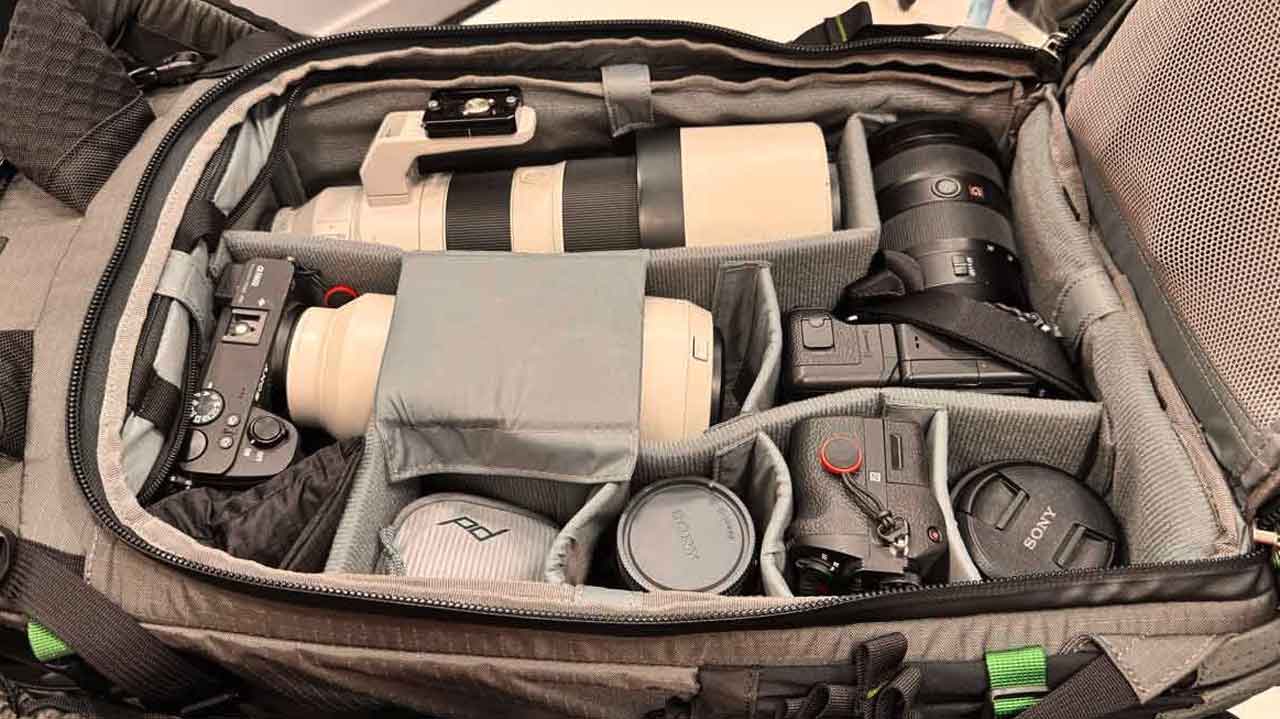
Thunder Bay – TECH – As smartphones like the iPhone 17 Pro Max continue to close the gap on traditional cameras in certain scenarios. But there are still major advantages to using a Sony mirrorless camera — especially models like the A7 IV, A9 III, or even older bodies like the A6600, and A-9 — over even the most advanced smartphones.
Now, remember the best camera is the camera that you have with you to take the image as it appears.
Its not likely that you would want to carry a full complement of gear around with you all the time. So for a lot of photos, the smartphone is just fine. A quick aside, if you are looking to carry gear, be sure to check out the Think Tank line of camera bags and packs.
Jared Polin, a really amazing photographer on Youtube shared what he was taking on a Safari to Africa, and from that I reached out to Think Tank and am doing an indepth review of one of their Backlight® camera backpacks, look for it in coming weeks.
Sorry about the digression – ever find that is all too common when talking tech and especially camera gear?
Continuing on, there are times when the bigger gear can really help.
Recently, one morning, walking down Red River Road the sunrise was amazing. I had an iPhone 15 in my pocket so I took the shot. When I brought it into Photoshop, it just didn’t have the snap and vibrance that my eye saw in the sunrise.
Here is the first image:

The next day, I captured this image:
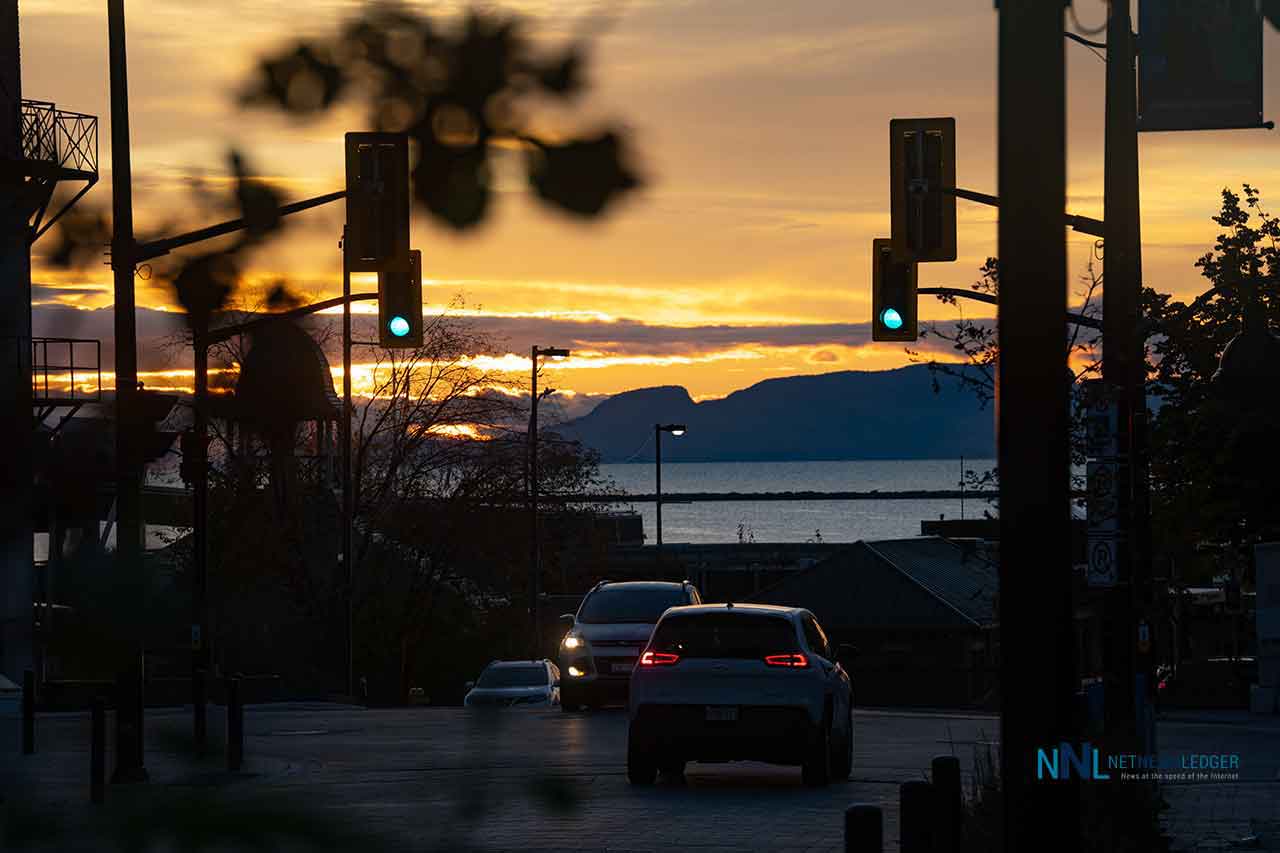
To me there is just greater depth in the image shot with the mirrorless camera.
So that got me to thinking, should I always be carrying my camera with me, or is my smartphone good enough for more pictures.
Here’s a breakdown of the top benefits of using a Sony mirrorless camera vs the iPhone 17 Pro Max (or similar flagship smartphones) in 2025:
1. Sensor Size = Superior Image Quality
✅ Sony Mirrorless:
-
Full-frame or APS-C sensors (15x–30x larger than a smartphone sensor)
-
Significantly better dynamic range, depth of field, and low-light performance
-
Clean, noise-free images at ISO 3200+ and beyond
❌ Smartphone:
-
Tiny sensor size limits light-gathering ability
-
Computational tricks help, but can’t match pure optics
Real-World Example: Shooting wildlife at dawn in Quetico or an indoor hockey game at Delaney Arena — a Sony A9 or A7 IV will smoke a smartphone in clarity, sharpness, and dynamic range.
2. True Optical Zoom and Interchangeable Lenses
✅ Sony Mirrorless:
-
Swap lenses for any scenario: super-telephoto (200–600mm), fast primes (85mm f/1.4), wide-angle (16mm)
-
True optical zoom retains full resolution
-
Ability to use macro, tilt-shift, ultra-wide, or cinema lenses
❌ Smartphone:
-
Digital/AI-based zoom = resolution loss beyond 5x–10x
-
Fixed lenses with simulated DOF, not physical separation
-
Limited creative control
Real-World Example: Photographing bald eagles or moose from 100+ metres away? Only a real telephoto lens on a Sony body can capture that cleanly — iPhones crop or digitally simulate it.
3. Professional Video Control and Quality
✅ Sony Mirrorless:
-
Shoot in 10-bit 4:2:2, S-Log3, HLG, or Cine EI profiles
-
Interchangeable lenses, better sensor readout, bokeh, and low-light video
-
Full HDMI, audio input/output, focus peaking, zebras, and manual controls
❌ Smartphone:
-
Great for casual video, TikTok, or short-form content
-
Limited in high dynamic range scenes or pro workflows
-
No true lens depth, compression, or manual focus options for pros
Real-World Example: Shooting a music video in Marina Park at golden hour — a Sony A7 IV with a 35mm f/1.4 will give you cinematic depth, while an iPhone will flatten the image with fake blur.
4. Full Manual Control and Customization
✅ Sony Mirrorless:
-
Full manual exposure, white balance, shutter, aperture, ISO
-
Custom function buttons, dual card slots, grip accessories
-
Designed for intentional shooting and pro workflows
❌ Smartphone:
-
Limited manual settings, most decisions made by AI
-
No tactile feedback or control in high-pressure conditions
Real-World Example: Shooting fast action or long exposures of the Northern Lights in Northwestern Ontario — only a Sony mirrorless gives you real-time manual control and RAW flexibility.
5. RAW Files with Real Editing Headroom
✅ Sony Mirrorless:
-
True 14-bit RAW files with deep tonal data
-
Ideal for post-processing in Lightroom, Capture One, or Photoshop
-
More dynamic range to recover highlights and shadows
❌ Smartphone:
-
Some ProRAW support, but limited by sensor depth
-
Edits often break down under heavy retouching
Real-World Example: Recovering a blown-out sky over Lake Superior? A full-frame RAW from a Sony A7 IV gives you multiple stops of recovery — not possible from smartphone HDR JPEGs.
6. Build Quality and Expandability
✅ Sony Mirrorless:
-
Weather-sealed bodies, pro grips, full-size SD cards, hot-shoe for flash/audio
-
Expandable with microphones, cages, external monitors
-
Built to survive remote shoots, long hikes, and bad weather
❌ Smartphone:
-
Fragile lenses, battery limits, overheating during long shoots
-
Accessories limited to mobile-grade gear
7. Real Battery Life and Reliability
✅ Sony Mirrorless:
-
Z-battery lasts 600–800 shots, hours of 4K video
-
Hot-swappable batteries mean no downtime
-
No throttling under heat or low light
❌ Smartphone:
-
Limited by background apps and screen usage
-
Can overheat or drop frames in 4K/60p+ modes
Final Verdict: Smartphone Convenience vs Camera Capability
| Use Case | Best Tool |
|---|---|
| Casual social media, snapshots | iPhone 17 Pro Max |
| Wildlife, action, low-light | Sony A9, A9 III |
| Portraits with real depth | Sony A7 IV |
| Documentary, interviews, cinematic video | Sony A7 IV or A9 III |
| Fast content capture on the go | Smartphone |
| Precision, pro editing, print-quality work | Sony mirrorless |
The Bottom Line for Thunder Bay Photographers
While smartphones like the iPhone 17 Pro Max are incredibly powerful for their size, they’re still limited by physics.
For serious photography, video production, wildlife tracking, or anything requiring creative control, a Sony mirrorless camera is still miles ahead.
That’s especially true in Thunder Bay, where low light, weather extremes, and long lenses are often essential for shooting nature, events, and sports across Northwestern Ontario.
If photography is a journey, and truthfully for me it has been a long trip so far, with a break in the middle, so having the ability to almost always have a camera with me – my smartphone, but having the option of my mirrorless camera really makes a world of difference.
Hope this helped you in your photo journey.
James