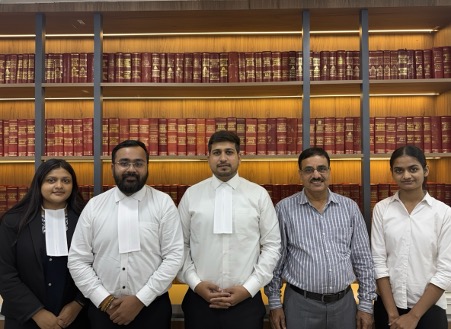
Advocate Kanish Bangia is a practicing lawyer and a proprietor of a reputed law firm Krishna Law Offices based in sector-67, Gurugram. He has a deep expertise in real estate law and regulatory litigation. A former Legal Executive at the Real Estate Regulatory Authority (RERA), he has represented numerous clients in matters involving illegal demands, delayed possession, refund claims, and builder malpractices. With a focus on consumer rights and builder accountability, he continues to play an active role in shaping a fairer property market.
Over the years, India’s real estate sector has transformed from being largely unregulated to becoming more transparent and consumer-centric. Having had the privilege to serve as a Legal Executive under the Real Estate (Regulation and Development) Act, 2016—commonly known as RERA—I witnessed this transformation from the inside. Today, as a practicing advocate focusing on real estate laws, I continue to see firsthand how these laws benefit homebuyers, developers, and the industry at large. A Much-Needed Regulatory Shift: The RERA Revolution
Before RERA, the real estate industry in India faced several challenges—delayed possession, non-disclosure of project details, and an overall lack of accountability. Homebuyers were often at the mercy of developers. RERA was a landmark legislation that shifted the power dynamics by putting the consumer at the center.
The Act mandates project registration, timely possession, regular updates, and financial discipline among builders. It also created a fast-track dispute resolution system through Real Estate Regulatory Authorities and Appellate Tribunals. As a legal executive with RERA, I was part of the team that ensured compliance, handled disputes, and facilitated smoother transactions. I saw developers becoming more accountable and buyers gaining confidence in the system—a true win-win.
During my tenure as a Legal Executive at RERA, I was actively involved in ensuring builder compliance, resolving disputes, and overseeing transparent project execution. This role gave me deep insight into the inner workings of regulatory enforcement and its impact on market behavior. Developers gradually became more cautious and disciplined, while homebuyers began to reclaim their trust in the system. Now, as a practicing real estate lawyer, I see that trust growing even stronger. Buyers are more informed, and developers are more responsive. Contracts are better drafted, disclosures are more detailed, and the legal remedies available today are far more effective than they were a decade ago.
In my practice, I routinely observe:
- Increased confidence among homebuyers while making property investments
- Willing collaboration between buyers and developers to address concerns transparently
- More amicable dispute resolutions, facilitated by the robust framework RERA has introduced
- And a clear shift toward accountability and ethical business practices within the real estate community
The Indian real estate market is no longer a one-sided playing field. Thanks to RERA and complementary reforms, there is now mutual respect and communication between developers and buyers. Where mistrust once prevailed, we now see contracts honored, possession dates met, and a clear channel for grievances.
This evolution has not only benefited consumers but has also restored credibility to developers who follow the rules. It’s a market transformation driven not just by law, but by legal enforcement, awareness, and transparency.
The real estate sector in India is on a positive trajectory, powered by legal reform and guided by regulatory oversight. As someone who has transitioned from regulatory enforcement to legal advocacy, I firmly believe that law is not just a tool for compliance—it is a pillar of trust. With continued commitment from all stakeholders—buyers, builders, regulators, and lawyers alike—we can ensure that the Indian property market remains fair, transparent, and trustworthy.
Real-Life Cases & Client Success Stories
In my legal practice, I’ve handled numerous cases where builders acted outside the scope of the law—but RERA provided a strong remedy. Some examples include:
- Illegal & Untimely Demands by Developers:
In multiple cases, developers issued demands that were either illegal or raised before the stipulated payment stage. We secured interim relief orders, and such demands were rolled back. In many instances, the units were restored, and penalties were imposed on the developers.
- False Offer of Possession & Cancellation:
A common malpractice I’ve encountered is when developers issue a misleading “offer of possession” just to trigger the next installment—even when the property is not ready. In one notable case, a client had a clear payment plan of 50% at booking and 50% at possession, but the developer raised an early demand and later cancelled the unit after deductions. We challenged the move legally, and the entire illegal demand was waived off, and interest was awarded for delayed possession.
- Refund Rights Misunderstood:
Many homebuyers are misled into thinking that refunds are solely at the developer’s discretion. This is a myth.
Under Section 18 of RERA, the allottee has the right to:
- Seek a refund along with interest
- Or claim possession with interest for delay
Developers cannot unilaterally decide when or how to refund. This legal right has been reinforced through many of my cases, and authorities have consistently upheld buyer protection.
“RERA is not just a regulation—it’s a declaration of the rights of homebuyers. And the law stands firmly on their side.” — Advocate Kanish Bangia
The market is evolving. Developers are realizing that transparency isn’t just a legal obligation— it’s good business. Homebuyers, armed with legal knowledge and professional guidance, are entering transactions more confidently.
Today, I see developers adhering to payment schedules, respecting contractual obligations, and resolving disputes more responsibly. Meanwhile, homebuyers are no longer afraid to challenge illegal practices.
This is a sign of a healthy, maturing real estate market—built on law, trust, and accountability.
The journey from being a RERA Legal Executive to a practicing real estate advocate has shown me one thing clearly—law is the strongest pillar of trust in any market. For buyers, it means security. For developers, it means legitimacy. And for the industry as a whole, it means sustainable growth.
As we move forward, continued awareness, compliance, and active legal enforcement will ensure that Indian real estate truly becomes a safe and transparent space for everyone.