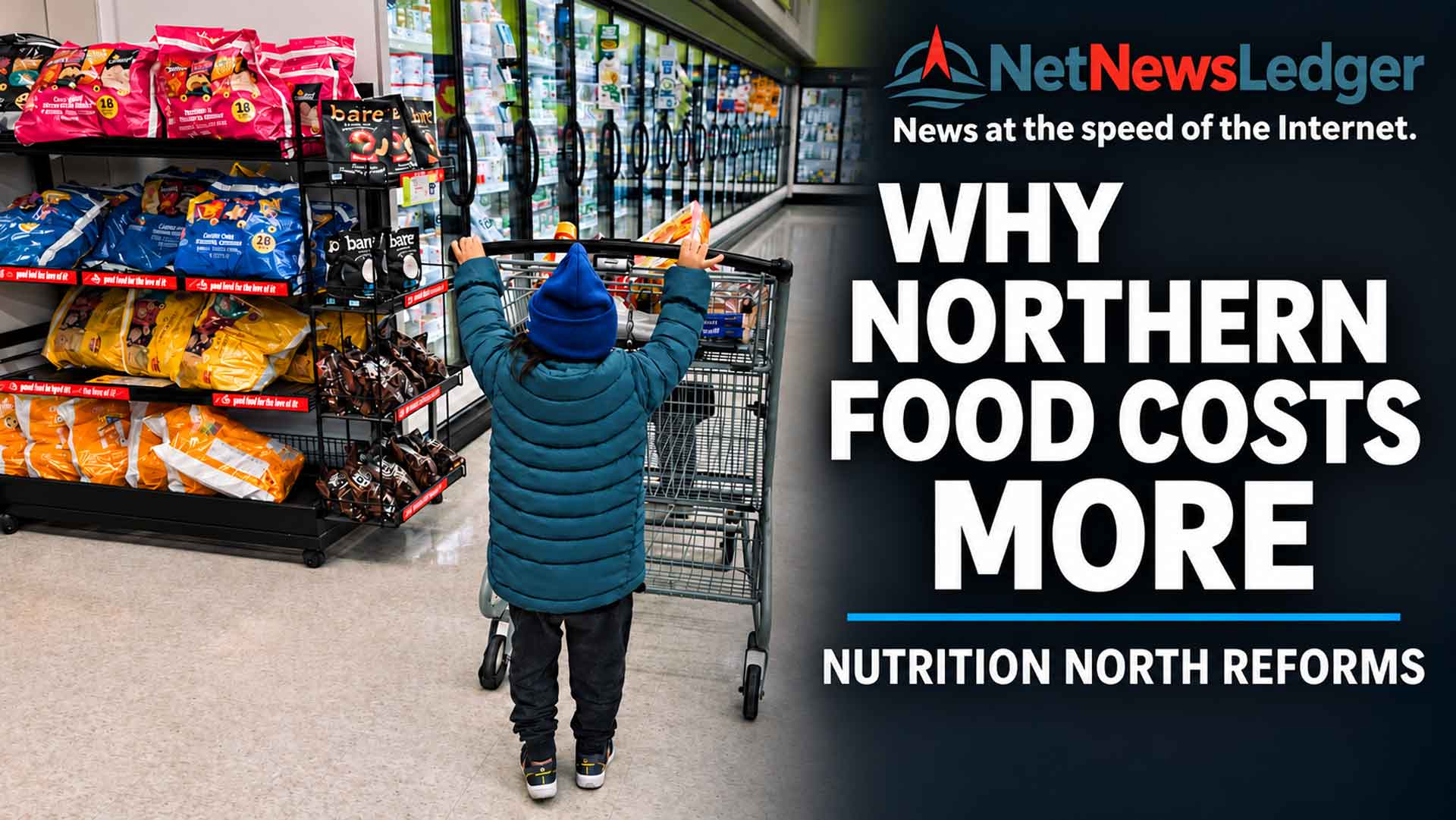
THUNDER BAY – National News Service – The federal government plans to announce changes Tuesday to Nutrition North Canada, a food subsidy program that has helped lower some grocery prices in remote communities but has not closed the gap with southern Canada.
Northern Affairs Minister Rebecca Chartrand is scheduled to make the announcement in Ottawa on Dec. 1. The government’s notice does not say what the reforms will include, how much they will cost or when they will take effect.
Ottawa plans Nutrition North reforms as high freight costs and limited transport options keep northern grocery bills steep
For families in isolated communities, the stakes are visible at the grocery store. A revised Nunavut government survey found that a basket of 24 selected food items cost an average of $197.95 across the territory in March 2025. The same basket cost $132.44 in Ottawa.
Those figures are a snapshot, not today’s prices or the cost of feeding a family for a week. They also conceal differences within Nunavut: the survey put the basket at $237.68 in Clyde River and $165.83 in Resolute.
A separate federal measure estimates the weekly cost of a nutritious diet for a reference family of four. Among eligible communities with pricing data, that basket averaged $600 in March 2026, up from $585 a year earlier. The estimate is based on a defined basket, not a record of what every family spends.
Why food costs more
Many northern communities do not have a year-round road or rail connection to southern distribution centres. Food may travel by truck to an airport or marine port, then by plane, ship or barge before reaching a local store.
Fresh milk, produce and other foods that spoil quickly often depend on air freight. Planes are faster than ships, but cargo space is limited and flying is expensive. Weather can delay deliveries, reducing the time fresh food remains saleable after it arrives.
The cost of diesel fuel, and aviation fuel has continued to climb. Even getting gasoline and diesel fuel into remote northern communities is expensive.
Seasonal sealifts can carry large quantities of shelf-stable or frozen goods, but orders must be planned well ahead and stored until needed. In some places, winter roads offer another seasonal route.
Neither option provides the same year-round flexibility as a highway.
Stores also face costs after a shipment arrives. They must heat, light and refrigerate buildings, pay workers and maintain storage space. An earlier federal study of northern food retailing identified freight, electricity and other operating expenses as contributors to the price gap. Those costs vary by community and retailer.
Small populations can make it harder to spread those fixed costs across sales. Limited shopping options may also leave residents with fewer choices when prices are high. Distance alone does not explain every shelf price: purchasing arrangements, freight rates, operating costs and retail pricing all matter.
From Food Mail to Nutrition North
Federal support for shipping food north is not new. The Food Mail Program, which dates to the 1960s, subsidized the transport of food and other necessities through Canada Post to communities without year-round surface access.
Ottawa announced Nutrition North in 2010, and the new program began on April 1, 2011. It shifted the main subsidy from the postal shipping system to registered retailers and suppliers. The government said the change was intended to make nutritious food more accessible and affordable.
Today, registered recipients claim a subsidy based on the weight of eligible items and the applicable rate. Rates differ by community and product category. Participating businesses must pass the full subsidy on to shoppers through lower prices, while eligible residents can also place orders through registered suppliers.
The subsidy reduces the price from what it otherwise would be; it does not guarantee that an item will cost the same as it does in southern Canada. Some nutritious foods and certain essential non-food items qualify, but not every product on a grocery shelf is subsidized.
The program has expanded beyond store-bought food. A Harvesters Support Grant launched in 2020 helps support hunting, harvesting and food sharing. A community food fund introduced in 2022 supports initiatives such as meals for elders, school food programs and group ordering. The programs were developed with Indigenous and northern partners,
Those programs recognize the importance of country food, which can include locally harvested fish, wildlife and other foods. Harvesting can itself be costly: people may need fuel, equipment and safe access to the land and water.
Questions about results
Nutrition North has faced scrutiny over whether its subsidy reaches shoppers and whether it is designed to address the full causes of food insecurity.
In 2014, Canada’s auditor general found that the department had not done enough to verify that retailers were passing the full subsidy to consumers. That finding concerned oversight at the time; it did not establish that retailers had kept the subsidy. The department agreed to strengthen its requirements.
The program now says it reviews claims and commissions independent compliance audits of a sample of recipients each year. Recipients must provide information including shipment records and attest that they passed on the subsidy.
A more recent federal evaluation found that the subsidy lowers the price of eligible goods from what it would otherwise be. It also concluded that the program alone cannot solve food insecurity, which is affected by income, employment, infrastructure, inflation and environmental conditions.
The evaluation said newer grants offer more community-led options, but identified continuing weaknesses in the program’s design, governance and co-ordination. It called for a stronger Indigenous role in decision-making.
Food insecurity means not having reliable access to enough food because of financial constraints. Lower prices can help, but a household may still struggle if its income must also cover high housing, energy and transportation costs.
What comes next
The federal spring economic update provided a $30-million top-up for the retail subsidy in 2026-27 and said it supported 124 isolated communities. A federal evaluation describes the broader program as reaching 125 communities; the figures come from different program descriptions and should not be treated as a confirmed change in eligibility without clarification.
The coming announcement follows criticism that the Nov. 5 federal budget did not provide an update on promised reforms.
Inuit Tapiriit Kanatami and northern food-system experts raised concerns. Chartrand’s office said the promised changes would be delivered this fall. For residents, the test will be what Ottawa changes, when those changes begin and whether they make nutritious food easier to obtain and afford. The government has not yet released those details.