When a truck loses air conditioning, the compressor gets blamed first. It is the expensive part, it is the one with moving pieces, and it is what most shops quote on. In practice it is rarely where the system failed. The lines and hoses that carry refrigerant around the chassis give out years earlier, and a compressor that seizes has usually been starved by a leak somewhere upstream.
That order matters commercially as much as mechanically. Replacing a compressor on a system that is still leaking buys a few weeks of cold air and a second repair bill.
It also changes where the repair lands. Shops replacing truck air conditioning lines and hoses work from the OEM number and the original routing rather than from length alone, because the same nominal hose can carry different fitting angles between model years.
What actually wears in a heavy duty AC system
A truck air conditioning system is a sealed loop under pressure. The compressor raises refrigerant pressure, the condenser sheds heat, the drier removes moisture, the expansion valve drops it again, and the evaporator pulls heat out of the cab. Every one of those components is joined by rigid lines and flexible hose.
The rigid sections are stable. The flexible sections carry the whole burden of engine movement, chassis flex and vibration, and rubber under pressure has a service life that steel and aluminium do not. That is the first reason hoses fail first.
Where truck AC lines and hoses give out
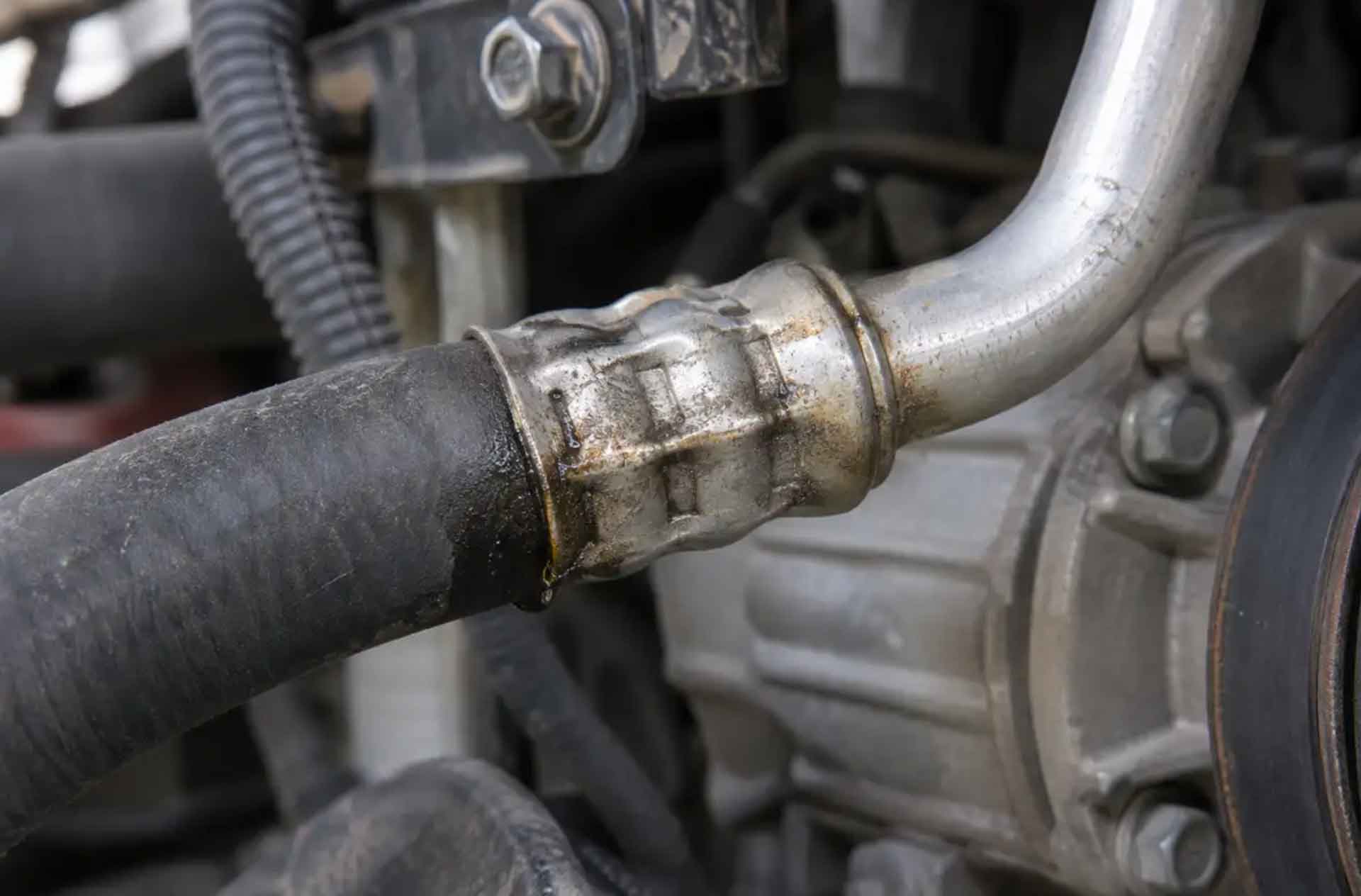
Failures cluster in a small number of predictable places. The crimped fittings at each end of a hose assembly are the most common, because that is where the flexible section is clamped to a rigid one and where movement concentrates. O-ring seals at the connections are second. The hose body itself usually fails last, and when it does it is from the inside out.
Mileage alone does not decide this. A line routed close to the exhaust or turbo ages far faster than an identical part on the other side of the engine. A hose rubbing against a bracket wears through in a season. This is why two trucks in the same fleet, bought the same year, can be years apart in AC condition.
When the diagnosis points at the flexible side rather than the compressor, the repair becomes a matter of matching the assembly to the chassis and reproducing the original routing exactly, clips and clearances included.
In rough order of frequency, failures show up at the crimped fittings where flexible hose meets rigid line, then at the O-rings on service ports and connections, then in sections routed near a heat source or rubbing against a bracket. The hose body itself is usually last, and when it goes it has typically been permeating for years rather than splitting.
Why refrigerant escapes through a hose that looks fine
Refrigerant molecules are small enough to migrate slowly through rubber. Modern barrier hose is built with a nylon layer specifically to slow that down, and it works well for years. Heat accelerates it, and so does age, as the barrier layer hardens and develops microscopic cracking.
This is why a system can lose its charge over two seasons with no visible oil stain and no hissing. Nothing failed in a way a visual inspection would catch. The hose simply stopped being as sealed as it was.
It also explains a pattern many fleets see: a truck gets recharged in spring, cools well all summer, and is empty again by the following June. That is not a slow leak at a fitting. That is permeation plus a small joint leak working together.
What a leak does to the rest of the system
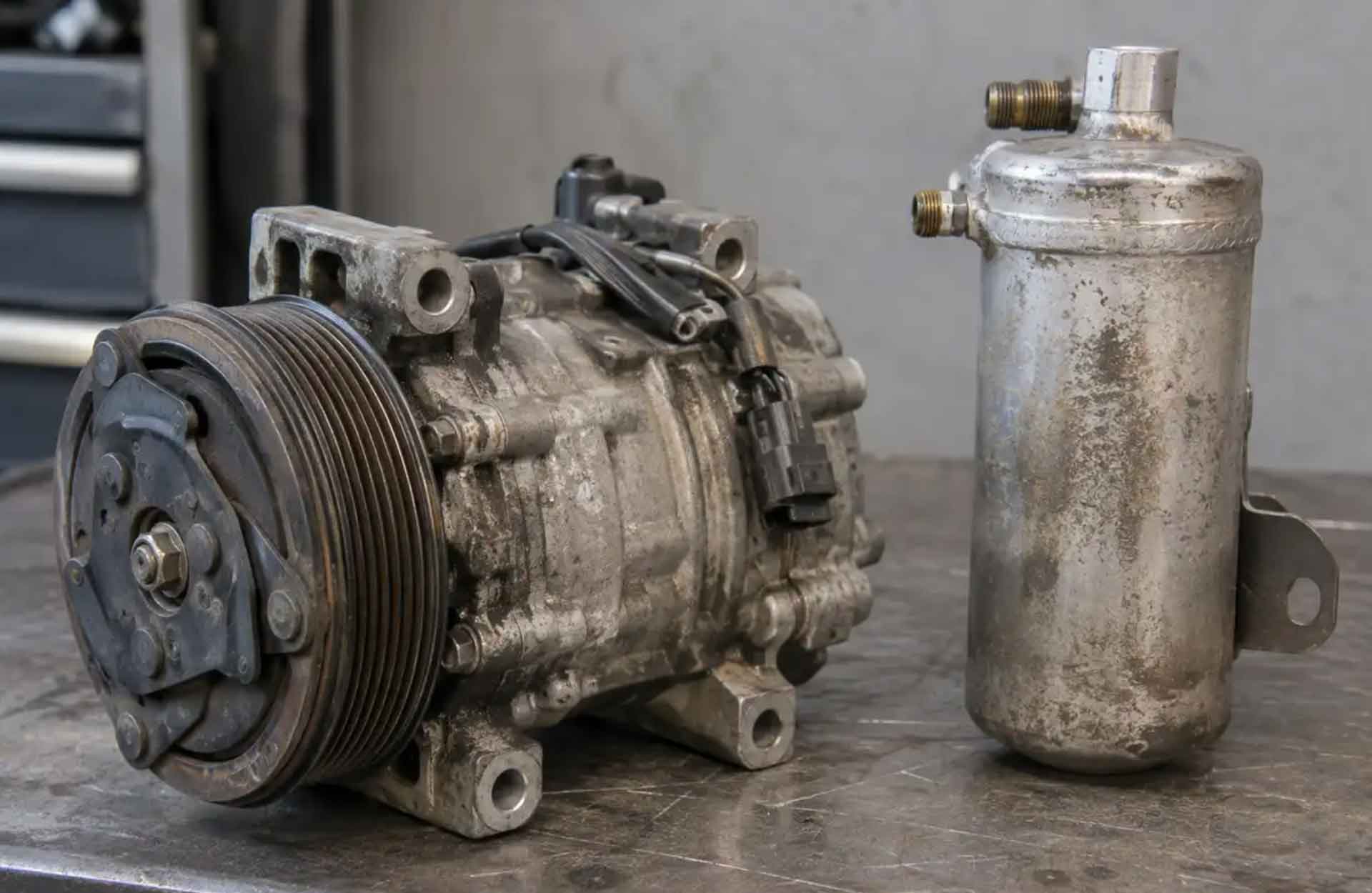
A refrigerant leak is never only a refrigerant problem. As pressure falls, the oil that circulates with the refrigerant stops reaching the compressor properly, and the compressor begins running with marginal lubrication. That is the mechanism behind most compressor failures in heavy duty service.
A leak also lets moisture in. Moisture combines with refrigerant and oil to form acids that attack the metals inside the loop, and it is what the drier exists to absorb. Once the drier is saturated, that protection is gone. A system that has been open or empty needs the drier replaced as a matter of course, not as an upsell.
So a hose that has been quietly leaking for a season can end up costing a compressor, a drier and a full system flush. Finding it early is the entire economic argument for diagnosing the flexible side first.
Finding the leak before it empties the system
A pressure test with nitrogen is the most reliable way to locate a leak that refrigerant sniffers miss, because it holds steady pressure while the technician works along the lines. Electronic detectors are good at pinpointing once the area is known. UV dye is slow but useful for intermittent leaks that only open up under heat and vibration.
Whatever the method, the inspection follows the routing rather than the component list: every crimped fitting, every point where a hose passes near heat, every place it touches the chassis. Most leaks are found by hand and eye before any instrument is switched on.
Fleets that add a spring AC inspection to their pre-season service catch most of these while they are still hose repairs. The ones that wait for a driver complaint in July are usually buying a compressor as well.