A single grain of cement dust or an unexpected chemical splash can change a worker’s vision in seconds. In workplaces where dust, fumes, solvents, acids or cleaning agents are part of daily operations, eye safety should not be avoided. The right checks help identify hazards before they reach the eye, ensure protective equipment actually fits the task and prepare teams to respond immediately when exposure occurs.
Employers and supervisors who treat these checks as routine safety habits create a stronger culture of prevention. Partnering with an eye hospital strengthens workplace safety protocols.
Start With a Hazard Assessment
Every effective eye-safety programme begins with a task-by-task assessment. Employers should ensure appropriate eye or face protection when workers face hazards from flying particles, liquid chemicals, acids or caustic liquids, chemical gases or vapours and injurious light radiation.
A practical assessment includes identification of:
- The type of dust such as wood, cement, silica, metal, grain or abrasive particles.
- Whether particles are airborne, falling or generated by grinding, cutting, sanding or blasting.
- Chemicals handled, their concentration, splash potential, vapour risk and compatibility with water for emergency rinsing.
- Work positions that create splash exposure, such as pouring, mixing, decanting, spraying or cleaning equipment.
- Nearby tasks that may create secondary risks, including overhead work, compressed air use or machinery ejecting debris.
These details should be documented thoroughly so physicians at an eye care hospital can quickly determine the right treatment during emergencies.
Match Protection to the Hazard
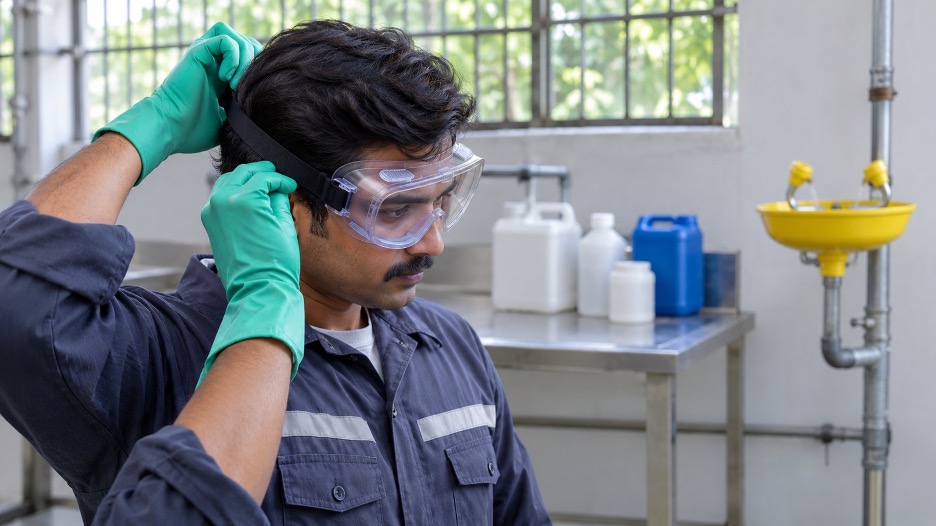
Eye protection is not interchangeable. Safety glasses may be suitable for general impact risks, but they do not necessarily seal out fine dust or chemical splashes. Vented goggles are suitable for dust such as cement dust. Non-vented goggles are suitable for chemicals, with face shields used alongside safety glasses or goggles for flying objects or chemical splashes.
Take a look at the following workplace hazards and the eye protection checks that should be done by a specialist at aneye hospital:
| Workplace hazard | Recommended eye protection check |
| General dust and flying particles | Safety glasses with side shields; confirm secure fit and Z87 marking. |
| Fine or heavy dust, including cement dust | Vented goggles that seal around the eyes and prevent particle entry. |
| Chemical splash, acids, caustics, solvents | Non-vented chemical goggles; add a face shield for high-splash tasks. |
| Chemical vapours or gases | Task-specific protection based on the safety data sheet and exposure assessment. |
| Prescription-lens users | Prescription safety eyewear or protective eyewear that fits properly over prescription glasses. |
| Severe splash exposure | Goggles plus a compatible face shield, not a face shield alone. |
Workers who experience chronic dryness or foreign body sensations after shift work should be examined promptly at an eye hospital.
Check Fit, Condition and Compatibility
Supervisors should include these checks in daily or pre-task inspections:
- Lenses are free of deep scratches, cracks, clouding or chemical residue.
- Goggles seal around the face without painful pressure points.
- Straps, hinges, side shields and ventilation ports are intact.
- Eyewear does not interfere with respirators, helmets, hearing protection or other PPE.
- Workers using prescription lenses have compliant prescription safety eyewear checked at an eye hospital.
- Anti-fog measures are in place where temperature changes, masks or humid conditions cause visibility problems.
Verify Emergency Response Readiness
Chemical exposure requires an immediate response. NIOSH recommends having an eye wash or sterile solution available, and you should not to rub your eyes with dirty hands or clothing after dust exposure. In severe emergencies, arrange immediate transport of the patient to the nearest eye hospital.
Workplaces should confirm:
- Emergency eyewash stations are accessible within the time and distance required for the chemicals in use.
- Stations are unobstructed, clearly signposted and tested regularly.
- Water flow is adequate and free from contamination.
- Sterile eyewash solutions are within their expiry date where portable bottles are used.
- Workers know to flush immediately and continue rinsing while seeking medical help.
- Eye care hospital-approved Safety Data Sheets identify whether a particular chemical requires special first-aid measures.
Final Thoughts
Eye protection for dust and chemicals should be regularly checked to ensure the right measures are taken to protect against the hazard. This includes ensuring that the equipment used is appropriate, fits well around the face and is in good condition. These measures reduce preventable injuries and help employees work with greater confidence. For persistent irritation, blurred vision, pain or chemical exposure, prompt assessment at an eye hospital is important.