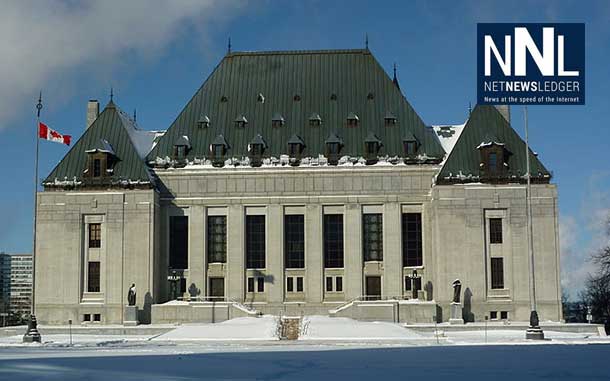
OTTAWA – National News Service – The Supreme Court of Canada is set to hear four linked appeals Monday and Tuesday that challenge the federal government’s 2020 prohibition of about 1,500 firearm models and variants.
The cases ask whether the federal cabinet acted within the authority Parliament gave it under the Criminal Code when it used regulations to reclassify the firearms as prohibited. The outcome could shape both federal firearms policy and the limits on cabinet-made regulations that carry criminal consequences.
The hearing is scheduled to begin at 9:30 a.m. EST Monday and continue Tuesday. The court lists the four matters as Christine Generoux et al. v. Attorney General of Canada, Canadian Coalition for Firearm Rights et al. v. Attorney General of Canada, Michael John Doherty et al. v. Attorney General of Canada, and Jennifer Eichenberg et al. v. Attorney General of Canada.
The appeals do not ask the court to decide whether the policy is politically popular.
The appellants argue, among other points, that cabinet exceeded its delegated authority and that the regulation was unreasonable. Ottawa maintains that the prohibited firearms were reasonably judged unsuitable for hunting or sport and that cabinet acted under powers granted by Parliament.
A Federal Court judge dismissed the challenges in October 2023. The Federal Court of Appeal upheld that result in April 2025, describing the lower court’s reasons as legally sound. The Supreme Court granted leave to appeal in March 2026.
The 2020 order immediately barred the use, sale and import of the listed firearms. Later federal measures added more models. The RCMP says the related amnesty orders are now set to expire 90 days after the Supreme Court releases its decision in these appeals. The amnesty protects affected owners from criminal liability in specified circumstances while the legal process continues; it does not restore ordinary use or sales.
Several groups have been permitted to intervene, including the Canadian Coalition for Gun Control, the British Columbia Civil Liberties Association, the Canadian Constitution Foundation, shooting-sport organizations and provincial attorneys general. Interveners may address legal principles but do not become parties to the underlying dispute.
A ruling is not expected at the end of the hearing, and the court has not announced a decision date. Until judgment is released, the lower-court decisions remain in place.