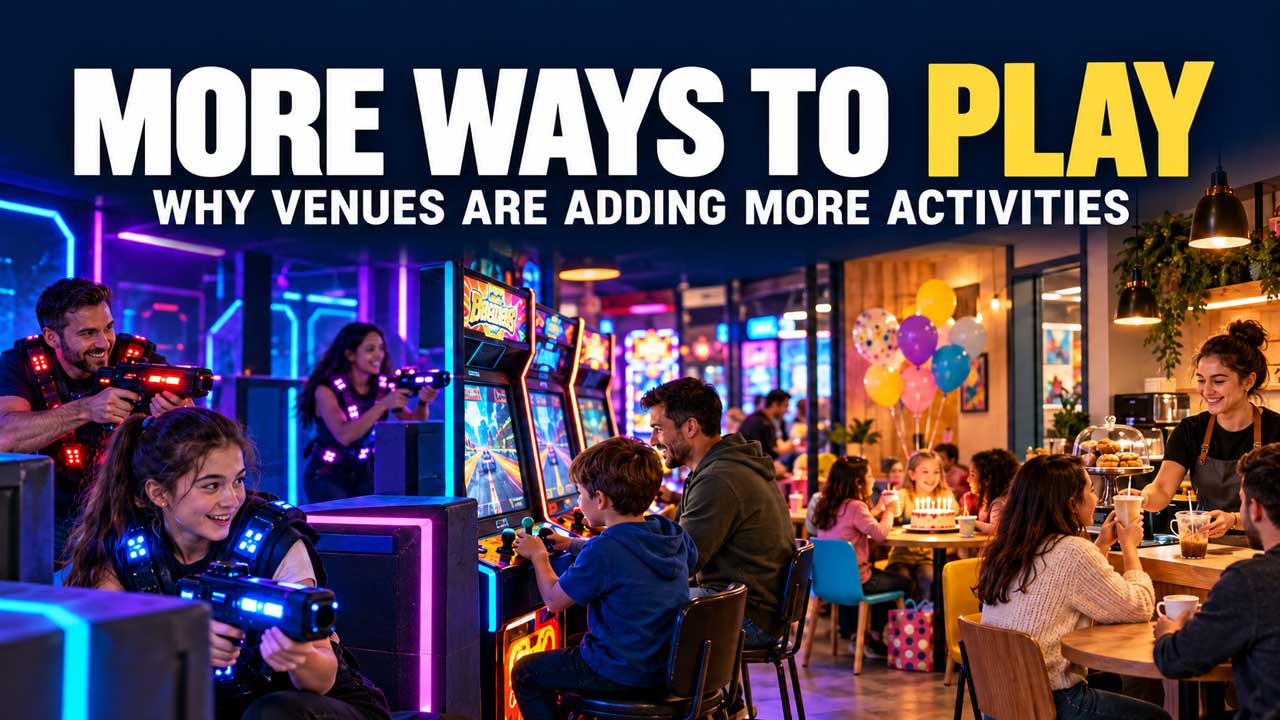
Walk into a successful small entertainment venue today and you will rarely find just one thing going on. There might be a party room next to an arena, a small arcade in the corner, a café counter serving families between sessions, and a calendar full of corporate bookings. This shift did not happen by accident. Owners have learned that relying on a single attraction makes revenue fragile, while a mix of activities makes it steady.
The logic is easy to see in the numbers. A venue built around one experience depends on that experience staying fashionable, on one type of customer showing up, and on one set of busy hours. When a new competitor opens down the street, the damage is immediate. A venue with several activities spreads that risk. If one attraction slows down, others keep the doors open, and customers who came for one thing often stay to try another.
That is why many operators start with a flexible core attraction and build around it. Investing in commercial laser tag sets is a common first step, because the same equipment can serve birthday parties, school groups, team-building days, and weekend tournaments. One purchase supports several customer segments, which is exactly the kind of leverage a small venue needs when capital is limited.
Filling Quiet Hours With Different Audiences, From School Trips to Corporate Workshops
Every entertainment business has dead time: weekday mornings, early afternoons, and off-season weeks. Multi-activity venues use those gaps strategically. A space that hosts children’s parties on Saturday can run corporate workshops on Tuesday, school field trips on Thursday morning, and league nights in the evening. Each use brings a different audience, so the calendar fills in places where a single-purpose venue would sit empty.
Bundled Packages and Add-Ons Raise Spending Per Visitor
When guests have more to do, they stay longer and spend more. A family that arrives for a one-hour session may add food, a second game, or a party upgrade if there are appealing options within reach. Average spend per visitor often rises not through higher ticket prices but through convenient additions. Bundled packages make this easier by giving customers a simple choice that feels like good value while increasing the total sale.
Expanding Gradually Keeps Costs and Complexity Under Control
Owners sometimes worry that adding activities means adding complexity and cost. In practice, the smartest operators expand gradually. They begin with one strong attraction, learn what their customers ask for, and add a second activity only when demand is clear. Many extras are modest: a small party area, a few interactive games, or a retail corner. Choosing activities that share space, staff, and booking systems keeps overhead under control.
Seasonal Events, New Formats, and Memberships Bring Guests Back
Repeat visits are the backbone of a healthy venue, and variety is one of the best ways to earn them. Customers who have played every scenario grow bored; customers who can try new formats, seasonal events, or themed nights have reasons to return. Memberships, punch cards, and birthday clubs work well in this setting because there is always something fresh to offer.
A Richer Story for Social Media and Local Partnerships
A multi-activity venue also has more to talk about. Social media content becomes richer when it features tournaments one week, a themed party the next, and a corporate team challenge after that. Local partnerships grow naturally too: schools, sports clubs, and employers can each find a package that suits them, which turns a single venue into a community hub rather than a one-time stop.
How to Choose Complementary Activities That Fit Your Space and Staff
Success depends on choosing complementary activities rather than piling on random attractions. Look at your audience, available space, and staffing, then select options that fit together and can be explained in a sentence. Track which activities generate bookings and repeat visits, and be willing to retire those that do not. Safety, cleanliness, and well-trained staff matter more than the number of attractions on the menu.
Resilience, Higher Revenue, and Community Appeal: Why the Multi-Activity Model Lasts
Small entertainment venues are embracing multiple activities because the model offers resilience, higher spending per guest, and more ways to connect with the community. Starting with a versatile core attraction and expanding thoughtfully lets owners grow without gambling everything on a single idea, and that flexibility is quickly becoming the standard for venues built to last.