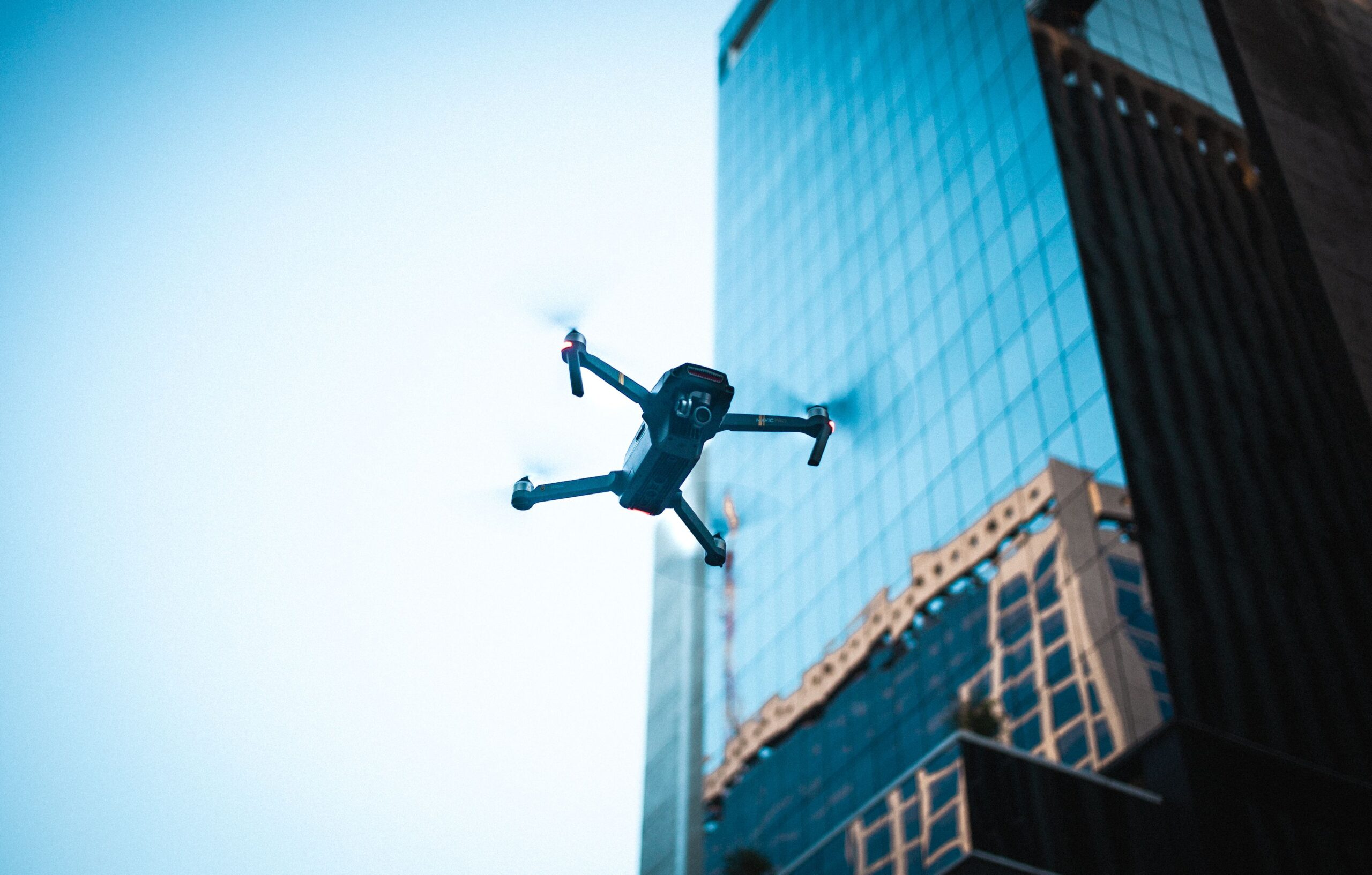
Canada’s vast coastlines are home to both remote communities and extreme weather. That risk to the country’s coastal residents was one of the primary reasons the Government of Canada launched the Defense Drone Initiative (DDI) Marketplace and chose ZenaTech, Inc. as a pre-qualified supplier of autonomous drones. The selection formally welcomes the company into an evolving national framework for uncrewed and autonomous systems.
ZenaTech specializes in providing AI drone systems, Drone as a Service, enterprise SaaS, and quantum computing solutions. The recent DDI qualification places the company inside a pre-qualified supplier pool where it will compete for future government needs related to drone use in defense and in the Canadian Coast Guard.
What the DDI Marketplace is, and what it isn’t
Canada’s government launched the DDI in July 2026 to expedite the development, testing, adaptation, and production of uncrewed and autonomous systems. The drones involved in this initiative will strengthen Canada’s domestic defense industrial capability.
That focus on testing and adaptation reflects the acknowledgment that drones cannot simply be bought and switched on. They must be proven and refined as they are integrated into demanding operational environments.
When ZenaTech earned a DDI Marketplace qualification, it gained the ability to apply and compete for specific future requirements that may be issued via the Marketplace. That distinction is important for public trust, as Canadians expect procurement decisions in defense and security contexts to be completely transparent. These transactions must also be competitive and accountable. A supplier pool is part of building that structure by creating a known set of qualified participants who can respond when needs arise.
A founder’s perspective on building autonomous drones and drone technology for real-world needs
“Being selected for Canada’s Defense Drone Initiative Marketplace represents an important milestone for our growing defense business,” Shaun Passley, Ph.D., founder and CEO of ZenaTech, said in a recent press release. “We have been investing in autonomous drone technology, AI, manufacturing, and advanced capabilities designed for real-world defense and government applications, and we look forward to demonstrating how our ZenaDrone solutions can contribute to Canada’s objective of building a strong domestic drone and autonomous systems industry. Our goal is to continue advancing our technology and manufacturing capabilities so that ZenaDrone can become an important supplier of autonomous drone solutions to Canada and allied governments.”
These government applications will include missions in which drones support people performing difficult jobs, such as surveillance and reconnaissance, as well as defense logistics. Most importantly, the missions will find drones taking on operations in environments that are either too dangerous or too costly to cover with traditional methods alone.
A look at ZenaDrone’s growing platform lineup in defense drones
At the center of ZenaDrone’s defense-oriented portfolio is the ZenaDrone 1000, a multifunction autonomous drone platform built for surveillance, reconnaissance, logistics, and specialized cargo missions. The ZenaDrone 1000 is currently in testing.
ZenaTech is also developing the IQ Series. These smaller drones span multiple use cases from indoor surveillance and security to longer-range infrastructure inspections, such as land surveying and mapping. One model even handles underwater applications. The breadth of that portfolio reflects how drone technologies tend to evolve. The same onboard computing and sensors are quickly being adapted to a variety of extremely different missions.
ZenaTech is also developing counter-UAS maritime interceptor drones and an associated launch and refueling station.
Across these platforms, ZenaTech provides AI-driven autonomy, advanced sensors, and modular payload capabilities to meet demanding operator requirements. The company has also been working to expand its manufacturing facilities across Arizona, Dubai, and Taiwan, giving it a global footprint that underscores how drone manufacturing and component sourcing have become internationally networked.
Why autonomous drone advancement matters to Canadians today
Canada is a country defined by distance and weather. From Arctic approaches to remote highways and coastal waters, there are many places where getting eyes on a situation quickly is expensive — even dangerous. Autonomy can help drones fly longer routes and operate in harsher conditions to support crews on the ground or at sea with faster situational awareness.
Canada’s Drone Defense Initiative establishes a structured approach to evaluating and improving these technologies in Canadian contexts, rather than relying solely on generic solutions designed for different terrains or climates.
A qualification into a pre-qualified supplier pool connects innovation directly to public need. Capabilities refined through defense-oriented testing can spill over into other high-need areas such as search-and-rescue support, disaster-response mapping, wildfire monitoring, infrastructure inspection, and maritime awareness.
Of course, for the solutions to prove most valuable, they must be validated and procured through appropriate processes. Most people never see the thousands of test flights, sensor calibrations, and software tuning that take place long before drone technology is considered ready for evaluation.
Yet, after years of engineering work to ready its autonomous, AI-powered drone solutions for practical consideration, ZenaTech’s DDI Marketplace qualification recognizes that the company has earned a place as a pre-qualified supplier for Canada’s government.