As athlete-led production companies have multiplied across Hollywood and sports, the competition has expanded beyond who can make the next hit documentary or sell the next series to a streaming service.
Increasingly, the competition is for brands.
Omaha Productions, the media company founded by Peyton Manning and Jamie Horowitz, has quietly built a significant business in the space through Omaha Brand Studio, working with companies including Macy’s, FanDuel, Nestlé, U.S. Bank, Nationwide, Topps, Toyota and the American Red Cross. The division has also produced custom movie trailers for films including Anaconda, Ghostbusters: Frozen Empire and Turning Red.
Horowitz recently spoke to Sports Business Journal about the growth of the business, which he acknowledged is still one of the less widely known parts of Omaha.
The strategy behind it is deceptively simple: Make something the brand likes, the talent likes and, most importantly, audiences actually want to watch.
“If you watch Baker Mayfield doing a Popeye’s chicken commercial, the goal is not that you know that Omaha made it,” Horowitz told Sports Business Journal. “The goal is that Popeye’s is very happy and Baker is very happy that everybody just wants to do more business together.”
It is an approach that fits into the larger mission Manning and Horowitz have established for Omaha: bring people together by making uplifting and unifying content.
And increasingly, that mission is becoming a business strategy.
From Production Company to Creative Partner
Omaha isn’t alone.
LeBron James built SpringHill alongside longtime business partner Maverick Carter. Stephen Curry’s Unanimous Media is run with Erick Peyton, a veteran producer and entrepreneur. Religion of Sports paired Tom Brady and Michael Strahan with filmmaker Gotham Chopra. And Coco Gauff has partnered her iROC Media Group with Religion of Sports, giving the young tennis star an established production infrastructure while she remains focused on her playing career.
Now another evolution is underway.
Production companies that once concentrated primarily on television, films and documentaries are increasingly moving directly into creative work for advertisers. Words + Pictures, OBB Media and Fanatics Studios, Park Stories and Religion of Sports are among the companies expanding their relationships with brands.
Park Stories has worked with Nike, Adidas and EA Sports. Religion of Sports has created campaigns including work involving Gauff and Naked Juice. OBB’s Bolded division has partnered on sports-related campaigns with Dick’s Sporting Goods, UPS, Old Spice and Starbucks.
“We’re seeing brands want to put a lot of investment into original content,” OBB Media and Fanatics Studios executive Kfir Goldberg told Sports Business Journal. “That doesn’t mean that you have to have their logo in every scene, or their products. They just want to be associated with great sports storytelling.”
Omaha is attempting to capitalize on the same shift, but with a creative identity rooted heavily in Manning himself: humor, sports, accessibility and an aversion to taking itself too seriously.
Horowitz describes the result as a world that brands increasingly want to enter.
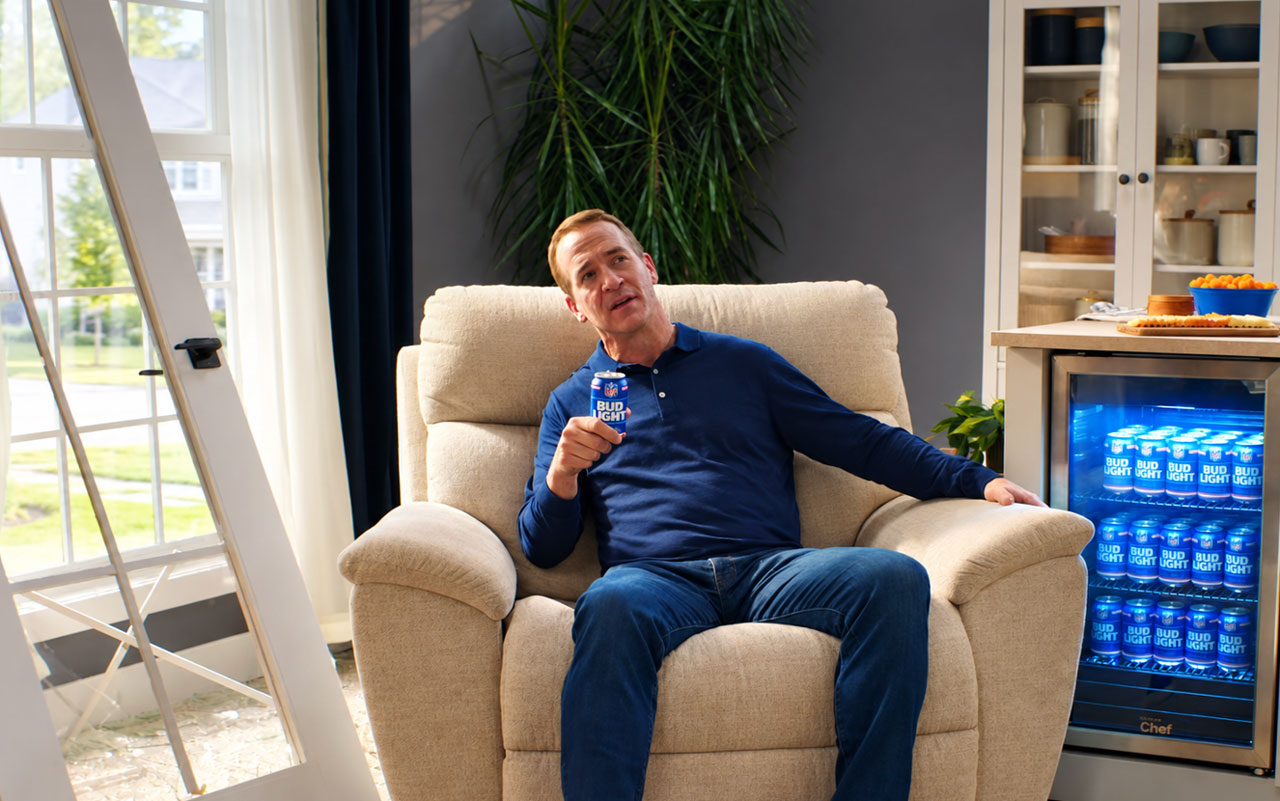
Omaha, for example, worked with Bud Light on Armchair Quarterback, an extension of the Netflix series Quarterback. It partnered with the PGA of America on Breakfast at Bethpage, with T-Mobile serving as presenting sponsor of the Ryder Cup morning show. Other projects have ranged from traditional commercials to digital series, live events and social campaigns.
“It can work in a lot of different ways,” Horowitz told Sports Business Journal, “but our focus is simply helping brands achieve their goals.”
The Executive Helping Build That World
One of the key people responsible for translating Manning and Horowitz’s philosophy into actual campaigns is Kristen Herlihy, Omaha’s head of marketing.
Herlihy and Horowitz worked together at FOX Sports, and she joined him at Omaha Productions a year after the company launched. Since then, she has become an important architect of Omaha’s digital and branded-content strategy.
Sports Business Journal named Herlihy to its Forty Under 40 class in 2024. Herlihy is responsible for relationships between Omaha and more than 40 different brands and is generating and overseeing tens of millions of dollars in revenue for the company.
Herlihy’s background predates Omaha. She began her career at ESPN before moving to FOX Sports, where she helped create digital programming and led the Emmy-nominated Dos Equis partnership The Ultimate College Football Road Trip.
At Omaha, one of the principles she has emphasized is that branded content should lead with entertainment rather than the sales pitch.
That philosophy was evident in Omaha’s Peyton It Forward work with Bud Light, which assembled Manning, Saquon Barkley, Emmitt Smith and other NFL stars around a deliberately playful premise. Herlihy has said that Omaha’s use of comedy comes naturally from Manning’s personality but also serves a larger purpose.
“We also find humor tends to be a great unifier,” Herlihy told Awful Announcing. “Omaha strives to create uplifting content that everyone can enjoy.”
That philosophy extends beyond the work Omaha puts on screen. The company has offices in New York, Los Angeles and Charlotte, and each features the same sign: “Work hard and be nice to people.” It is a simple philosophy that Horowitz focuses on and one that has become connective tissue for Omaha employees as the company has grown.
Ashley Braband, Omaha’s Head of People and one of the company’s first employees, described the phrase as the company’s “unofficial motto” in an interview with Cynopsis. Braband said Omaha has been intentional from its earliest days about hiring people who embody the company’s ethos and credited Manning and Horowitz with establishing a culture centered on hard work and relationships.
“That focus on hard work and the importance of relationships is passed down directly from our leadership,” Braband said.
The idea is that ambition and kindness aren’t competing values: work hard, treat people well and build relationships that last. For a company increasingly asking brands to entrust it with their image, athletes to entrust it with theirs and audiences to give it their attention, that philosophy has become more than an office slogan.
And the concept of bringing people together doesn’t always have to mean making them laugh.
When a Brand Can Do More Than Sell Something
One of Omaha’s most powerful branded projects came through its work with Nationwide.
Zoe Suder was a Los Angeles high school soccer captain who had been diagnosed with stage-four metastatic osteosarcoma. Her treatment included chemotherapy, surgeries and an eight-hour leg-salvage procedure, while mounting medical expenses led her family to create a GoFundMe.
Nationwide and Omaha built a campaign around giving Suder and her teammates a surprise day at the Rose Bowl.
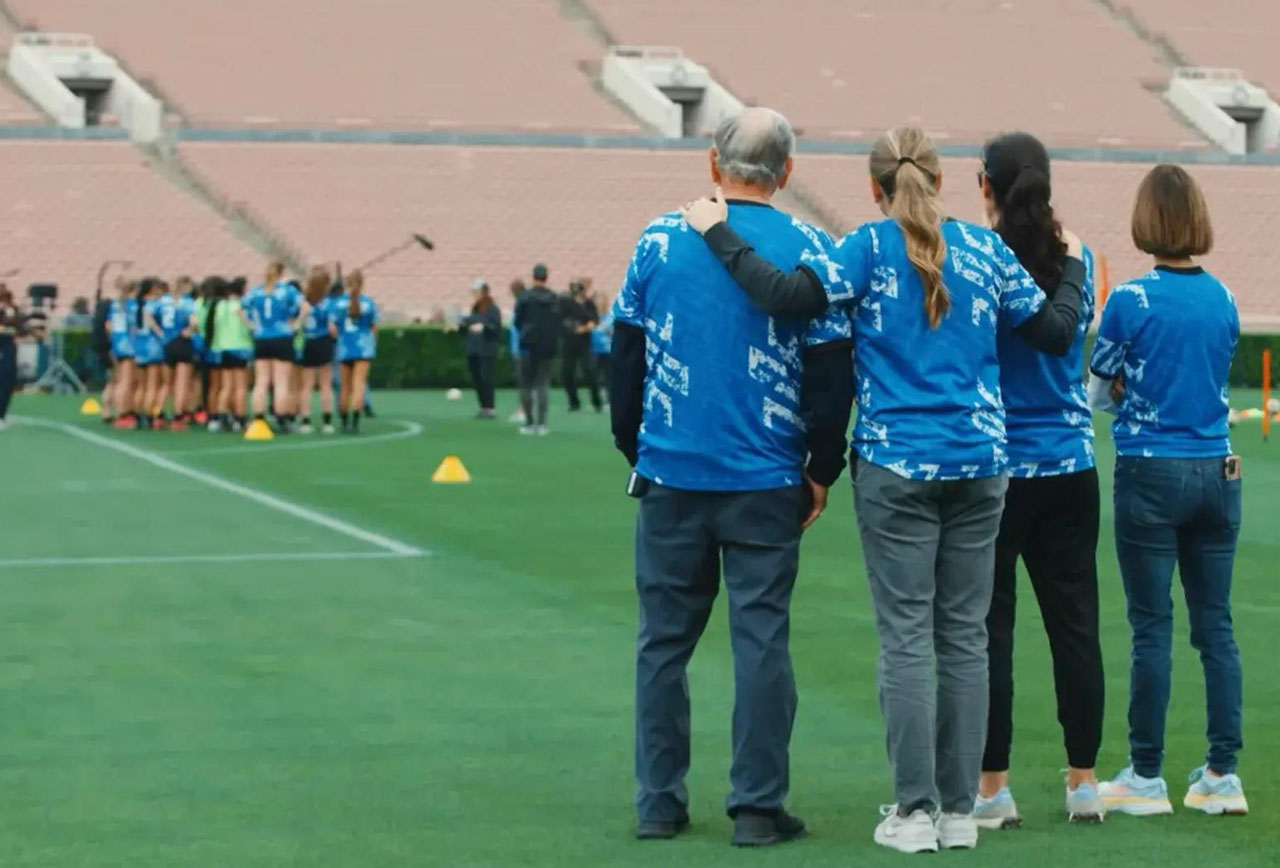
Omaha used its relationships to bring soccer legends Mia Hamm and Brandi Chastain, along with Melanie Barcenas, to the field. Other players contributed video messages. Manning appeared by video as well, eventually revealing that Nationwide and Omaha would complete Suder’s GoFundMe goal to help finance her care.
The campaign generated 500,000 Instagram views and nearly 7 million TikTok views, according to its Shorty Awards entry. Manning, Horowitz, and Herlihy conceived and executed the project as part of the ongoing relationship with Nationwide.
It also demonstrated something more fundamental about the opportunity Omaha sees.
The same operation capable of putting Baker Mayfield in a Popeyes commercial or building a humorous Bud Light campaign can use a brand’s resources, Omaha’s athlete relationships and its production capabilities to tell a story that has almost nothing to do with selling a product.
That range may ultimately be more important than any single campaign.
Entertainment First
The lines separating media companies, creative agencies, production studios and athlete businesses are becoming increasingly difficult to find.
Words + Pictures CEO Connor Schell told Sports Business Journal that his company is having more direct conversations than ever with brands about funding projects. Religion of Sports CEO Ameeth Sankaran has described his company as evolving into a “mini-studio” as it expanded beyond documentaries and deeper into the brand ecosystem.
The opportunity is clear: Brands have money to spend and increasingly want something beyond a conventional 30-second spot. Athletes want to build businesses and tell stories without becoming walking advertisements. And audiences have more ability than ever to ignore advertising that doesn’t interest them.
Omaha’s answer is to make the advertisement—or series, event, social video or live show—something audiences might have chosen to consume anyway.
That is also why Omaha doesn’t necessarily need viewers to know Omaha made it.
The company’s highest-profile successes, from the ManningCast to Quarterback, have helped create a particular sensibility around the Omaha name: sports mixed with entertainment, recognizable personalities, humor and an earnestness that rarely drifts into cynicism.
Brand Studio offers companies access to that sensibility without requiring Omaha itself to be the centerpiece.
For Manning and Horowitz, that could become an increasingly valuable part of the company they have built.
There are now plenty of athlete production companies. There are plenty of creative agencies. And there are increasingly plenty of businesses attempting to be both.
Omaha’s bet is that its differentiation won’t simply come from access to Peyton Manning or other famous athletes. It will come from a creative philosophy that can extend across television shows, documentaries, commercials, social videos and live events.
Make something entertaining. Make something people feel good about watching. Make the talent want to come back. Make the brand want to come back.
And, whenever possible, bring people together.