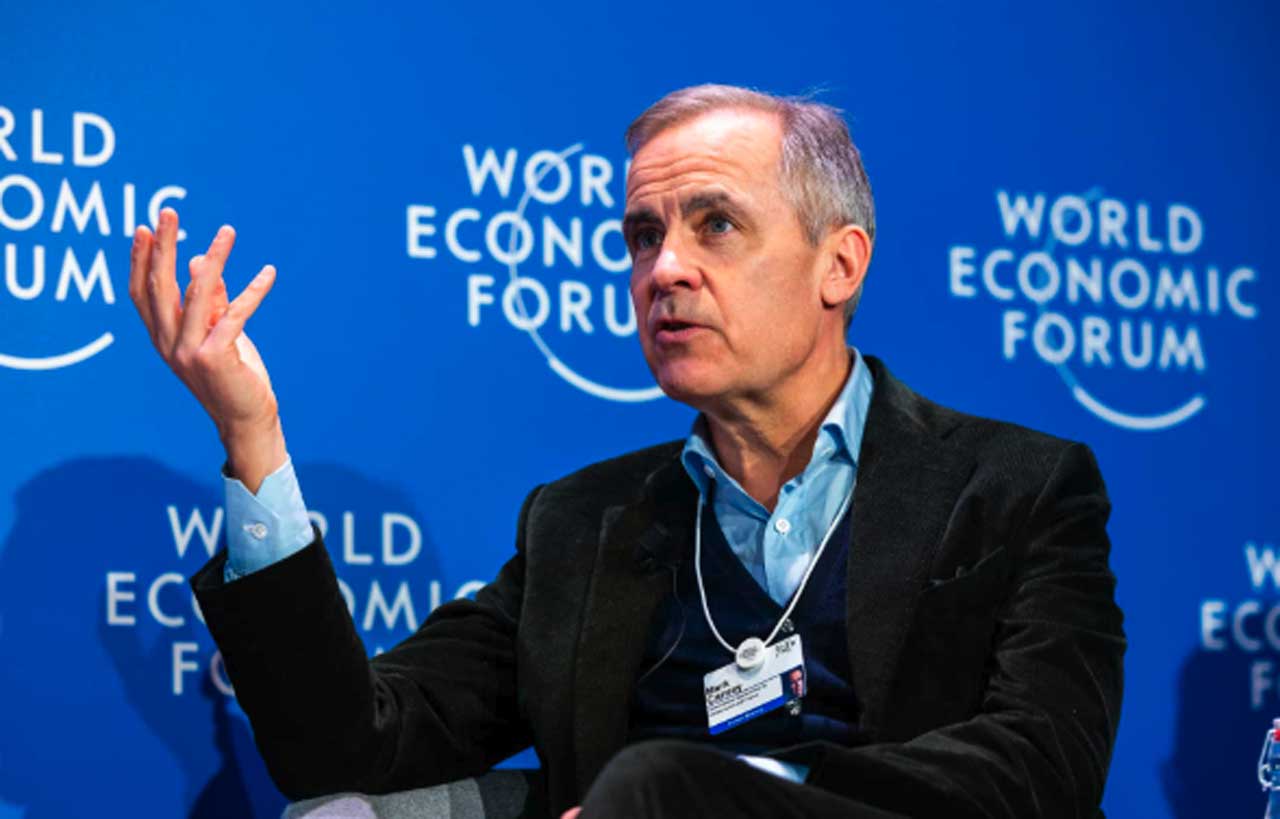
Prime Minister Mark Carney and European Commission President Ursula von der Leyen launched the international alliance during the United Nations General Assembly in New York
NEW YORK CITY – NATIONAL POLITICAL NEWS – Canada will invest $82 million over five years to expand ocean monitoring as part of a new international effort aimed at strengthening weather forecasting, maritime safety and climate research.
Prime Minister Mark Carney and European Commission President Ursula von der Leyen formally launched the OceanEye International Alliance for the Global Ocean Observing System on Wednesday, September 23, 2026.
The announcement was made during the high-level week of the 81st United Nations General Assembly in New York City.
According to the federal government, Canada, the European Union and their international partners secured pledges valued at more than C$339 million, or approximately EUR211 million.
That figure should not be read as a single cash fund ready for immediate spending. The total includes financial commitments, in-kind assistance and access to equipment and infrastructure such as research vessels, ocean sensors, drones and data-processing facilities.
What Canada Is Committing
Canada’s $82-million commitment will be spent over five years, beginning in the 2027-28 fiscal year.
The federal government says the investment will:
- double the number of ocean-measuring floats Canada deploys annually through the international Argo network;
- increase monitoring of currents in the North Atlantic and Davis Strait;
- support year-round Arctic Ocean observation using autonomous underwater vehicles;
- establish a network of fixed Arctic buoys providing real-time data;
- continue Canadian participation in Antarctic ocean research; and
- improve the exchange of ocean information between Canada and international partners.
For a country bordered by the Atlantic, Pacific and Arctic oceans, the investment has direct implications for shipping, fisheries, coastal protection, search and rescue operations and northern sovereignty.
Ocean measurements also feed the computer models used to forecast weather and longer-term climate conditions. Better information about water temperatures, currents, sea ice and changing ocean conditions can improve warnings for coastal communities and mariners.
European Union Funding Needs a Clear Breakdown
The Prime Minister’s Office reports that the European Union pledged EUR92 million for ocean-observation activities.
A European Commission OceanEye information page separately identifies EUR62 million coming through the Horizon Europe program. The available announcements do not fully explain the remaining EUR30 million within the broader EU figure.
The two figures may describe different parts of the same package, but that should be confirmed before the EUR92-million amount is presented as one new cash allocation.
What Is the Global Ocean Observing System?
The Global Ocean Observing System, commonly known as GOOS, is an international network that collects and shares ocean information.
It is co-sponsored by the Intergovernmental Oceanographic Commission of UNESCO and the World Meteorological Organization.
GOOS receives approximately 120,000 observations each day from about 8,000 platforms operated by 64 countries through 17 global observation networks.
Those platforms include buoys, research vessels, underwater instruments, satellites and autonomous monitoring systems. Their data help governments, scientists, shipping companies and emergency agencies understand changing conditions above and below the ocean surface.
The European Commission says 90 per cent of global ocean observations are currently funded by only nine countries. That concentration makes the system vulnerable when a major contributor cuts funding, loses equipment or changes its political priorities.
What the OceanEye Alliance Is Designed to Do
The OceanEye alliance is intended to broaden the number of countries supporting GOOS and make funding more dependable.
The announced commitments are expected to help maintain existing observation platforms, close data gaps, strengthen the GOOS secretariat and regional coordination hubs, and support the OceanOPS data-reporting centre.
The alliance also supports open access to ocean information. Free and reliable access is important because weather systems, ocean currents, pollution, sea ice and marine ecosystems cross national boundaries.
Thirty-one members have joined the alliance. Along with Canada and the European Union, participating countries include Angola, Belgium, Brazil, Cabo Verde, Chile, Colombia, Costa Rica, Croatia, Cyprus, France, Germany, Greece, Iceland, Ireland, Italy, Madagascar, Malta, Mauritius, Mexico, Namibia, the Netherlands, Norway, Palau, Portugal, Slovenia, South Korea, Spain, the Faroe Islands and the United Kingdom.
The Political Message from Carney
The announcement fits Prime Minister Carney’s broader effort to position Canada as a dependable partner in international alliances, scientific research and climate policy.
It also deepens Canada’s relationship with the European Union at a time when Ottawa is trying to diversify its diplomatic, security and economic partnerships.
Carney’s central message was that no country can adequately observe or protect the oceans by itself. Sharing measurements allows each country to see conditions beyond its own waters and increases the value of every participating nation’s investment.
Von der Leyen said ocean observation gives governments the information required to understand and protect a rapidly changing underwater environment.
Politically, the initiative allows Canada to connect climate action with practical economic and security concerns. Ocean data are not only used in environmental studies. They support commercial navigation, ports, offshore industries, fisheries, disaster planning and national defence.
The Questions Ottawa Still Needs to Answer
The announcement establishes a funding commitment, but several details will determine its value to Canadians:
- Which federal departments and agencies will manage the $82 million?
- How much funding will purchase Canadian-made equipment or support Canadian researchers?
- What portion will be spent in the Arctic and with northern or Indigenous partners?
- Will the new observing equipment be built and maintained in Canada?
- How will the government measure improvements in forecasting, navigation safety and coastal protection?
- How much of the international C$339-million total is cash, and how much is equipment or other in-kind support?
Those questions matter because a pledge is not the same as a completed project. The public will need clear reporting on when equipment is deployed, whether data gaps close and what measurable benefits result from the investment.
What Comes Next
The New York event begins a wider effort to secure support through 2028 and beyond.
Further financial and in-kind commitments are expected to be sought at COP31 and at the 12th Our Ocean Conference, which will be held in Halifax, Nova Scotia.
If participating countries meet their commitments, the alliance could reduce the Global Ocean Observing System’s dependence on a small group of major funders. If promised contributions are delayed or counted more than once across existing programs, the impact will be more limited.
For Canada, the test will be whether the $82-million announcement produces more instruments in the water, better Arctic coverage, faster data sharing and more dependable information for mariners, coastal communities and weather forecasters.