Homeowners across Canada and the United States are changing how they approach outdoor home improvements. Rather than spending money on temporary patio furniture or low-cost shade accessories that need frequent replacement, property owners are treating their backyards as long-term architectural investments. Creating a functional, year-round outdoor room requires structural elements that resist seasonal weather extremes while maintaining clean visual appeal. Consequently, the demand for a heavy-duty metal pergola has grown significantly across both residential and commercial sectors.
Why Traditional Outdoor Structures Often Struggle
For decades, wood decks, pressure-treated pergolas, and fabric gazebos were the standard choices for backyard shade. However, these traditional materials present ongoing maintenance challenges and performance limitations in demanding North American climates:
- Wood Degradation: Timber structures absorb moisture, leading to warping, cracking, splintering, and wood rot over time. They require labor-intensive sanding, staining, and sealing every few years.
- Fabric Vulnerability: Canvas umbrellas and cloth gazebos tear easily in high winds, fade under UV light, and fail under heavy rainfall or winter snow.
- Structural Instability: Lightweight plastic or thin steel kits often lack the structural weight and anchoring capabilities needed to endure severe storms.
These recurring costs and maintenance demands have pushed property owners toward engineered metal alternatives.
What Makes a Metal Pergola Different
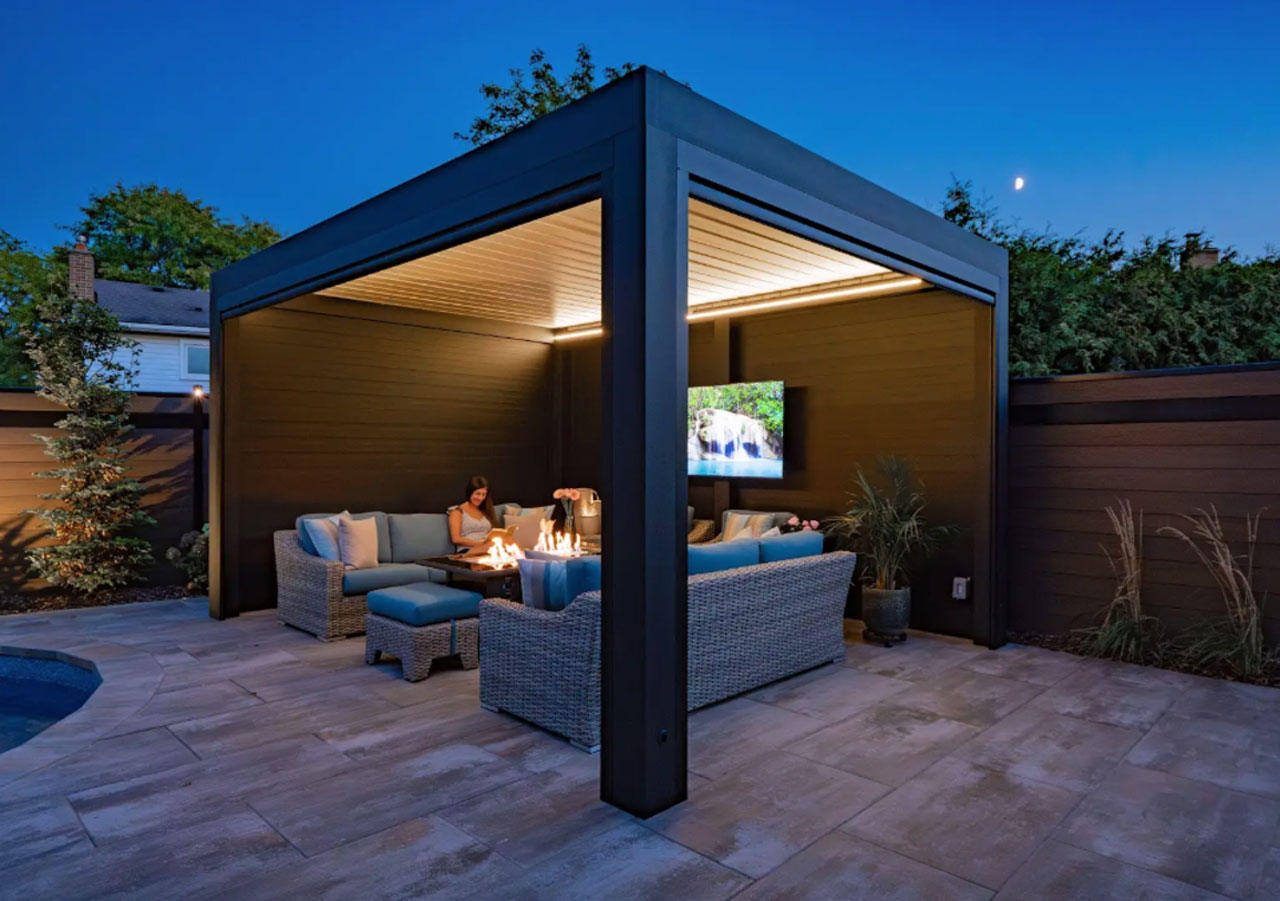
An engineered metal structural system provides superior structural stability, precise manufacturing tolerances, and modern architectural styling. Modern metal outdoor structures feature heavy-gauge extruded framing, concealed hardware, and integrated water management systems that create a clean, modern aesthetic. Unlike temporary shelter options, a permanent metal framework anchors the patio, creating a defined living zone that functions reliably throughout every season.
Designed for Snow in the North and Heat Further South
One of the key reasons metal structures are gaining widespread popularity across North America is their ability to adapt to distinct regional weather demands. In northern climates, including Canada and the northern United States, structures must support heavy static snow loads and resist damage from freeze-thaw cycles. In coastal or southern regions, the same structures must withstand high wind gusts, intense solar radiation, and humid salt-air environments.
High-performance powder coatings protect metal surfaces against salt spray corrosion, UV chalking, and paint blistering, ensuring long-term structural integrity regardless of geographic location.
The Shift Toward Adjustable Roof Systems
Modern metal structures have evolved beyond basic open-lattice frames. Advanced designs incorporate motorized louvered roof systems that allow users to control overhead coverage with the press of a button.
Slanting the roof louvers open allows natural sunlight and vertical airflow to cool the patio, while closing them forms a watertight seal during rainstorms. Integrated gutter channels hidden inside the perimeter beams route water down through internal post downspouts, keeping outdoor dining tables, lounge sectionals, and outdoor kitchens completely dry.
Durable Outdoor Design Is Replacing Temporary Shade
The shift toward engineered metal outdoor structures represents a permanent change in residential landscape design. Homeowners increasingly prioritize long-term durability, functional climate control, and low-maintenance materials over temporary, quick-fix shade options. By choosing resilient, weather-ready metal structures, property owners create beautiful, highly functional outdoor living spaces that deliver reliable comfort for years to com