Most LASIK results are close to the intended correction, with only a small number of patients left with a minor residual prescription afterward. An enhancement procedure may address this, although not every case is a candidate for one. This article explains what an enhancement involves, who may be a candidate, when it is performed, and what questions to ask before agreeing to a second procedure.
What Is a LASIK Enhancement?
An enhancement is a secondary refractive procedure performed after the initial LASIK surgery to refine a result that did not fully reach the target correction. It is not a repeat of the original surgery. The eye has healed from the first procedure, and the corneal structure has already been altered. The approach to an enhancement has to account for both changes.
Most enhancements involve small corrections, often between 0.50 and 1.5 diopters of residual refractive error. This does not usually mean that something went wrong. Corneal healing varies from person to person, and the eye does not always settle exactly where the preoperative calculations predicted.
Why Some Patients Need a Second LASIK Procedure
Several factors can lead to the need for an enhancement.
Healing response is the most common factor. Some corneas heal with slightly more or less tissue remodeling than the preoperative formula anticipated, which shifts the final refractive outcome by a small margin.
Higher prescriptions are more likely to require enhancement than lower prescriptions. Correcting an eye with -7.00 diopters of myopia involves removing more tissue, and working with a more distant target, than correcting an eye with -2.00 diopters, so even a well-executed procedure carries a slightly higher chance of residual error at the higher end, similar to a long versus short golf putt.
Age-related changes also play a role, particularly in patients who underwent LASIK years earlier. The eye’s prescription can drift gradually over time for reasons unrelated to the original surgery, and what appears to be a LASIK-related issue may simply reflect normal age-related refractive change.
Why Surgeons Wait Before Considering Enhancement
Patients who do not see 20/20 vision immediately after surgery may assume that something needs to be fixed right away, but that is not usually the case. The cornea needs time to stabilize before anyone can determine whether the result is final or still changing. Also, early on especially, the final result can be finessed by increasing or decreasing the frequency of topical steroid drops.
Most surgeons wait at least three months before considering an enhancement, and some prefer six months, especially for higher corrections that tend to take longer to stabilize. Acting too early risks treating a refractive error that might have resolved on its own.
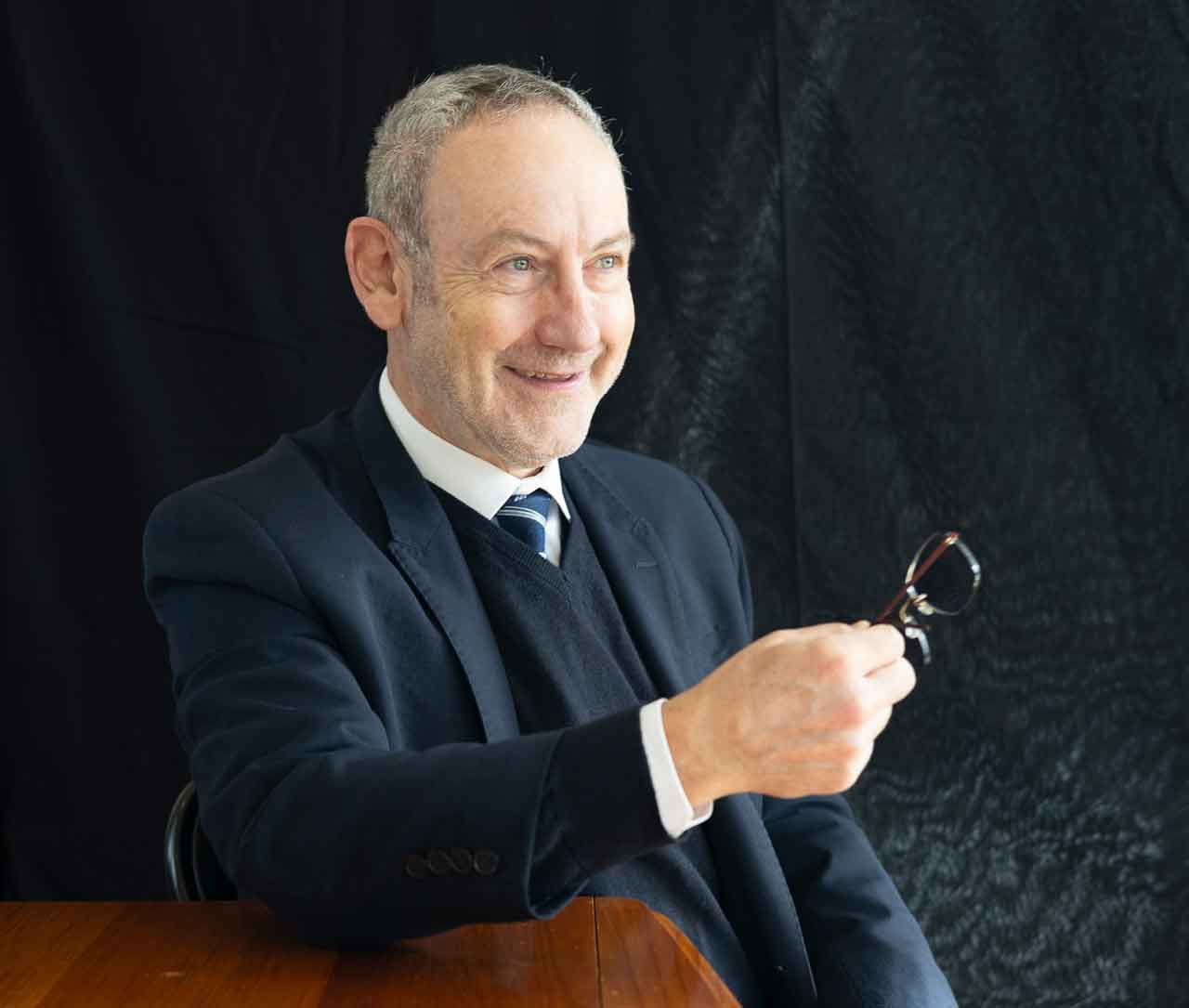
During that waiting period, the surgeon tracks two things: how stable the prescription is between visits and how the corneal shape looks on topography. Dr. David Robinson+ notes that the wait is not a formality; it is the best way to determine whether an enhancement is truly needed or whether the eye is still healing.
Types of LASIK Enhancement Procedures
There are two main technical approaches, and which one applies depends on the original surgery.
Lifting the Original LASIK Flap
If the original LASIK flap is still intact and accessible, which can remain the case even years later, the surgeon may lift the same flap rather than create a new one. The excimer laser then applies the additional correction underneath, and the flap is repositioned. This avoids creating a second flap.
PRK Surface Enhancement
In some cases, particularly when the flap cannot be safely lifted or when remaining corneal tissue is limited, a surface ablation approach is used instead. This skips the flap step entirely and treats the surface directly, similar to primary PRK.
The choice between these approaches is not arbitrary. It depends on how much stromal tissue remains, the quality and position of the original flap, and how much correction is actually needed. This is one area where a thorough re-evaluation matters, because the tissue-safety calculations must be repeated before a second procedure.
Who Is a Candidate for LASIK Enhancement?
Not everyone with residual prescription after LASIK is automatically a candidate for an enhancement. The same tissue-safety principles that applied to the original surgery still apply here, with less margin for error because some stromal tissue has already been removed.
Repeat pachymetry (corneal thickness) and topography (corneal mapping) assessments are standard before any enhancement is approved. The surgeon needs to confirm that there is enough residual stromal bed remaining to safely perform another ablation and that the cornea has not shown signs of irregular thinning or early ectatic change since the original procedure.
Patients who had thinner corneas to begin with, or those whose higher prescriptions were corrected initially, sometimes find that an enhancement is not advisable. Dr. Robinson notes that this comes down to a simple safety question: Is there enough tissue left to work with safely? When the answer is no, glasses or contact lenses may be the more sensible option for the remaining refractive error.
What Happens During an Enhancement Consultation?
A proper enhancement evaluation is more than a quick vision check. It typically includes a fresh refraction, repeat corneal imaging, and a discussion about whether the current refractive error is stable enough for treatment.
Questions worth bringing to that consultation:
How long has my prescription been stable, and has it been measured more than once?
Is my original flap still viable to lift, or would this require a surface approach instead?
What does my current pachymetry show, and is there enough tissue remaining for a safe enhancement?
What is the realistic likelihood that this will fully resolve my residual prescription versus only partially improving it?
Are there any signs on my topography that would make a surgeon hesitant to proceed?
Corneal subspecialists tend to devote particular attention to these topographic findings when evaluating enhancement candidates. Dr. Robinson’s enhancement evaluations include the same corneal mapping used in primary LASIK assessments rather than a simplified version, because a second procedure leaves less room for error than the first.
What is the Goal of LASIK Enhancement?
An enhancement is not a failure of the original surgery, and it is not guaranteed to be an option for every patient. It is a secondary procedure with its own safety thresholds, timing requirements, and candidacy criteria, separate from the criteria that determined eligibility for the original surgery.
Patients considering an enhancement are usually better served by an evaluation that applies the same scrutiny as the first procedure rather than assuming the second surgery will be simple because the eye has already had LASIK once. As Dr. Robinson notes, the goal of an enhancement consultation is not to persuade a patient to have a second surgery; it is to determine whether the eye can safely support one.