NetNewsLedger 2026 Wildfire Update: Fire Danger High Across Much of Northwestern Ontario
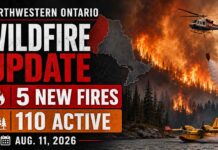
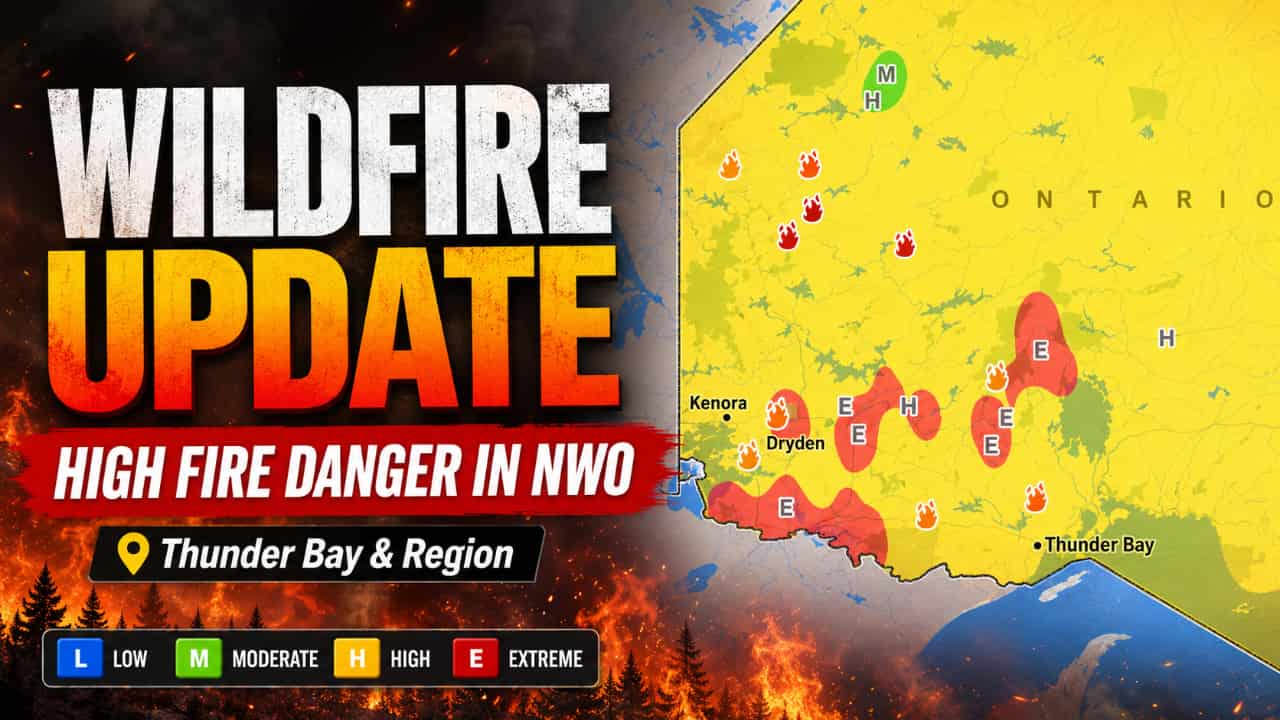
THUNDER BAY — Wildfire conditions are building across northwestern Ontario, with the latest forest fire map image showing widespread high fire danger and pockets of extreme hazard near parts of the Kenora, Dryden and north shore areas. The update matters locally because changing fire conditions can affect remote First Nations, highways, forestry operations, mining exploration, tourism and air quality across the region.
Northwest Region Sees Increased Fire Activity
Ontario’s latest public forest fire information indicates there are 10 active wildland fires in the Northwest Region, including four not under control and two being held. The province’s interactive fire map provides real-time information on active fires, current fire danger and restricted fire zones, though conditions can change quickly with wind, heat and lightning.
Map Shows High to Extreme Fire Danger
The map image shows most of northwestern Ontario under a high fire danger rating, with several extreme pockets visible near populated and travel corridors. Several new and active fire icons are also visible across the region.
That does not mean every community faces an immediate threat, but it signals a higher risk that new starts can spread quickly, especially where fuels are dry and winds increase.
Why This Matters for Thunder Bay and the Northwest
For Thunder Bay, wildfire risk is not only a forest issue. Smoke can affect air quality in the city and along Lake Superior’s north shore, while fires near Highway 17, Highway 11 and remote access roads can disrupt freight, tourism travel and emergency response.
For remote and fly-in First Nations, early-season fires can become more serious when smoke, aviation limits or changing winds affect evacuation planning and access to health care. Indigenous Services Canada says it reimburses 100 per cent of eligible response and recovery costs for First Nations affected by wildfires.
National Preparedness and Smoke Outlook
Nationally, the Canadian Interagency Forest Fire Centre reported 54 active fires, 815 fires year-to-date and 3,630 hectares burned as of its latest public dashboard reading, with the national preparedness level at 1.
BlueSky Canada’s smoke forecast for June 1 notes that wildfire smoke modelling is an estimate and may not capture all fire activity, especially where cloud or smoke obscures satellite detection.
Outdoor Burning Reminder
Ontario’s legislated fire season runs from April 1 to Oct. 31. Residents should check local municipal rules and provincial restrictions before lighting any outdoor fire. Where burning is allowed, fires must be kept small, attended at all times and fully extinguished.
To report a wildland fire north of the French and Mattawa rivers, call 310-FIRE. For fires south of those rivers, call 911.
Regional Context
Northwestern Ontario has long dealt with fire as part of the boreal forest cycle, but recent fire seasons have shown how quickly local conditions can become regional emergencies. Heat, wind, dry forest fuels and lightning can rapidly move a small fire into a threat to communities, transmission lines, rail corridors and industrial sites.
For residents, the practical message is simple: monitor official updates, avoid unnecessary burning and be prepared for sudden changes in smoke, travel conditions or emergency alerts.