DJI Pushes Back: DJI drones have undergone multiple independent and government security evaluations and have consistently been found safe and secure
THUNDER BAY – TECH – Ontario is restricting the use and future purchase of Chinese-made drones by the Ontario government and the Ontario Provincial Police, citing concerns over sensitive data, public safety and foreign-made technology.
The decision could affect policing, emergency response, wildfire monitoring, highway inspections and environmental work across the province, including Thunder Bay and Northwestern Ontario.
What Ontario Announced
The province says the restrictions begin with an immediate ban on Chinese-made drones for “highly sensitive” OPP operations. Ontario is also moving to phase out broader government use of Chinese-made drones and replace them with aircraft manufactured in Canada or other approved jurisdictions. Future procurement of Chinese-made drones by the government and the OPP is being suspended.
The province says drones are currently used for law enforcement, emergency management, wildfire monitoring, road and bridge inspections, and environmental monitoring. Ontario’s announcement says the transition is intended to happen without interrupting critical frontline services.
The move affects every drone currently owned and operated by the OPP, with the province saying the force currently uses only Chinese-made drones. The government has not publicly released the total number of affected OPP drones or the estimated cost of replacement.
Why the Province Says It Is Acting
Ontario says companies incorporated in China may be required under Chinese law to disclose data, even if that data is stored outside China. The province says that raises concerns about drones that could access, store or transmit sensitive information gathered during police and government operations.
Public and Business Service Delivery and Procurement Minister Stephen Crawford said the move is part of protecting provincial data and supporting Canada’s drone manufacturing sector.
Solicitor General Michael Kerzner said police need modern tools, but the province must address security and privacy concerns tied to foreign-made technology.
DJI Pushes Back
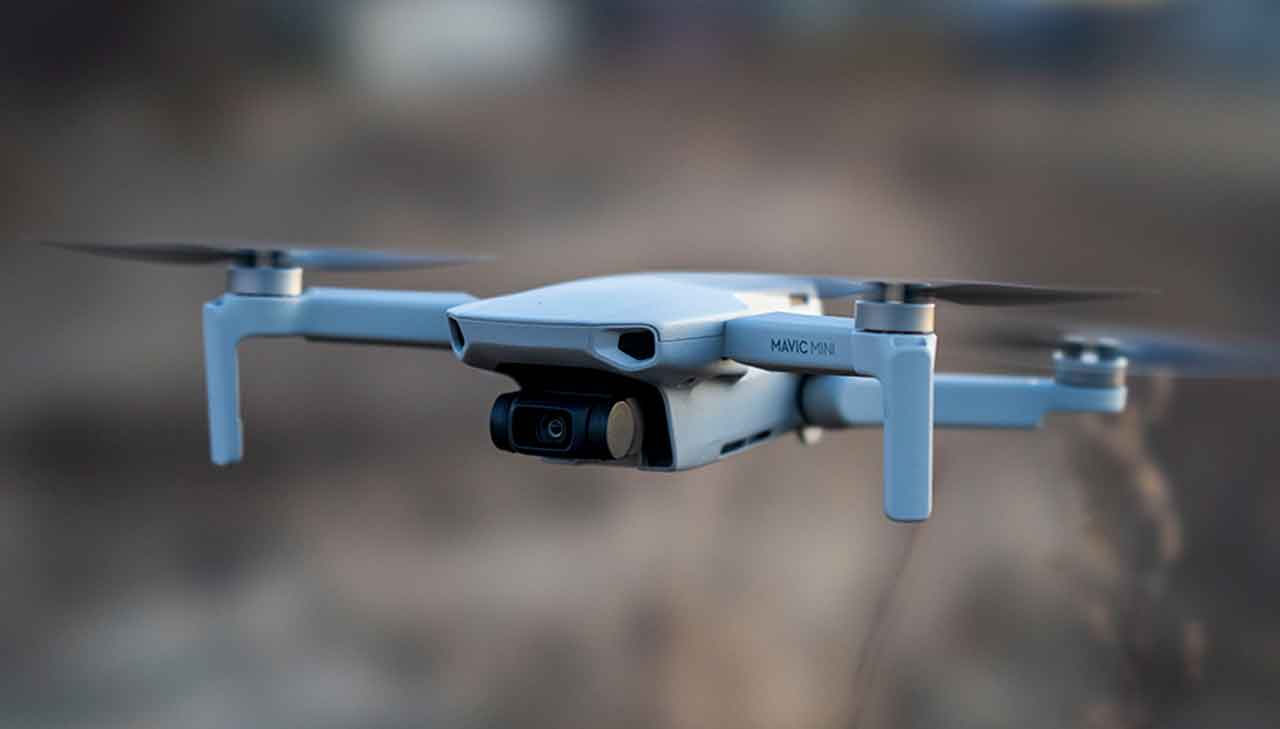
DJI says Ontario’s decision is not supported by proven evidence and could hurt public safety agencies that rely on drones.
“DJI is disappointed to learn of the Government of Ontario’s decision to restrict the use and purchase of life-saving drone technology based solely on the manufacturer’s country of origin.
“The facts speak for themselves: DJI drones have undergone multiple independent and government security evaluations and have consistently been found safe and secure. Additionally, DJI has the most robust privacy control features in the industry.
“We give users full control over the data they generate. Users are not required to share photos, videos, or flight logs with DJI, and by default, none of this data is synced with DJI. The concerns around our products are simply not supported by any proven evidence.
“DJI drones are life-saving tools, and no comparable products offer the same capability, reliability, and cost-effectiveness. We urge the authorities to focus on the facts and carefully consider the substantial impact this decision may have on public safety agencies.”
What Drone Options Ontario and the OPP Now Have
Ontario has not released a final approved replacement list. The province says it will consult industry and public-sector stakeholders to identify replacement options, including Canadian and Ontario drone manufacturers.
The likely options fall into three categories.
First, Ontario can continue using existing Chinese-made drones where permitted during the transition, but not for highly sensitive OPP operations. That approach would reduce immediate service disruption while replacements are assessed.
Second, Ontario can look to Canadian suppliers, manufacturers, service providers and integrators. Canadian companies in the sector include Draganfly, which markets drones for public safety, health, agriculture and energy; Volatus Aerospace, which provides aerial intelligence services, training and support for public safety, government, infrastructure and other sectors; Aeromao, a Canadian UAV manufacturer focused on fixed-wing drones for mapping, surveying and remote sensing; and Canadian UAVs, a Canadian-owned operator with BVLOS and emergency response services.
Third, Ontario could consider aircraft from approved allied jurisdictions. U.S. and allied-market options often discussed for secure public-sector use include Skydio X10D, Parrot ANAFI USA GOV, Teal 2 and Freefly Astro. Those platforms are marketed for government, public safety, inspection, reconnaissance or defence-related use, and several are connected to the U.S. Blue UAS or NDAA-compliant market.
Any replacement aircraft used in Canada will still have to meet Transport Canada requirements for the type of operation being flown.
Transport Canada says drones used for advanced and Level 1 complex operations require appropriate RPAS Safety Assurance declarations, depending on whether they are operating near people, over people, in controlled airspace or beyond visual line of sight.
Why This Matters in Thunder Bay and Northwestern Ontario
For Northwestern Ontario, this is not only a procurement story. OPP detachments, emergency responders and government agencies cover long distances, remote highways, forested areas, waterways, rail corridors and communities where fast aerial awareness can matter.
Drones can assist with collision reconstruction on Highway 11/17, search and rescue, missing-person cases, wildfire assessment, flood monitoring, road washouts, bridge inspections and environmental response.
A sudden loss of capable aircraft could affect response times, training needs, battery and parts supply, thermal imaging capacity and the ability to operate in harsh weather.
The province says it does not want the phase-out to interrupt critical frontline work. That will be the key test for communities outside southern Ontario, where replacement equipment must be reliable in cold weather, remote terrain and limited-connectivity environments.
Are Other Provinces or Countries Doing This?
Ontario says its policy would align with steps already taken by the Canadian Armed Forces, the RCMP and the U.S. Federal Communications Commission.
Public reporting says the RCMP has restricted hundreds of Chinese-made drones to non-sensitive operations and uses other aircraft, including French, American and Belgian-made drones, for higher-risk work.
NetNewsLedger has not confirmed a comparable province-wide announcement from another Canadian province as of May 21, 2026. Ontario appears to be moving at the provincial level while federal agencies and several U.S. jurisdictions have already taken steps.
In the United States, the FCC added new foreign-made drones and critical components to its Covered List in December 2025, restricting new equipment authorizations while allowing existing approved drones to continue operating.
Several U.S. states have also moved against Chinese-made drones in public agencies.
Arkansas passed a law restricting state agencies from using drones made by China and other covered foreign entities, while reporting has identified restrictions or legislation in states including Florida, Mississippi, Tennessee, Nevada and Connecticut.
Other countries have taken different approaches. India has restricted imports of finished drones as part of a broader push to support domestic manufacturing, while Australia has seen federal concern over DJI use in defence, police and border agencies, though that is not identical to Ontario’s policy.
Key Questions Still Unanswered
Ontario has not yet said what counts as a “highly sensitive” OPP operation, how many drones must be replaced, how much the transition will cost, which manufacturers will qualify, or whether municipal police services and public-sector contractors will face similar restrictions.
For Thunder Bay and Northwestern Ontario, the central issue is balance. Ontario wants stronger control over sensitive public-sector data. DJI says the decision is not evidence-based and could remove cost-effective tools from agencies that use drones to save lives.
The coming procurement process will determine whether Ontario can replace DJI technology without reducing public safety capability in large, remote and weather-challenged regions of the province.