Louise Arbour named Canada’s next Governor General after King’s approval
OTTAWA — Prime Minister Mark Carney announced May 5 that King Charles III has approved the appointment of the Honourable Louise Arbour as Canada’s next Governor General, making the former Supreme Court justice and international human rights leader the King’s representative in Canada.
The appointment matters in Thunder Bay and Northwestern Ontario because the office connects Canada’s constitutional system, the Canadian Armed Forces, Indigenous reconciliation, national honours and the rule of law to communities far from Ottawa. It also comes as First Nations leaders reflect on the historic tenure of outgoing Governor General Mary Simon, Canada’s first Indigenous governor general.
A jurist with national and international reach
Ms. Arbour will become Canada’s 31st Governor General since Confederation and the first appointed by King Charles III. The Prime Minister’s Office described her as a legal scholar, judge and human rights leader whose public service has spanned more than five decades.
Her career includes appointments to the Supreme Court of Ontario, the Court of Appeal for Ontario and the Supreme Court of Canada. In 1996, she was appointed by the United Nations as chief prosecutor for the International Criminal Tribunals for the former Yugoslavia and Rwanda. She later served as United Nations High Commissioner for Human Rights and as UN Special Representative for International Migration.
Prime Minister Carney said Ms. Arbour has “held institutions to account” and will represent Canada at home and abroad. He also thanked outgoing Governor General Mary Simon for her service and her advocacy for Inuit rights, Indigenous self-determination and the preservation of Indigenous language, culture and identity.
AFN honours Mary Simon and welcomes Louise Arbour
The Assembly of First Nations also responded to the announcement, acknowledging Ms. Arbour’s appointment while paying tribute to Ms. Simon’s historic service.
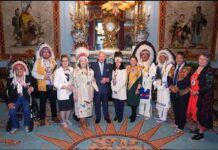
“The Assembly of First Nations honours the leadership of Governor General Mary Simon, whose tenure reflected the strength, resilience, and voices of the First Peoples across these lands,” said National Chief Cindy Woodhouse Nepinak. “Her presence in this role was deeply meaningful for First Nations and for all Canadians. First Nations have a historic relationship with the Crown, and Governor General Simon’s commitments to reconciliation and recognition of rights were significant and inspiring. Her legacy will endure.”
The AFN said Ms. Simon’s tenure helped elevate national conversations about identity, inclusion and renewing the relationship between First Peoples and the Crown. That relationship is not symbolic for many First Nations in Northwestern Ontario. It is tied to treaty rights, land, governance, resource development, child welfare, policing, justice and the continuing responsibility of governments to act honourably in Crown-Indigenous relations.
The AFN also welcomed Ms. Arbour’s legal and human rights background.
“The AFN welcomes the appointment of Ms. Arbour, whose distinguished career on the highest court of Canada and in the international sphere is marked by a strong commitment to advancing justice and human rights,” said National Chief Woodhouse Nepinak. “Ms. Arbour brings significant experience to the office of the Governor General, including an understanding of the systemic issues within justice systems that impact First Nations and First Nations rights.”
The AFN said Ms. Arbour’s experience presents an opportunity to deepen awareness and respect for First Nations laws and traditions, adding that it looks forward to engaging with the new Governor General “in a manner that reflects the true spirit of our historic and long-standing partnership.”
What the Governor General does
The Governor General acts on behalf of the King in Canada and carries out constitutional duties including swearing in the prime minister and cabinet ministers, summoning, proroguing and dissolving Parliament, granting royal assent to acts of Parliament and signing orders-in-council. The office is non-partisan and apolitical.
The Governor General also serves as commander-in-chief of Canada, represents the country at home and abroad, encourages excellence through honours and awards, and plays a national role in bringing Canadians together.
Why the appointment matters in Northwestern Ontario
The Governor General does not set federal policy or decide regional funding. Still, the office is connected to issues that matter in Thunder Bay and Northwestern Ontario, including military service, public institutions, Indigenous recognition, national unity and the relationship between First Nations and the Crown.
Ms. Arbour’s recent work on misconduct in the Department of National Defence and the Canadian Armed Forces carries particular relevance in a region with a visible reserve presence. Her Independent External Comprehensive Review delivered 48 recommendations aimed at preventing and addressing sexual harassment and sexual misconduct, improving reporting systems and strengthening institutional accountability.
For communities across the region, including remote First Nations and border communities, the appointment also arrives at a time when public trust in institutions remains central to debates about justice, reconciliation, emergency response, climate adaptation, infrastructure, resource development and national security.
Ms. Arbour’s background in human rights and institutional accountability gives symbolic weight to the vice-regal role, even though direct policy authority remains with elected governments.
Thunder Bay legal perspective
Thunder Bay lawyer Chantelle Bryson said Ms. Arbour’s appointment reflects a lifetime of commitment to justice and the rule of law.
“When I clerked for the Federal Court of Appeal, we were housed in the Supreme Court of Canada building.
“On about our second day, a spry, vigorous, shortish woman arrived in our basement offices, hopped up to sit on a desk, asked us to introduce ourselves and she then proceeded to introduce herself, Madame Justice Arbour.
“She came to give us a pep talk about the importance of justice to human beings. She told us how mothers and grandmothers would walk for days to find her, to seek justice for the missing, tortured and murdered of the former Yugoslavia conflict, before they sought shelter, water and food.
“She told us to never underestimate the value of justice to persons, communities and peaceful coexistence and to just keep going, no matter the threats or hardships, that this was the essence of the rule of law purpose.
“Excellent choice for GG, upon knowledge, experience and character.”
Mary Simon’s legacy
Ms. Arbour will succeed Mary Simon, Canada’s first Indigenous Governor General. Mr. Carney thanked Ms. Simon for what he called an exemplary tenure and highlighted her advocacy for Inuit rights, Indigenous self-determination and Indigenous languages and culture.
That legacy has particular resonance in Northwestern Ontario, where Indigenous governments and communities continue to press for meaningful action on treaty relationships, housing, policing, health care, child welfare, resource development and language preservation.
For First Nations across the region, the office of Governor General is part of a broader constitutional and historical relationship with the Crown. The AFN’s response underscores that Ms. Simon’s tenure was viewed not only as a milestone in representation, but also as part of an ongoing conversation about rights, recognition and reconciliation.
Historical context
Canada’s vice-regal office predates Confederation and remains part of the country’s constitutional monarchy and parliamentary democracy. King Charles III is Canada’s head of state, while the Governor General is the King’s representative in Canada.
The appointment of Ms. Arbour continues that tradition while placing a jurist with deep experience in Canadian courts, international criminal justice, human rights and military institutional reform into one of the country’s highest public offices.
For Thunder Bay and Northwestern Ontario, the practical impact will be indirect, but the symbolism is clear: Canada’s representative of the Crown will be someone whose public career has been closely tied to justice, accountability and the institutions that hold a country together.