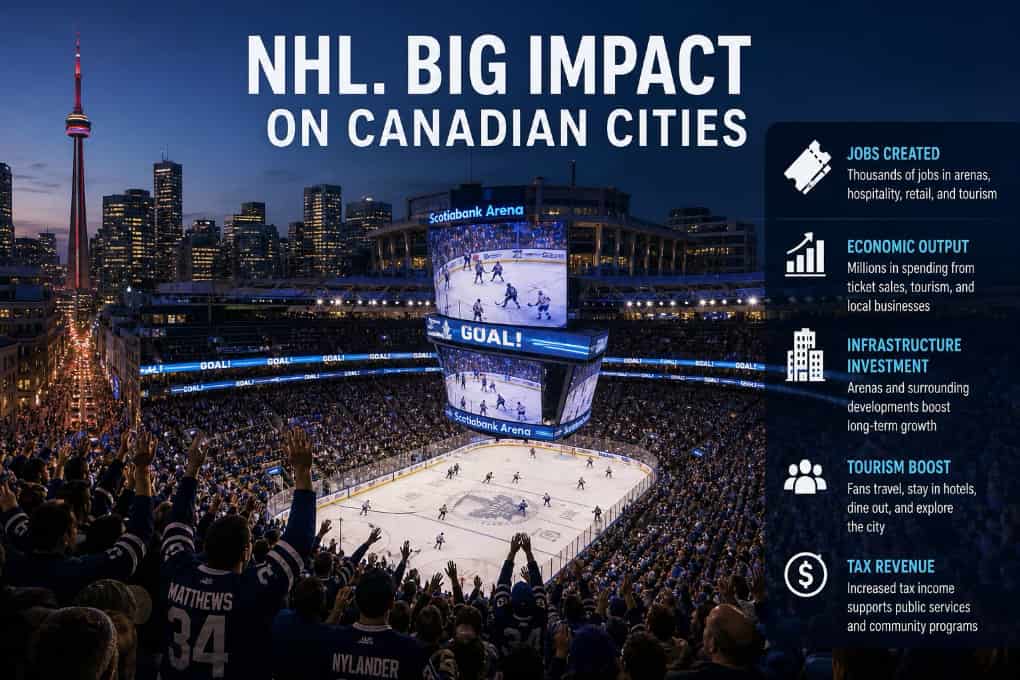
Professional hockey plays a central role in Canada, not only in culture but also in local economies. Cities that host NHL teams see direct and indirect financial effects that shape employment, infrastructure, tourism, and public spending. This article examines how NHL activity drives economic outcomes in Canadian urban areas, using clear examples and verifiable patterns.
Online casinos form a separate part of the digital economy and attract users through web-based platforms that offer games and betting services. Many discussions include Royalzino casino as an example within broader comparisons of online gambling services, often focusing on user access, payment systems, and regulatory context. These platforms generate revenue through wagers, support jobs in technology and customer service, and operate under rules that vary by jurisdiction. Analysts often review their economic role alongside other entertainment sectors, without linking them directly to professional sports operations.
Direct economic impact of NHL teams
NHL teams generate revenue through ticket sales, merchandise, concessions, and media rights. Each home game brings thousands of spectators into arenas, which creates immediate spending within the venue and nearby districts.
Cities benefit from:
- Ticket purchases that circulate money within the local economy
- Food and beverage sales inside arenas and surrounding businesses
- Merchandise sales linked to team identity
- Parking fees and transportation usage
Game days create predictable spikes in economic activity. Restaurants, bars, and retail stores near arenas often rely on these events for a significant portion of their revenue.
A typical NHL season includes 41 home games per team. This schedule ensures steady economic engagement rather than one-time boosts.
Employment and job creation
NHL teams support a wide range of jobs. These roles extend beyond players and coaching staff.
Key employment categories include:
- Arena operations staff
- Security personnel
- Food service workers
- Marketing and media teams
- Maintenance crews
- Event coordinators
Local businesses also hire additional workers to handle increased demand during the season. This effect spreads across hospitality, retail, and transportation sectors.
Temporary and part-time roles often depend on game schedules. While these positions may not offer long-term stability, they still contribute to income generation for many residents.
Tourism and visitor spending
NHL teams attract visitors from other cities and countries. Fans travel to attend games, especially during high-profile matchups or playoffs.
Tourism-related spending includes:
- Hotel stays
- Dining
- Local transportation
- Entertainment outside the arena
Cities such as Toronto, Montreal, and Vancouver see strong inbound travel tied to hockey events. Playoff games increase this effect due to higher demand and media attention.
International visitors often combine hockey games with broader travel plans, which extends their stay and spending.
Infrastructure development and public investment
Cities often invest in arenas and surrounding infrastructure to support NHL teams. These projects aim to improve accessibility, safety, and overall experience.
Examples of infrastructure spending include:
- Arena construction or renovation
- Public transit upgrades
- Road improvements
- Public spaces near venues
Local governments justify these investments by projecting long-term economic returns. However, results vary depending on management, location, and overall economic conditions.
A simple comparison highlights typical financial flows:
| Category | Short-term effect | Long-term effect |
| Arena construction | Job creation | Maintenance costs |
| Game-day activity | Increased spending | Business stability |
| Tourism | Revenue spikes | City branding |
| Public investment | Budget pressure | Potential tax growth |
Cities must balance costs with expected benefits. Not all projects deliver equal returns.
Impact on small and local businesses
Local businesses often rely on NHL activity. Restaurants, bars, and shops near arenas see increased customer flow on game days.
Positive effects include:
- Higher daily revenue during the season
- Increased brand exposure
- Repeat customers who associate businesses with game experiences
However, reliance on hockey schedules can create uneven income patterns. Businesses may struggle during off-season months.
Some areas develop entire entertainment districts around arenas. These zones aim to attract visitors even when games do not take place.
Media rights and broadcasting revenue
NHL games generate significant income through broadcasting agreements. National and regional networks pay for rights to air games, which brings money into the league and indirectly into cities.
Media exposure also promotes cities on a national and global scale. This visibility supports tourism and strengthens local identity.
Broadcasting creates additional jobs in:
- Production
- Journalism
- Technical support
These roles extend economic benefits beyond the arena.
Real estate and urban development
NHL arenas often influence property values. Areas near venues may experience increased demand due to improved infrastructure and higher foot traffic.
Effects on real estate include:
- Rising property prices in nearby districts
- New residential and commercial developments
- Increased investment interest
Urban planners sometimes use NHL arenas as anchors for redevelopment projects. These initiatives aim to transform underused areas into active zones.
However, rising prices can also create challenges for existing residents. Higher costs may push some people out of these neighborhoods.
Tax revenue and public finances
NHL-related activity generates tax income for local governments. This revenue comes from several sources:
- Sales taxes from tickets and merchandise
- Income taxes from employees
- Business taxes from local enterprises
- Tourism-related taxes
Governments use this income to fund public services. However, they must also account for expenses tied to infrastructure and event management.
The balance between revenue and spending determines whether NHL presence benefits public finances in the long term.
Seasonal fluctuations and economic stability
The NHL season runs from fall to spring. This schedule creates predictable cycles in economic activity.
During the season:
- Businesses experience increased demand
- Employment rises in certain sectors
- Tourism grows
During the off-season:
- Activity slows down
- Some businesses reduce staff
- Revenue declines in entertainment districts
Cities with diversified economies handle these fluctuations more effectively. Areas that depend heavily on hockey may face greater instability.
Social and community influence
While economic factors drive analysis, community engagement also affects local economies. Strong fan support encourages spending and participation in events.
Community programs linked to NHL teams can:
- Support youth sports
- Promote local events
- Increase civic pride
These effects may not translate directly into financial figures, but they shape long-term economic behavior.
Challenges and limitations
Despite clear benefits, NHL teams do not guarantee economic success. Several factors limit their impact:
- High costs of arena construction and maintenance
- Uneven distribution of revenue across sectors
- Dependence on team performance
- Economic inequality in host cities
For example, a successful team can boost spending, while poor performance may reduce attendance and revenue.
Cities must evaluate whether investments align with realistic outcomes.
Comparison of economic contributions
Different Canadian cities experience varying levels of impact based on population, market size, and team performance.
Key variables include:
- City population
- Arena location
- Tourism appeal
- Team success
Larger cities tend to capture more benefits due to higher demand and stronger infrastructure. Smaller markets may rely more heavily on their NHL teams for economic activity.
The role of corporate partnerships
Corporate sponsorships contribute additional revenue streams. Companies invest in advertising, naming rights, and promotional campaigns tied to NHL teams.
These partnerships:
- Support team finances
- Increase marketing activity
- Create business opportunities for local firms
Local companies often benefit from association with professional teams, which can strengthen their market presence.
Digital engagement and modern revenue streams
Digital platforms expand the economic reach of NHL teams. Online streaming, social media, and e-commerce create new income channels.
Digital activity supports:
- Merchandise sales beyond local markets
- Global fan engagement
- Advertising opportunities
This shift reduces reliance on physical attendance while maintaining economic influence.
Conclusion
The NHL plays a measurable role in the economies of Canadian cities. Teams generate revenue, create jobs, attract visitors, and influence urban development. These effects extend beyond arenas into surrounding businesses and public finances.
However, benefits depend on careful planning and realistic expectations. Cities must manage costs, support local businesses, and maintain economic diversity to maximize positive outcomes.
Professional hockey remains an important economic driver in Canada. Its influence continues to shape urban environments through consistent activity, structured seasons, and strong community engagement.