Thunder Bay council to decide on three designated encampment sites
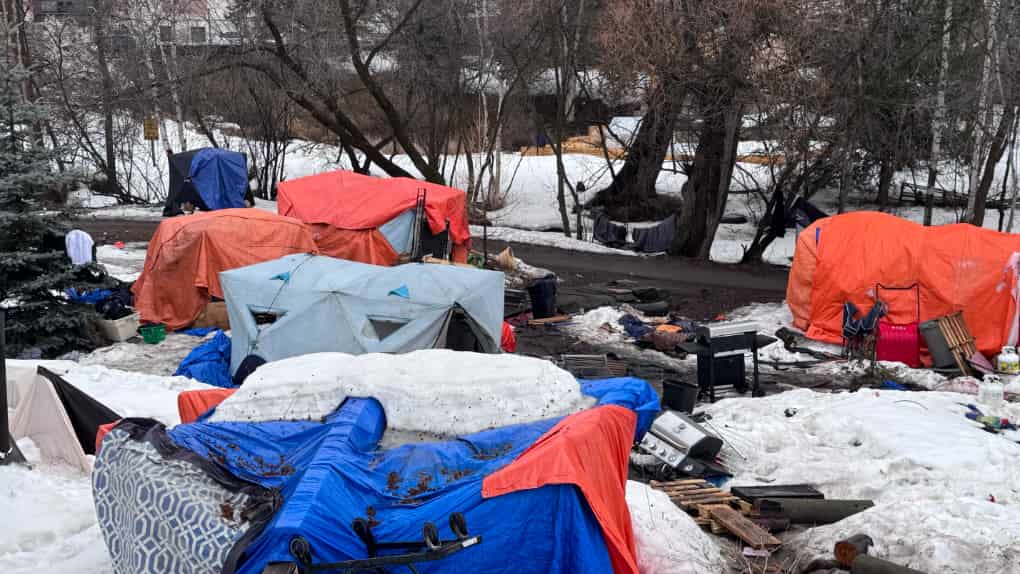
THUNDER BAY – Thunder Bay city council will be asked Wednesday night to approve three designated tent encampment sites as part of the city’s response to homelessness and the growing number of people living outdoors.
A city administration report is recommending Current River Park, Freedom Park and a Simpson Street site as the preferred locations.
The decision matters for people living unsheltered, nearby businesses, emergency responders, service agencies and residents concerned about how public spaces are being used across the city.
Administration recommends Current River Park, Freedom Park and Simpson Street
The recommendation is contained in Report 209-2026-Growth-Strategy & Engagement, which is listed on the agenda for the Wednesday, May 6 special committee of the whole meeting.
The city’s current agenda page says the May 6 agenda is available, and the public agenda listing identifies Current River Park, Freedom Park and Simpson as the three sites administration is asking council to recognize as designated encampment locations.
The report was signed and verified by Kerri Marshall, the municipality’s commissioner of growth. It recommends Site A — Current River Park, Site B — Freedom Park, and Site F — Simpson. Three other sites — Island Drive, Kam River Heritage Park, and land near McKellar and Vickers streets — were reviewed but not recommended.
The city has described designated encampments as managed outdoor spaces with basic services and co-ordinated outreach intended to support people living rough while they connect to shelter, housing and other supports.
The current process follows earlier public consultation tied to the city’s 10-part enhanced encampment response action plan.
Why these three sites were chosen
The Simpson Street location ranked first overall in the city’s survey, although it ranked third among respondents with lived experience. The site is close to the city hall transit terminal and has access to social and health services. It also has roadway access for emergency vehicles and is considered suitable for year-round operation. Business owners expressed a moderate level of concern.
Freedom Park, located at the north end of Prince Arthur’s Landing, was selected because of its history of encampment use, proximity to the Waterfront transit terminal and access to multiple social and health-care services. Administration’s recommendation does not include property north of the Marina Park overpass. The report says business owners expressed the highest level of concern about this site, while people with lived experience and service providers showed moderate to high support.
Objections to the Freedom Park location included concerns from the Waterfront Business Improvement Area board and CPKC, which raised safety issues.
Current River Park was recommended because it is largely flat and grassy, close to transit, and within 1.5 kilometres of several social services. Feedback was mixed, but people with lived experience ranked the site first overall, while business owners expressed low concern.
Sites not recommended
Island Drive was found to have sufficient space, but administration did not recommend it because of limited encampment history, uneven terrain and concerns about emergency access. The nearest transit stop is about 1.3 kilometres away.
Kam River Heritage Park has a long history of encampment activity and had previously been considered for a temporary homeless village site. Administration did not recommend it because of safety risks, including its location near both a railyard and a watercourse. The report says the cost of mitigating those risks would not be justified without consistent staff supervision or structured programming.
The McKellar and Vickers site was also not recommended. Although large enough to provide basic services, the site has little history of encampment use, no social services within 1.5 kilometres and roadway limitations that would not safely support emergency response vehicles. Feedback on the site was generally unfavourable.
Costs could affect other city work
If all three sites are approved, administration says fencing and privacy screening would be required. The estimated cost is $200,000 plus HST, which could lead to the postponement of the Mission Island Bridge construction project. Another $15,000 plus HST would be needed for cold-rated and fire-rated pallets; the report says that cost could be absorbed within anticipated in-year operating budget variance.
Other services required at the sites would fall within existing budgeted expenses, according to the report.
The cost question places council in a difficult position. The recommended sites are intended to reduce unmanaged encampments and improve outreach, but the capital work needed to make the sites safer may push other infrastructure work further down the city’s list.
Why this matters in Thunder Bay
Thunder Bay’s encampment debate is not only about parks, tents and public complaints. It is also about the shortage of affordable, supportive and transitional housing in Northwestern Ontario.
The District of Thunder Bay Social Services Administration Board manages the community housing and homelessness prevention system in the district, including affordable housing, rent supports, emergency shelter-related supports and homelessness prevention programs.
The city’s 2024 housing needs assessment said there were 953 individuals on the By-Name List of Homeless Individuals as of January 2025.
The same document cited the October 2024 Point-in-Time Count, which recorded 557 participants; 78 per cent identified as Indigenous, 22 per cent were sleeping in an encampment and 18 per cent were outdoors in a public space.
Point-in-Time Counts are snapshots, not full-year totals. A 2026 homelessness review for TBDSSAB cautioned that these counts are partial and time-bound, and should not be used alone to define the full scale of homelessness. Even so, the data point to sustained pressure on local shelters, outreach services and housing providers.
For Thunder Bay, location matters. Sites close to transit, emergency access and health or social services are more practical in a city where winter conditions, distance and mobility barriers can quickly turn a lack of shelter into a life-safety issue.
At the same time, nearby businesses and neighbourhoods are looking for clear rules, cleanup plans and reliable enforcement when safety concerns arise.
What happens next
Council will consider the recommendations at the special committee of the whole meeting on Wednesday night. If council approves the sites, administration would move ahead with site design, fencing, privacy screening, pallets and operational measures.
Designated encampments would not solve homelessness. They would create specific locations where tents are permitted, services can be directed and safety measures can be planned. The longer-term challenge remains moving people from tents into stable housing, with supports that reflect the realities facing Thunder Bay, Indigenous communities and the wider district.