Kashechewan First Nation Crisis Deepens as Leaders Call for Urgent Action and Government Accountability
THUNDER BAY – National Indigenous News – Indigenous leaders and organizations—including Kashechewan First Nation leadership, Mushkegowuk Council, Nishnawbe Aski Nation, and Chiefs of Ontario—are intensifying their criticism of both the federal and Ontario governments for what they describe as slow and insufficient responses to a worsening public health and infrastructure crisis in the remote Cree community of Kashechewan.
State of Emergency Triggered by Infrastructure Collapse
On Jan. 4, 2026, Kashechewan Chief Hosea Wesley and Council formally declared a state of emergency after a catastrophic failure of the community’s water treatment and sewage systems created an urgent health risk. Raw sewage infiltrated the only healthcare facility and contaminated the water supply, forcing authorities to shut down the treatment plant and declare a “do not consume” water advisory.
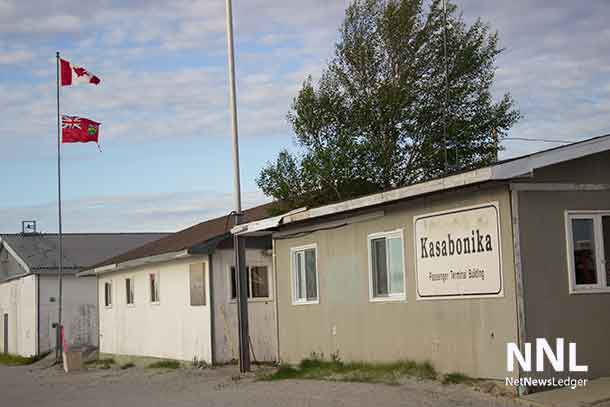
Typically accessible only by air for much of the year, the community of roughly 2,200 on the western shore of James Bay now depends on flights for potable water deliveries and evacuation flights for residents.
Federal Response: Evacuation Planning and Technical Support
In response to the crisis, Indigenous Services Canada (ISC) has acknowledged the severity of the situation and outlined several actions:
-
Prioritized evacuation planning: ISC announced that the evacuation of up to 500 vulnerable residents — such as elders and medically at‑risk community members — would be prioritized “as early as possible,” with plans to temporarily relocate them to Timmins and Kapuskasing while broader logistics are finalized.
-
Specialized technical support: The department has contracted a water and wastewater management firm to address the failures at the water treatment plant. Repairs are underway, including installation of a replacement pump within the sewage lift system.
-
Interim health services relocation: Due to flooding and sewage contamination of the local nursing station, ISC has shifted emergency health services into the community school building for the duration of the evacuation.
Despite these efforts, community leaders argue the actions are reactive and insufficient. Leaders have repeatedly requested additional supports, including military logistics assistance to speed up evacuation, but say those requests have not been fully met.
Calls for Action from Indigenous Leadership
Chief Hosea Wesley has made it clear that Kashechewan can no longer accept temporary fixes. “There will be no more Band‑Aid solutions in my community,” he said, urging both the Government of Canada and the Province of Ontario to fast‑track the community’s relocation to higher ground, a process agreed to years ago but yet to be completed.
Grand Chief Alvin Fiddler similarly challenged federal and provincial leaders—Prime Minister Mark Carney and Premier Doug Ford—to take meaningful action that would allow Kashechewan families to “look ahead to the future with hope.”
Mushkegowuk Deputy Grand Chief Natasha Martin described the quiet community as stark evidence of the crisis’s toll: “The children are gone at a time they should be playing outside or playing at school,” she said.
Background: Long‑Standing Treaty and Relocation Commitments
In 2019, Kashechewan First Nation, the Government of Canada, and the Government of Ontario signed the Together We Work for Hope tripartite framework agreement, affirming a shared commitment to relocate the community to higher ground to reduce its vulnerability to annual flooding and infrastructure failure.
Under that agreement, progress was to include land designation, infrastructure planning, and eventual community construction. However, relocation efforts have stalled for years, frustrating residents and leadership who see the ongoing evacuations as evidence that interim measures and emergency responses are no substitute for long‑term solutions.
Wider Implications: An Example of a National Infrastructure Gap
Ontario Regional Chief Abram Benedict emphasized that Kashechewan’s crisis exemplifies a broader infrastructure deficit faced by First Nations communities across the province. “When that infrastructure fails,” he said, “you see what can happen.” Benedict stressed that beyond supporting evacuations, both federal and provincial governments must address the structural neglect that leaves communities like Kashechewan repeatedly vulnerable.