Bands Intensify Today, Ease Tuesday — Plan for Blowing Snow and Near-Zero Visibility
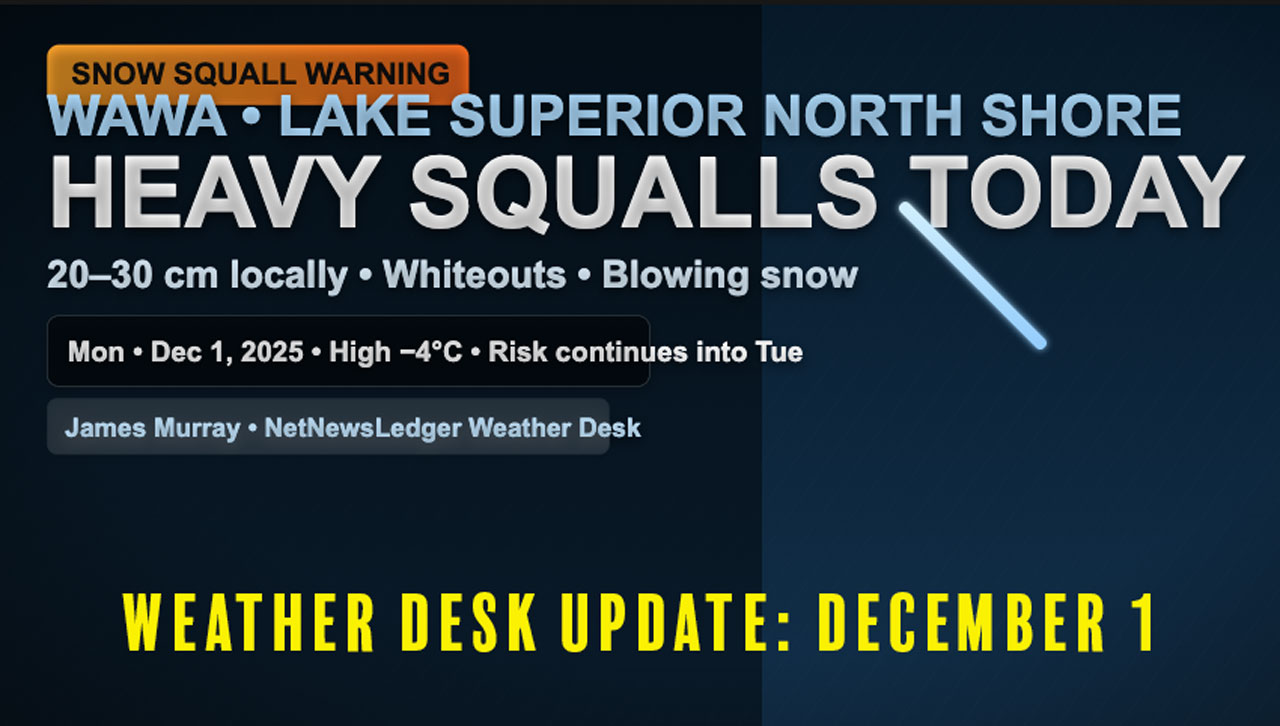
Thunder Bay – WEATHER DESK – A Snow Squall Alert is in effect for the Wawa area and much of the Lake Superior north shore.
This is going to impact travel on Highway 17 and likely as well along High
Local snowfall amounts of 20 to 30 cm are possible between this morning and Tuesday, with bursts of heavy snow and blowing snow dropping visibility to near zero at times. If you don’t need to travel, hold off until conditions improve.
Current Conditions — 8:00 a.m. EST, Monday, December 1
Wawa Airport is reporting light snow and –10.4°C. The barometric pressure is 102.6 kPa (falling), humidity 86%, wind north 2 km/h (wind chill –12), and visibility 5 km. Squall bands will lower visibility quickly when they pass.
Today — Flurries Turning to Squalls, Blowing Snow, High –4
Lake-effect snow strengthens into snow squalls through the morning. Expect flurries with a risk of snow squalls, local blowing snow late this morning and this afternoon, and 5 to 10 cm new snow today. Wind becomes southwest 20 km/h gusting to 40, driving drifts across exposed stretches. High near –4°C with wind chill –17 this morning, –10 this afternoon.
Tonight — Squalls Persist, More Accumulation, Low –8
Flurries with the risk of snow squalls continue, with local blowing snow this evening. An additional 10 to 15 cm is possible under the strongest bands. Wind west 20 km/h gusting to 40, easing late evening. Low near –8°C, wind chill around –13 this evening. Expect plow ridges and drifting on Highway 17 and local roads.
Tuesday — Flurries, Early Squall Risk, High –3
Flurries with a risk of snow squalls early in the morning; local 2 cm outside the bands. Wind becoming south 20 km/h gusting to 40 early afternoon. High near –3°C, wind chill near –12. Tuesday night: flurries, low –9°C.
Wednesday — On-and-Off Flurries, Sharply Colder at Night
Cloudy with a 60% chance of flurries, high –3°C. Wednesday night: cloudy periods with a 30% chance of flurries, low plunging to –19°C.
What to Wear & How to Travel
Dress for squalls: a thermal base, insulating mid-layer, and a wind-resistant parka. Add a toque, insulated mitts, and waterproof, high-traction winter boots. If you must drive, slow down, leave extra space, and keep lights on. Carry a winter kit (scraper, brush, shovel, traction aid, blanket). Expect whiteouts when bands cross and rapidly changing road conditions.
Lake Superior Squall Trivia
When cold air sweeps across “warm” open water, it grabs moisture and heat, building narrow snow bands that can dump 5–10 cm per hour — one town gets buried while the next sees only flurries.