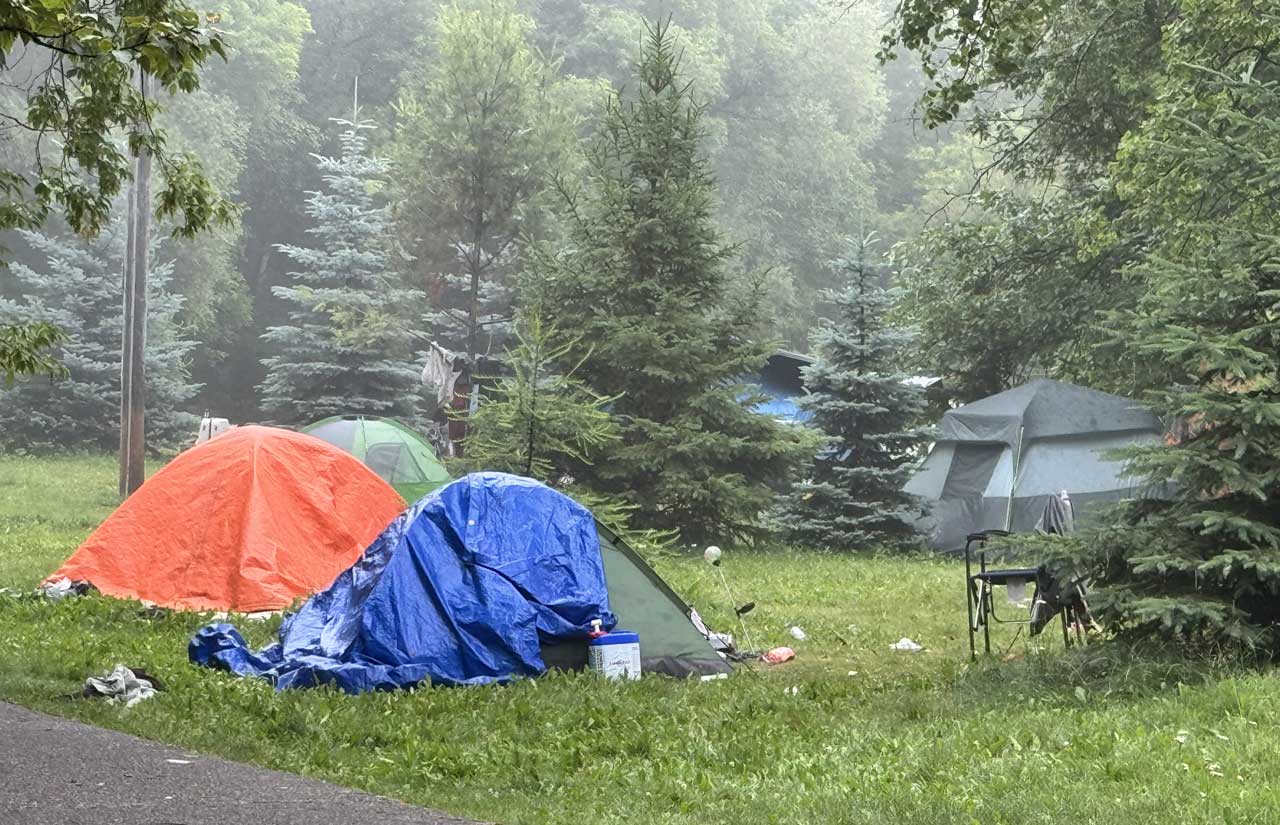
THUNDER BAY – Regional NEWS — One of the major issues for many in Thunder Bay and cities across Canada are homelessness and tent encampments. Barrie has declared a State of Emergency over the issue.
Cities that are bending the curve on homelessness aren’t guessing—they’re pairing housing-first placements with data-driven, person-by-name systems, steady supportive services, and interim options that are safer than sidewalk tents. Others that lean on sweeps or criminalization without equal housing flow are seeing displacement, higher costs, and little long-term relief.
Below is a scan of approaches with evidence, plus cautionary tales—and how they translate to Northwestern Ontario.What’s Working
1) Housing First + Coordinated, “By-Name” Systems
-
Built for Zero communities use real-time, person-level data to quickly match people to housing and supports. Rockford, Illinois, and Abilene, Texas achieved functional zero for veteran and chronic homelessness by organizing all agencies around one list and one goal.
-
In Canada, Medicine Hat reached functional zero for chronic homelessness and continues tracking people by name; in March 2024 the local dashboard still listed a small active cohort—evidence of ongoing system vigilance rather than complacency.
Thunder Bay takeaway: Build (and publish) a by-name list across shelters, Indigenous partners, hospitals, police and outreach; use weekly case conferences to keep housing placements above inflow.
2) Permanent Supportive Housing & Scaled Interim Options
-
Los Angeles County recorded a second consecutive year of lower unsheltered homelessness in 2025; gains align with more placements and expanded interim beds (even as debates continue about speed and cost).
-
Tiny-home/pod villages outperform large dorm-style shelters at moving people into permanent housing. A two-year Portland State University study found average exits to permanent housing were ~36% from villages vs 12%from congregate shelters; some sites (e.g., Kenton Women’s Village) performed even better.
-
Community First! Village (Austin)—a permanent, service-rich, tiny-home community—now houses 470+ people with on-site supports, illustrating a scalable “housing with community” model.
Thunder Bay takeaway: Pair supportive housing (scatter-site and modular) with non-congregate shelter (hotels, tiny homes) to shrink street encampments while permanent units come online.
3) Managed, Safer Alternatives to Sidewalk Camps—As Bridge, Not Destination
-
San Diego’s Safe Sleeping program (sanctioned tent sites with services) coincided with a ~65% decline in unsheltered counts downtown from their 2023 peak—but pressure shifted to freeway rights-of-way and state properties, underscoring the need for housing flow and regional coordination.
Thunder Bay takeaway: If encampments pose immediate hazards, consider managed sites with bathrooms, storage, outreach, and housing navigation—only alongside clear pathways to housing.
4) Social Housing & Prevention at Scale
-
Finland’s Housing First—combined with prevention—has driven long-run reductions in homelessness; national policy now targets eradication by 2027, though some leaders caution momentum has slowed.
-
Japan maintains extremely low visible homelessness through robust income supports and tightly managed street outreach; the latest national count found 2,591 people—though critics note “hidden” homelessness.
Thunder Bay takeaway: Expand rent supplements, eviction prevention, and rapid rehousing to keep people from falling into encampments in the first place.
What’s Failing (or Failing on Its Own)
1) Sweeps & Criminalization Without Housing
-
After the U.S. Supreme Court’s Grants Pass ruling allowed stricter anti-camping enforcement, multiple studies show sweeps do not reduce homelessness, can increase mortality and costs, and often shift tents to new areas.
-
Public-health bodies warn sweeps disrupt care, destroy documents, and undermine housing pathways—typically moving people “down the street,” not indoors.
Thunder Bay lens: Enforcement may be necessary for safety at specific sites, but without beds and units, it mainly displaces people and erodes trust, making housing outcomes harder.
2) Enforcement-Only “Success” Masks Displacement
-
San Diego’s crackdown trimmed downtown tents but coincided with encampment growth on state-controlled freeway land until a city-state cleanup pact. Net lesson: count what happens region-wide, not just in one zone.
3) Stagnating Housing Pipelines & Funding Gaps
-
Houston, long a model for coordinated Housing First, saw unsheltered and chronic homelessness rise with the loss of pandemic funds and slower permanent placements—showing even good systems backslide without sustained dollars.
-
Metro Vancouver: preliminary 2025 data show a 9% increase since 2023 despite interventions—evidence that high rents and inflow can overwhelm capacity.
-
Toronto: people experiencing homelessness more than doubled between 2021 and Oct. 2024, underscoring the cost of inadequate supply and prevention.
A Practical Playbook for Thunder Bay & NWO
-
Adopt a Built-for-Zero cadence: Maintain a public by-name list, weekly housing conferences, and shared metrics across city, TBDSSAB, Indigenous partners, health, police, and outreach.
-
Scale supportive housing + rapid rehousing: Modular builds and rent supplements move people faster than waiting on large, expensive projects.
-
Stand up non-congregate shelter now: Hotel rooms, tiny homes, and medical respite reduce encampments humanely while permanent units are readied.
-
Pilot one managed site (if needed): A time-limited sanctioned site with 24/7 services and housing navigation; publish throughput targets (move-outs to housing).
-
Invest upstream: Eviction prevention, utility/rent arrears relief, and landlord engagement keep inflow down.
-
Measure what matters: Track inflow vs. outflow, days-to-housing, and returns to homelessness—not just tent counts in one neighbourhood.
Bottom Line
Cities that treat encampments as a housing-supply and systems problem—not just a policing problem—are posting the most durable gains. Thunder Bay can borrow the best pieces now: data unity, steady housing flow, humane interim shelter, and prevention. That’s how tents disappear for the right reason—because people have a home to go to.