
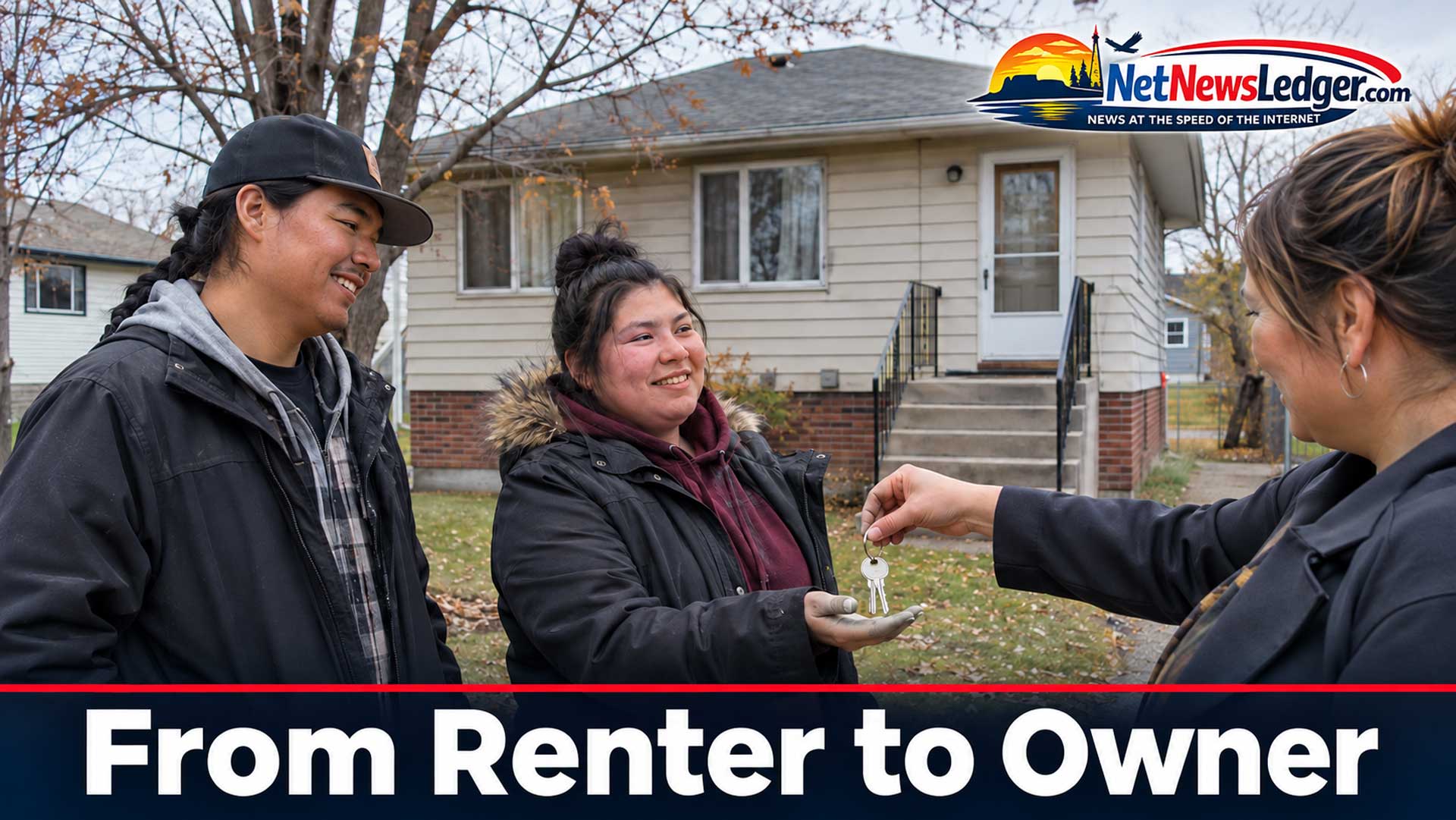
Down payments can start at five per cent, but buyers also need closing money, mortgage approval and a realistic household budget. Indigenous housing programs may help eligible buyers
THUNDER BAY — For a renter hoping to purchase a home in Thunder Bay or a surrounding community, saving a down payment is an important first step. It is only part of the preparation.
Buyers also need to qualify for financing, cover closing costs and take responsibility for expenses that a landlord may currently handle, including building insurance, property taxes and major repairs.
Some Indigenous buyers may qualify for assistance with their purchase. However, eligibility depends on the program, household circumstances and whether the property is off-reserve or on First Nation land.
How much down payment is required?
For a typical owner-occupied home purchase, Canada’s minimum down payment depends on the purchase price:
| Home purchase price | Minimum down payment |
|---|---|
| $500,000 or less | 5% |
| More than $500,000 but less than $1.5 million | 5% of the first $500,000, plus 10% of the remaining price |
| $1.5 million or more | 20% |
A lender may require more depending on the borrower and property. Buyers putting down less than 20 per cent will generally need mortgage default insurance. This protects the lender if the borrower defaults. It does not protect the buyer’s household income.
Here is what those rules mean at several example prices:
| Purchase price | Minimum down payment | Down payment at 20% |
|---|---|---|
| $250,000 | $12,500 | $50,000 |
| $300,000 | $15,000 | $60,000 |
| $350,000 | $17,500 | $70,000 |
| $400,000 | $20,000 | $80,000 |
| $500,000 | $25,000 | $100,000 |
| $600,000 | $35,000 | $120,000 |
These are calculation examples, not estimates of local home values.
The down payment is not the entire savings target
Canada Mortgage and Housing Corporation advises buyers to plan for closing costs equivalent to roughly 1.5 to four per cent of the purchase price, in addition to their down payment. Actual costs vary.
For a $350,000 home, that produces this preliminary budget:
| Expense | Example amount |
|---|---|
| Minimum down payment | $17,500 |
| Closing-cost allowance | $5,250–$14,000 |
| Combined amount | $22,750–$31,500 |
Moving expenses and an emergency repair fund would be additional.
Closing expenses can include legal fees, land transfer tax, title insurance, adjustments for prepaid property taxes and other transaction costs. Buyers should also budget for inspections and any appraisal required by their lender.
Mortgage insurance adds another expense. CMHC’s standard premium at a five per cent down payment is four per cent of the base mortgage. On a $350,000 purchase with $17,500 down, that would be $13,300. The premium can generally be financed, but applicable provincial sales tax cannot be added to the mortgage. Different products or amortizations can change the premium.
What does a buyer need for mortgage approval?
A lender or mortgage broker will normally request identification, employment and income records, evidence of the down payment and closing funds, and details of debts and other financial obligations.
Self-employed applicants may need additional documentation, including Canada Revenue Agency notices of assessment. Buyers should also be ready to explain large deposits or financial gifts used toward the purchase.
The lender examines credit history, income and debt payments. Federal consumer guidance uses housing costs of approximately 39 per cent of gross household income and total debt payments of approximately 44 per cent as affordability benchmarks. Individual lending decisions can differ.
Banks also apply a mortgage stress test. Buyers generally must qualify at the higher of 5.25 per cent or their mortgage interest rate plus two percentage points. A mortgage offered at 4.5 per cent, for example, would normally be assessed at 6.5 per cent.
A buyer’s personal spending limit should leave room for groceries, transportation, childcare, savings and repairs. Mortgage approval alone does not establish what a household can comfortably afford.
Get preapproved before making an offer
Mortgage preapproval helps establish a shopping range. It should not be treated as final approval of every property.
The lender still needs to assess the home and complete its financing requirements. Buyers should discuss financing and inspection conditions before submitting an offer.
The Real Estate Council of Ontario recommends using appropriate conditions where possible, examining the home’s systems and checking whether renovations received proper permits. Buyers should also understand any representation agreement before signing it.
For Thunder Bay buyers, a practical inspection checklist includes the foundation, basement moisture, roof, heating equipment, plumbing and electrical system. Obtain an insurance quotation early enough to identify coverage problems before committing to the purchase.
Buying outside Thunder Bay requires additional homework
A home in Oliver Paipoonge, Shuniah, Neebing, Conmee, O’Connor, Gillies or another nearby community may have different services and maintenance responsibilities from a city property.
Where a home uses a private well and septic system, buyers should obtain records, review maintenance history and arrange appropriate professional assessments. A general home inspection should not be assumed to include a full septic evaluation.
The Thunder Bay District Health Unit recommends regular private-well testing. Its guidance calls for testing drilled wells at least three times annually and dug wells at least four times annually, with additional testing after heavy rainfall or flooding. Buyers should investigate both water safety and whether the supply meets household needs.
Other questions worth putting to the seller, municipality, lawyer and insurer include:
- Is road access legal and maintained throughout winter?
- Who pays for snow clearing on a private road?
- Are additions, outbuildings and extra dwelling units permitted?
- What heating fuel is used, and what are the operating costs?
- Are there easements, shoreline restrictions or land-use limitations?
- Is the property approved and suitable for year-round residential use?
For property in unorganized territory, buyers should establish the applicable taxes and services. Ontario administers provincial land tax for these areas.
What assistance is available to Indigenous buyers?
Two programs are particularly relevant to eligible off-reserve buyers in Northwestern Ontario. They have different qualification rules and financial consequences.
Ontario Aboriginal Housing Services
Ontario Aboriginal Housing Services’ OPHI Homeownership Program supports eligible low- to moderate-income Indigenous renters or first-time buyers purchasing a principal residence off-reserve, outside the Greater Toronto Area.
Its published FAQ describes assistance of up to 10 per cent of the purchase price toward the down payment and approved closing costs. The loan is fully forgivable after 20 years if its conditions are met.
The FAQ permits First Nations, Métis and Inuit applicants to self-identify without requiring a status or citizenship card. Applicants must still meet income, mortgage and other eligibility requirements.
Selling, renting out the property or other repayment events before forgiveness can require repayment, including a share of appreciation.
Availability needs confirmation: the posted FAQ is dated April 2025 and describes limited annual funding and a waiting list. Buyers should request current income limits, purchase-price limits and intake information before relying on assistance.
Contact: OPHI@oahssc.ca or 1-866-391-1061.
Métis Nation of Ontario
The Métis Nation of Ontario’s Home Buyers Contribution Program offers eligible MNO citizens with complete citizenship files up to 15 per cent of the purchase price, to a maximum of $50,000.
Applicants must meet its first-time buyer rules, provide their own minimum down payment from accepted sources and qualify through a participating lender: RBC, Scotiabank or Meridian Credit Union.
The contribution is a shared-equity second mortgage. There are no regular principal or interest payments while conditions are met, but repayment is required when the home is sold or another repayment event occurs.
If MNO contributed 15 per cent, its published sale terms require repayment of 15 per cent of the resale price or fair market value, whichever is greater.
Applicants must obtain conditional program approval before purchasing; assistance is not retroactive. Closing costs remain the buyer’s responsibility.
A 2026–27 application portal is published. Contact: hbc@metisnation.org.
Purchasing or building on First Nation land
Homeownership on reserve follows a different financing process.
Indigenous Services Canada’s Ministerial Loan Guarantees can secure loans for eligible on-reserve housing purchases, construction or renovations. A First Nation can apply on behalf of an eligible member.
The process begins with the First Nation’s housing department or Chief and Council, followed by lender approval and the required community authorization. Homeowners remain responsible for regular loan payments. A guarantee supports financing; it does not eliminate the debt.
The First Nations Market Housing Fund also supports access to financing through participating First Nations and lenders. Members should ask their housing department whether their community participates and what local requirements apply.
Other programs first-time buyers should examine
Indigenous buyers may also qualify for general homebuyer programs, provided they meet each program’s requirements.
| Program | What it offers | What buyers should understand |
|---|---|---|
| First Home Savings Account | Generally deductible contributions, with $8,000 in initial annual room and a $40,000 lifetime limit | Qualifying home-purchase withdrawals are tax-free; eligibility and contribution rules apply |
| Home Buyers’ Plan | Eligible withdrawals of up to $60,000 per person from RRSPs | This uses the buyer’s retirement savings and carries repayment obligations |
| Ontario land transfer tax refund | Up to $4,000 for qualifying first-time buyers | Previous ownership and a spouse’s ownership history can affect eligibility |
| First-time buyer GST/HST rebates | Assistance with qualifying new-home purchases or construction | Contract dates, construction dates, value and occupancy requirements matter |
The FHSA and Home Buyers’ Plan can be used for the same qualifying purchase when their respective conditions are met.
Ontario’s land transfer tax refund can eliminate the provincial land transfer tax on an eligible purchase of up to $368,000. Above that price, the maximum refund remains $4,000. Ontario’s definition of a first-time buyer differs from some federal programs: a person generally cannot regain eligibility after previously owning a home.
For qualifying new homes, CRA currently lists a federal first-time buyer rebate covering the GST or federal HST portion on homes valued up to $1 million, with reduced assistance below $1.5 million. It also lists an Ontario first-time buyer rebate of up to $80,000 of the provincial HST portion. Buyers should have their lawyer confirm eligibility and how rebates are reflected in the builder’s price. Ordinary resale homes generally do not attract HST on the purchase price.
Plan the move out of your rental
Purchasing a home does not automatically end an existing tenancy.
For most Ontario monthly tenancies, tenants must give at least 60 days’ notice, with the termination date falling on the last day of a rental period. Fixed-term tenancies generally cannot be ended through ordinary notice before the lease expires. Exceptions and mutually agreed arrangements may apply.
Buyers should coordinate notice with their closing arrangements and keep money available for a possible overlap between rent and homeownership costs.
For a renter preparing to buy, the strongest starting point is a complete household budget, a mortgage discussion and early applications to any relevant assistance programs. Begin that work before making an offer, so the purchase price, financing and program conditions can be assessed together.
Program information checked November 11, 2026. Funding availability and individual eligibility require confirmation with the administering organization.