Northwest Ontario reports 65 active wildfires, including two new fires near Thunder Bay and Kenora
THUNDER BAY — Ontario’s Aviation, Forest Fire and Emergency Services is reporting 65 active wildland fires across the Northwest Fire Region as of the evening of Friday, Aug. 21, with two new fires confirmed during the day.
Fire activity remains low across several of the region’s largest incidents, including the Rinker Lake Complex and the Atikokan Cluster, although a number of major fires remain not under control.
Two New Wildland Fires Confirmed
Two new fires were confirmed in the Northwest Region by Friday evening.
Thunder Bay 85 (THU085) is located southwest of McGaughey Lake, approximately 12 kilometres west of Highway 527. The fire is estimated at 0.1 hectares and is being held.
Kenora 33 (KEN033) is located near Puzzle Bay on Ord Lake, approximately 17 kilometres east of Highway 105. The fire is estimated at 0.1 hectares and is under control.
At the time of the 6 p.m. CDT update, the 65 active fires across the region were classified as:
- Five not under control;
- Five being held;
- 12 under control; and
- 43 being observed.
Rinker Lake Complex Activity Remains Low
Wildland fire activity across the Rinker Lake Complex remains low.
There are 29 FireRanger crews assigned to the complex, including personnel from Ontario, Alberta, Manitoba, Nova Scotia and Mexico.
Fourteen helicopters remain dedicated to the operation.
Crews are now split between hotspot detection and suppression work and the demobilization of equipment that is no longer required.
The major fires in the complex are:
- Thunder Bay 36 (THU036): 301,240 hectares, not under control;
- Dryden 34 (DRY034): 45,800 hectares, not under control; and
- Dryden 35 (DRY035): 30,088 hectares, not under control.
The three fires together cover more than 377,000 hectares.
Atikokan Cluster Sees Continued Low Fire Behaviour
Low fire behaviour has also been observed in recent days across the Atikokan Cluster.
Firefighters continue to extinguish hotspots identified through the most recent infrared scans.
There are currently 124 personnel assigned to the complex, including 83 firefighters from Ontario and Mexico, flight crews and engineers for eight helicopters, overhead personnel, support staff and an Incident Management Team.
The fires are listed as:
- Fort Frances 13 (FOR013): 25,476 hectares, being observed;
- Fort Frances 14 (FOR014): 51,768 hectares, not under control; and
- Fort Frances 15 (FOR015): 42,273 hectares, not under control.
Evacuation and Implementation Information
Residents and travellers should continue to monitor current Evacuation Orders, Implementation Orders and Evacuation Alerts before entering areas affected by wildfire operations.
Conditions can change quickly, and local restrictions may remain in place even when broader regional restrictions have been lifted.
NOTAM Remains in Effect Around Thunder Bay 36
A Notice to Airmen, or NOTAM, remains in effect in the area of Thunder Bay 36.
The restriction is in addition to standard airspace rules under section 601.15 of the Canadian Aviation Regulations.
Airspace around active forest fires is restricted to wildfire suppression aircraft within five nautical miles of the fire and up to 3,000 feet above ground level.
Pilots are reminded to check NAV CANADA’s flight-planning information for current wildfire NOTAMs before flying.
Fort Frances 14 Airspace Restriction Continues
A separate NOTAM remains in effect in the area of Fort Frances 14, northeast of Byers Lake.
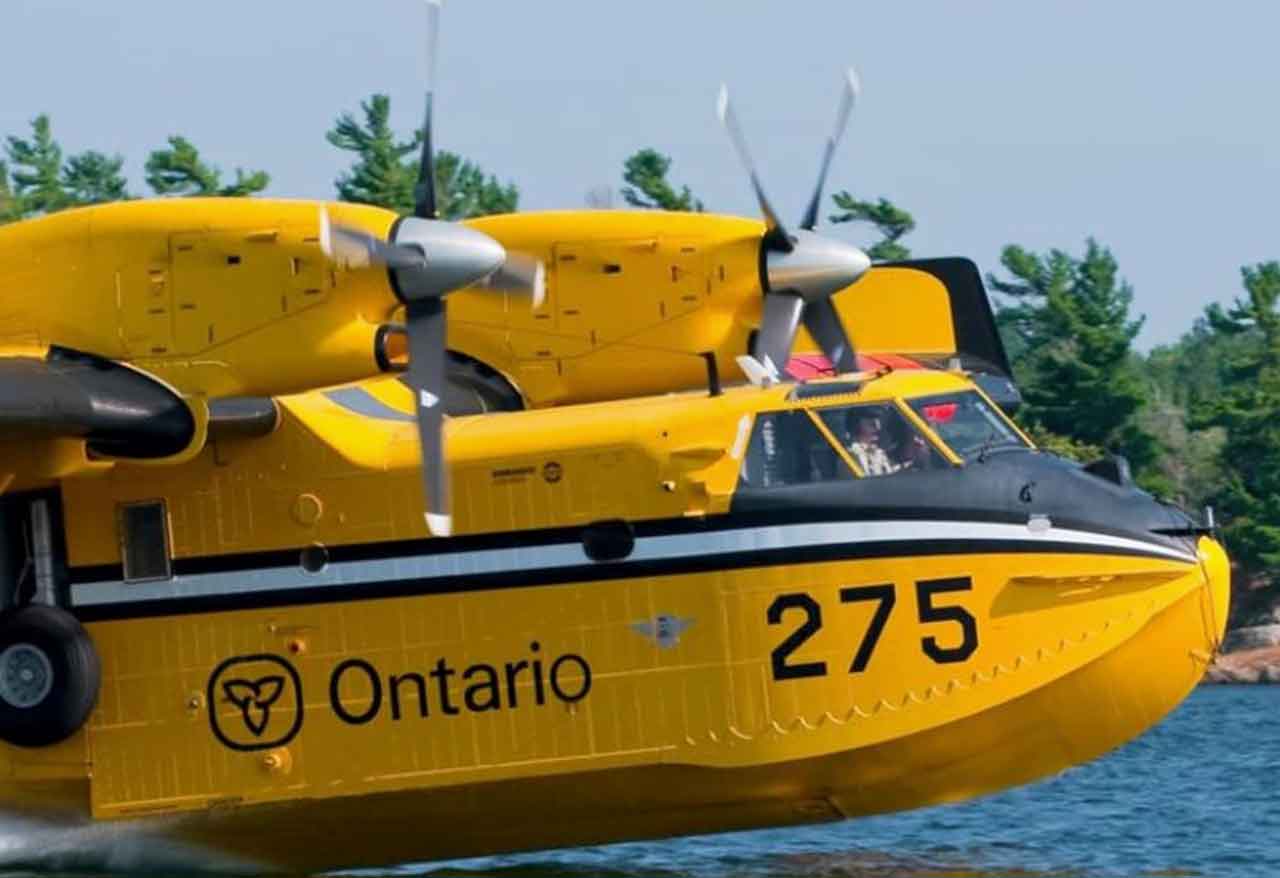
Unauthorized aircraft can interfere with helicopters, waterbombers and other firefighting operations.
Pilots should confirm all current restrictions before entering wildfire areas.
Wildland Fire Hazard Continues to Vary Across the Northwest
Ontario’s interactive fire map provides current wildland fire danger ratings based on data from more than 130 weather stations across the province’s fire regions.
The map changes throughout the day as weather conditions are updated.
Residents, campers, anglers, hunters and travellers are encouraged to check the current fire hazard before heading into forested or remote areas.
Outdoor Burning Rules Remain in Effect
Ontario’s legislated forest fire season runs from April 1 to Oct. 31.
Aviation, Forest Fire and Emergency Services is reminding the public that outdoor burning rules remain in effect.
Where outdoor burning is permitted, fires must be started no earlier than two hours before sunset and extinguished no later than two hours after sunrise.
Anyone burning outdoors should have adequate tools and water available to control and extinguish the fire.
Residents within municipal boundaries should also check with their local fire department for any burning restrictions or permit requirements.
How to Report a Wildland Fire
To report a wildland fire north of the French and Mattawa rivers, call 310-FIRE (3473).
To report a wildland fire south of the French or Mattawa rivers, call 911.
Although overall fire behaviour has eased in several major complexes, a number of large fires remain not under control and suppression work continues across Northwestern Ontario.
Northwestern Ontario wildfires, Thunder Bay 85, Kenora 33, Thunder Bay 36, Dryden 34, Dryden 35, Fort Frances 14, Rinker Lake Complex, Atikokan Cluster, Ontario wildfires, FireRangers, wildfire update, AFFES