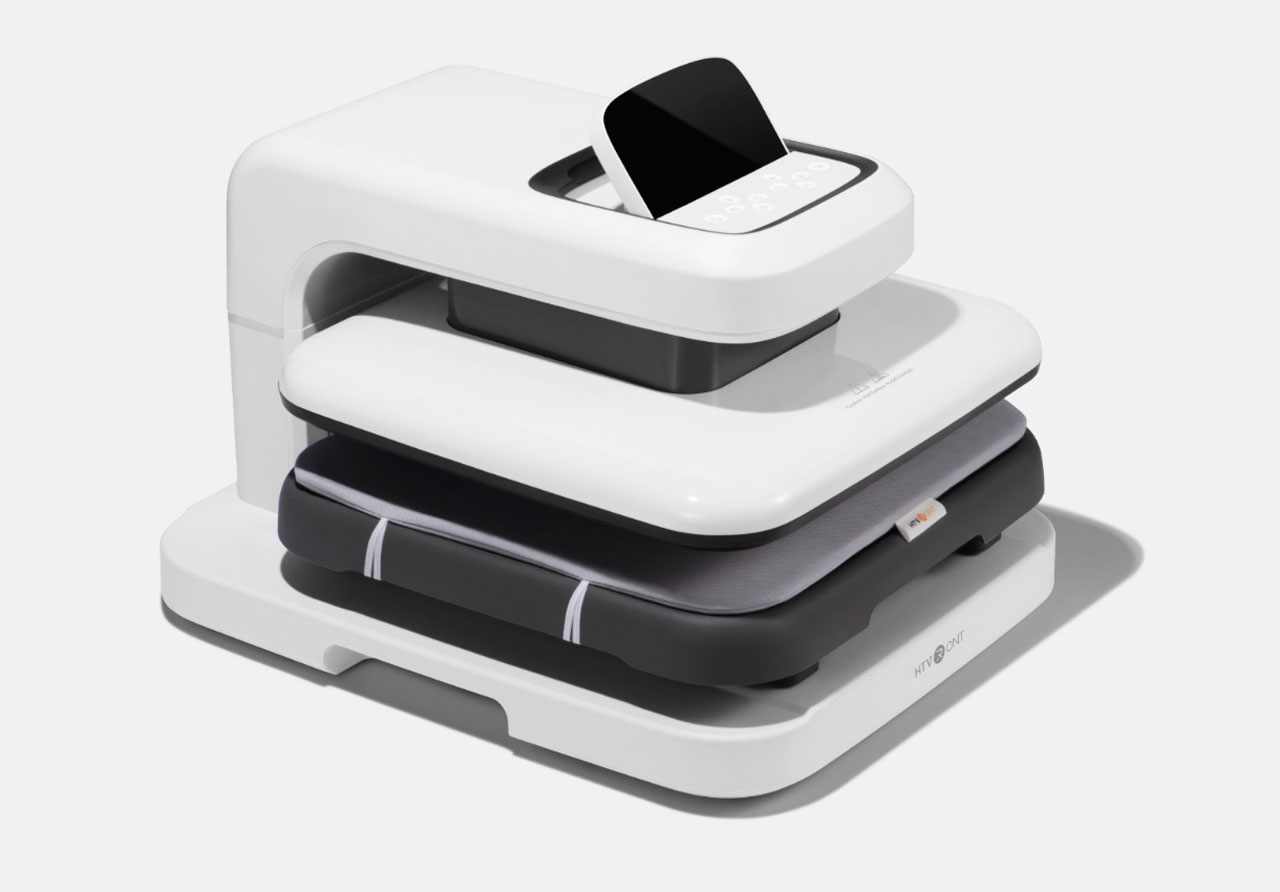
Custom clothing has become the first choice for individual, family, business, school, team and event group purchases. Custom clothing increases the sentiment of individuals and/or groups. Today, all you need is a blank canvas, some inspiration, and a few supplies to make custom clothing. No longer do you need to rely on a large printing company to buy a meaningful shirt. A few supplies and a small workspace are all that is required to start a shirt customization business. The most useful of these supplies is a good quality heat press for shirts.
A Heat Press for Shirts
All heat presses use the same heat and pressure technique to transfer artwork to a piece of clothing. They typically are made with a heated top plate and a lower plate where the clothing is placed. Once the press is closed, the upper plate is pressed against the fabric and holds the design in place for a specified amount of time. The transfer of the artwork to the cloth is then permanently completed. A heat press is better than using an iron to make a design on clothing because it provides even heating and pressure. With the ease of use for everyone, it is a great first purchase for someone, but also for high volume users.
What Does HTV Mean?
HTV stands for Heat Transfer Vinyl. It is a vinyl material that is used to apply designs to fabrics with heat and pressure. HTV comes in sheets and rolls and is fully customizable with designs that are cut out. To finalize a design, the excess vinyl is trimmed to reveal the design. The design is then pressed on the fabric and is permanently placed. With its versatile and simple nature, HTV is a great choice for people who like making their own clothing.
Why Is HTV a Good Material?
HTV is ideal for simple and clean designs with lettering and shapes. Examples of HTV projects could include a name on a soccer shirt, a business logo, a slogan, team numbers or decorative logo graphics. HTV is a great medium to introduce beginners to the world of fabric customizations because of its ideal projects and simple nature. Learning to use HTV correctly will give a user the skills and knowledge needed to do more complicated fabric customizations in the future.
Heat Transfer Paper in Comparison to HTV
While both HTV and heat transfer paper can be used to decorate a shirt, they have totally different methods of application. HTV is worked in by cutting a design, while heat transfer paper is worked in by printing an image first. HTV can be a quick alternative for bold lettering. Heat transfer paper can be used for detailed artwork with a lot of colors. In general this method is easier. Neither of the mentioned above can be said to be better than the other. This would be totally dependent on the design, printer, fabric and appearance that you are going for.
Avoiding Common Pressing Mistakes
When you are learning the trade, there are numerous similar mistakes made by first time users when getting accustomed to the pressing process. First, is the assumption that all materials will behave similarly and therefore the same temperature settings can be used. Second, if the design is placed wrong, this is only noticed after pressing, which is unnecessary. Pressing too hard or too little also creates an undesired effect. Yet more commonly used materials are pressed without consideration and without removing the carrier or the transfer sheet, which can be done hot, warm, or even cool.
Checking the instructions for each particular product is the easiest way to avoid these mistakes.
Creating Detailed Designs With Transfer Paper
Transfer paper is best used when your design has color and detail. With fine detail and complex images, it might be more convenient to use transfer paper and print everything you need for your design at once, rather than piecing everything together with vinyl. Because transfer paper is more suitable for finer detail, it does make the process of adding colors to your design convenient, as you would not need to do each step of the design one color at a time. However, there are numerous factors that contribute to the final appearance of the design, such as the ink quality and the compatibility of the paper and garment to the printer.
Creating Simple Designs With HTV
When your goal is something simple, HTV might be your best option. More often than not, simple designs involving a name, logo, number, or short phrase do not even need to be printed. Designs without intricacies can be made with colored HTV and are more convenient to create. Designs can become more complex, but advanced techniques of layering many colors should not be attempted until the basics of layering a single design are understood.
Personalized Shirts for Business Events
Shirts can also be customized for businesses. It is a great way for employees to easily be identified. Merchandise shirts can also help gather brand recognition since customers will also see employees wearing it at business events. Small business can easily utilize on demand printing for localized small runs. It is important for businesses to pay special attention to shirt quality since that will reflect their company in the best possible way.
Conclusion
Creating personalized clothing can be an enjoyable and fulfilling hobby as well as a legitimate addition to your income. Personalized t-shirt making is made easier with a dependable heat press for shirts that offers consistent heat and pressure. HTV (Heat Transfer Vinyl) provides a solution for most results that are clean and straightforward. There is also heat transfer paper that can allow for more detailed and vibrant designs. The most important aspect of the process to remember is that each material requires something different. Taking the instructions for each product and providing proper preparation as well as trying new materials will help to take your game and results to the next level with less waste. Whether you want to make a special order for just one shirt or make a full custom t-shirt apparel line, having the right combination of supplies, a creative vision, and some patience will allow you to make plain cloth shirts interesting.