Blue-Green Algae Confirmed at Middle Shebandowan Lake: What Residents Need to Know
SHEBANDOWAN — Residents, camp owners and visitors are being advised to avoid water affected by a confirmed blue-green algae bloom at Middle Shebandowan Lake.
The Ministry of the Environment, Conservation and Parks confirmed blue-green algae in a water sample collected July 30, 2026, from the shoreline of a Beaver Bay Road property.
The finding matters for people who draw household water from the lake, swim or boat near the affected shoreline, and allow pets or livestock to enter the water.
Avoid affected water and keep pets away
Water should not be used whenever a visible blue-green algae bloom is present and for about two weeks after the bloom has disappeared.
People should not:
- drink the water;
- use it for cooking, preparing infant formula or other household purposes;
- swim, wade or play in the affected water; or
- allow pets or livestock to drink from or enter the water.
Boiling contaminated water does not remove cyanobacterial toxins and may concentrate them as water evaporates. Residents relying on lake water should use bottled water or another safe source while the bloom is present.
Blooms can move or change quickly because of wind, waves and currents. Water that appears clear at one property may not remain clear, and shoreline conditions can differ from one location to another.
What is blue-green algae?
Blue-green algae is the common name for cyanobacteria, a naturally occurring type of bacteria found in freshwater lakes, rivers and streams.
Cyanobacteria are normally present in small amounts and do not always create a health hazard. Under favourable conditions, however, they can multiply rapidly and form dense blooms.
Warm water, slow-moving conditions and elevated levels of nutrients such as phosphorus and nitrogen can encourage bloom growth.
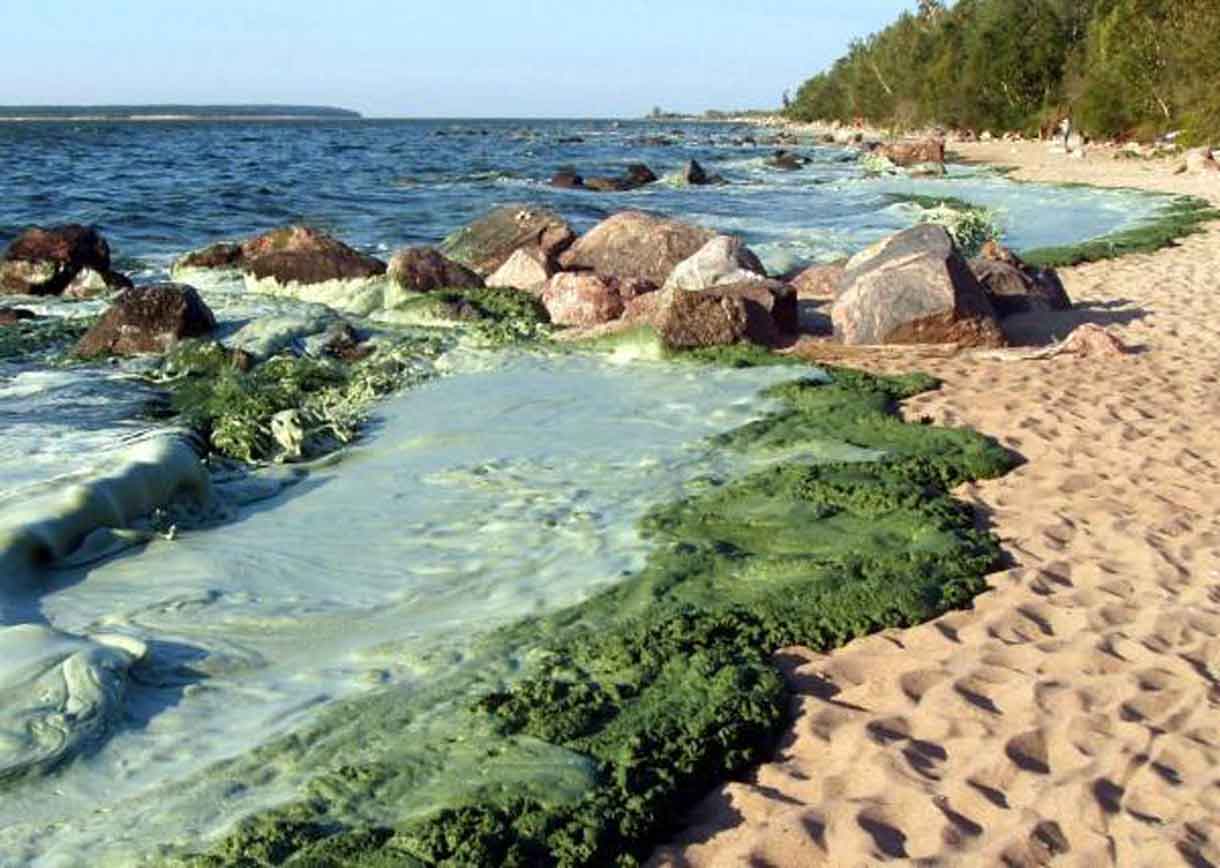
A bloom may make the water resemble green pea soup, spilled turquoise paint or fine grass clippings. It may also appear as streaks, foam, scum or solid-looking clumps on the surface.
Blooms can also appear brown or reddish. It is impossible to determine by sight whether a bloom contains toxins, so any suspected bloom should be treated as potentially harmful.
What makes a bloom dangerous?
Some cyanobacteria can produce poisons known as cyanotoxins. The presence and concentration of those toxins can only be determined through laboratory testing.
People can be exposed by swallowing contaminated water, getting bloom material on their skin or breathing in small droplets during activities such as swimming, tubing or water skiing.
Possible symptoms include:
- irritated skin, eyes, nose or throat;
- stomach pain, nausea, vomiting or diarrhea;
- headache, fever or muscle weakness; and
- breathing or neurological problems in severe cases.
Serious illness is uncommon, but some cyanotoxins can affect the liver, kidneys, nervous system or respiratory muscles. The severity of illness depends on the toxin involved, the amount of exposure and how the exposure occurred.
Anyone who becomes ill after possible exposure should contact a health-care provider and explain that contact with a suspected blue-green algae bloom occurred.
Why dogs and other animals face greater danger
Dogs are particularly vulnerable because they may drink lake water, swallow bloom material or lick contaminated water from their fur.
Their smaller body size means a dose of toxin can have a more serious effect. Health Canada reports that animal deaths have occurred after pets, livestock and wildlife drank water containing cyanotoxins or consumed bloom material.
Pet owners should keep animals away from the shoreline where a bloom is visible. If a pet enters the water, rinse it immediately with clean tap water and prevent it from licking its coat.
Contact a veterinarian promptly if an animal shows vomiting, weakness, stumbling, unusual behaviour, difficulty breathing or other signs of distress.
What to do after contact?
Anyone who accidentally comes into contact with affected water should wash exposed skin with soap and clean water as soon as possible.
Clothing, footwear, life-jackets and equipment that contacted the bloom should also be rinsed with clean water.
Children require particular attention because they are more likely to swallow water while playing and often spend longer periods in the water than adults.
Why blooms may become a greater regional concern
Blue-green algae blooms have historically been less common in many inland lakes across Northwestern Ontario than in warmer parts of the province.
However, the Lakehead Region Conservation Authority says cyanobacteria blooms have become a growing concern in the Thunder Bay District.
Longer periods of warm surface-water temperatures can create conditions that favour bloom development. Nutrients entering lakes through shoreline runoff, septic systems, soil erosion and other sources can also contribute.
The confirmation at Middle Shebandowan Lake does not mean the entire lake is continuously affected. It does mean residents should monitor conditions closely, avoid suspicious water and report new blooms.
Middle Shebandowan Lake has experienced a confirmed bloom before. Blue-green algae was identified at Rossmere Bay in August 2021, providing evidence that favourable bloom conditions have developed in the lake in previous years.
Reporting a suspected bloom
Suspected blue-green algae blooms should be reported to Ontario’s Spills Action Centre at 1-800-268-6060.
When making a report, residents should provide the location, date and time of the observation, along with photographs and a description of the water when possible.
Questions about water sampling can be directed to the Ministry of the Environment, Conservation and Parks office in Thunder Bay at 807-475-1205.
Questions about possible health effects can be directed to a Thunder Bay District Health Unit public health inspector at 807-625-5900.