A live football match can change in seconds. One team looks comfortable, controlling possession and keeping the opponent away from goal. Then a midfielder loses the ball, the defence is caught too high, and the entire direction of the match shifts after one counterattack.
For live betting platforms, reacting to these moments quickly is essential. Odds already move after goals, cards, substitutions and periods of pressure, but the process still depends on data travelling between stadiums, providers, central servers and users. Even a short delay matters when thousands of people are following the same event.
Edge computing could make that journey shorter. Instead of sending every piece of information to a distant data centre, some of the processing happens closer to the stadium, the broadcaster or the user. The result could be faster updates and live predictions that respond more naturally to what is happening on the pitch.
Why Every Second Matters
Before a match begins, prediction systems have time to study form, injuries, previous meetings and expected line-ups. Live analysis is different. The system must understand a moving situation while it is still unfolding.
A red card is an obvious change, but its effect depends on the context. Was the dismissed player a central defender or a winger? Is the team already leading? How much time remains? Does the coach respond immediately or wait until half-time?
The same applies to less dramatic moments. A full-back may begin struggling against a fresh winger. A team that pressed aggressively in the first half might start arriving half a second late. Possession can remain balanced even as one side gradually takes control of the dangerous areas.
Live prediction models must process these details quickly enough for the conclusions to remain useful. Information that arrives thirty seconds late may already describe a version of the match that no longer exists.
What Edge Computing Changes
Traditional cloud systems often send data to large central servers for processing. Those servers may handle enormous workloads, but they are not always physically close to the event or the user.
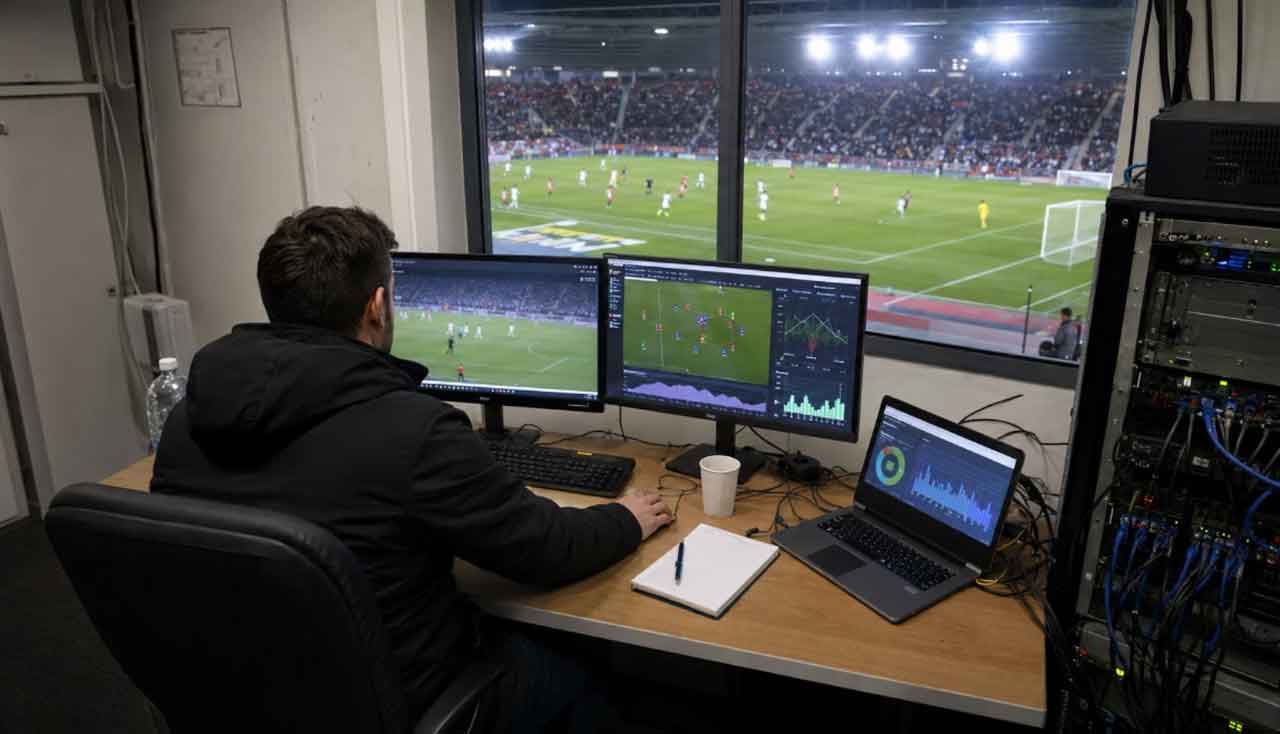
Edge computing moves part of the work nearer to the source. A local system at the stadium, for example, could process tracking data before sending the most relevant information elsewhere. Instead of transmitting every raw player movement, it might identify a tactical change, an increase in pressing intensity or a sudden drop in defensive organisation.
This does not mean the cloud disappears. Central servers would still store historical information, train prediction models and coordinate activity across competitions. Edge systems would handle tasks that benefit most from an immediate response.
For live betting, that difference could be significant. Odds, alerts and match probabilities could update with less delay, particularly during moments when many events happen almost simultaneously.
The Match Is More Than Goals and Cards
Most major incidents are easy for a system to recognise. A goal changes the score. A card changes the number of available players. A substitution changes the line-up. The harder task is noticing the quieter developments that often lead to those events.
Consider a team that has allowed three attacks down the same side within five minutes. No goal has been scored, but the danger is growing. Perhaps the winger has stopped tracking back, the full-back is isolated, or a central midfielder is no longer covering the space.
An advanced system could combine player tracking, ball movement and recent match patterns to identify the problem before the scoreboard changes. Processing some of that information at the edge would allow the model to respond without waiting for large volumes of raw data to complete a longer journey.
That is where real-time prediction becomes more interesting. The aim is not merely to react after something happens, but to recognise when the conditions for it are beginning to appear.
Live Video Could Become Part of the Analysis
Modern prediction models depend heavily on structured data: shots, passes, possession, tackles and expected goals. Video contains another layer of information.
Computer vision can follow player positions, recognise team shapes and measure the spaces between different parts of the formation. It can notice when a defensive line drops, when a midfielder stops joining attacks or when a side changes its pressing approach.
Video requires considerable processing power, especially when several camera feeds and many matches are involved. Sending every frame to a distant server is not always the most efficient solution. Edge devices could analyse parts of the footage locally and transmit only the observations that matter.
Over the next few years, this could make live models more aware of how a match feels tactically, not just what appears in the event statistics. The system might recognise that a team’s pressure has become more dangerous even before the next clear chance arrives.
Football Platforms Could Offer More Useful Context
Faster processing would not only affect bookmakers. Football analysis platforms could use similar technology to provide supporters with more responsive match information.
A platform might update its assessment when a key player is injured, when a substitution changes the formation or when one team begins creating chances of much higher quality. Rather than displaying a static pre-match opinion, it could explain why the balance has shifted.
Platforms such as NerdyTips already belong to a football culture in which statistics and automated analysis give fans another way to examine matches. Edge computing could eventually make this type of information more immediate, particularly during busy live schedules when many games are taking place at once.
The most useful systems would not simply show a new percentage every few seconds. They would explain what changed. A prediction becomes far more meaningful when the user understands whether it moved because of a red card, a tactical adjustment or a clear decline in one team’s intensity.
Faster Technology Also Brings Risks
Speed is valuable, but it can create problems. When live markets update instantly and users receive constant alerts, there is less time to think before acting.
A notification that one team is “building pressure” may encourage a quick decision, even though football momentum can disappear after one misplaced pass. A model may identify a genuine pattern, but that pattern is still a probability rather than a promise.
There is also the risk of unequal information. If some platforms receive faster data than others, users may be reacting to a match that the system has already evaluated several seconds earlier. Transparency about delays and data sources will become increasingly important.
Responsible-use tools will need to develop alongside the technology. Personal limits, clear records of activity and reminders during intense periods could become more visible. Faster betting should not mean removing every pause that allows a person to reconsider.
Security Cannot Be an Afterthought
Processing data across many edge devices creates more points that must be protected. A central server is not the only possible target when information also passes through stadium systems, local networks and connected hardware.
For the betting market, corrupted or delayed data could cause serious problems. A false goal signal, an incorrect card or manipulated tracking information might affect markets before the error is discovered.
Edge systems therefore need strong authentication, encrypted communication and a clear way to verify information against official sources. They must also continue operating when individual devices or network connections fail.
The fastest system is not necessarily the best one. Reliability matters just as much, particularly when real money and rapidly changing probabilities are involved.
Will Edge Computing Make Predictions More Accurate?
It should make them faster and more responsive, but accuracy is a separate question. Receiving information sooner does not guarantee that a model interprets it correctly.
Football remains difficult to predict because the strongest team does not always win. A side can dominate, hit the woodwork twice and then concede from a deflection. A goalkeeper can have an exceptional night, or a substitute can change the match with his first touch.
Edge computing cannot remove those possibilities. What it can do is ensure that prediction systems work with a more current picture of the match. Instead of reacting to old information, they can adjust while the tactical and physical changes are still relevant.
That is an improvement, but not a path to certainty.
Conclusion: Bringing Predictions Closer to the Match
Edge computing could become an important part of live football analysis over the next several years. By processing information closer to the event, it can reduce delays, support video analysis and help prediction models respond faster to tactical changes.
For live betting, this could produce markets that move more naturally with the match. For supporters, it could offer clearer explanations of why the balance is shifting, rather than simply displaying a changing number.
The technology will not make football predictable. Goals will still arrive against the run of play, players will still make unexpected mistakes, and one moment will still be capable of undoing the strongest analysis.
The real value of edge computing will not be knowing the future. It will be understanding the present a little sooner.